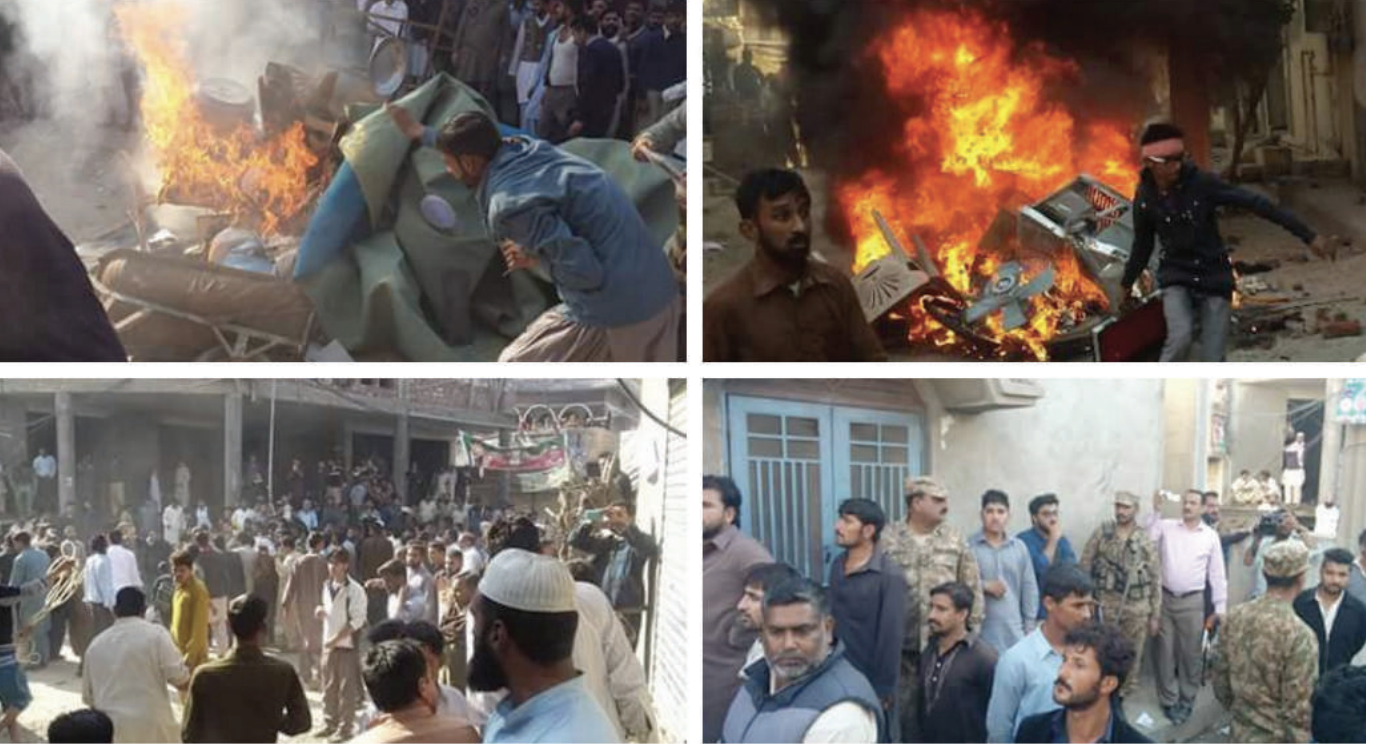
Summary
- The UN Special Rapporteur has documented systematic persecution of Ahmadi Muslims in Pakistan, where constitutional and legal frameworks criminalise them for identifying as Muslim and even restrict their burial rites.
- Grave desecrations are escalating, with 269 graves attacked in 11 incidents in 2025 alone, and authorities routinely fail to hold perpetrators accountable.
- The report calls on governments, human rights organisations, and the international community to demand the repeal of discriminatory laws and ensure protection of Ahmadi communities.
EXECUTIVE SUMMARY
The UN Special Rapporteur on freedom of religion or belief, Nazila Ghanea, has documented systematic and severe violations of the human rights of Ahmadi Muslims in Pakistan, revealing that discrimination extends even to death and burial. This briefing outlines the crisis and calls for immediate action.
KEY FINDINGS
1. LEGAL FRAMEWORK OF DISCRIMINATION
In Pakistan, Ahmadis are constitutionally declared “non-Muslim” under the Constitution (Second Amendment) Act, 1974, and criminalised under Ordinance No. XX of 1984 for identifying as Muslim.
That legal framework legitimises discrimination, extending even to death and burial.
2. DENIAL OF BURIAL RIGHTS
The authorities reportedly frequently deny Ahmadis access to public graveyards, desecrate their graves and side with violent mobs that obstruct funerals. Ahmadiyya graveyards are often reportedly encroached upon and authorities routinely deny burials or fail to protect graveyards from mob desecration.
3. CRIMINALISATION OF FUNERAL RITES
The Punjab Maintenance of Public Order Act and the anti-Ahmadi ordinances are often misused to justify police interference in Ahmadi funerals under the pretext of maintaining the peace, effectively criminalising burial rites.
Ahmadis are reportedly even criminalised for using Islamic epitaphs on their graves.
4. WIDESPREAD GRAVE DESECRATION
Recent Documented Incidents:
24 January 2024:
Four police officials from Daska police station reportedly desecrated 65 Ahmadi graves in Moosaywala and 10 in Bhairokay, destroying gravestones and painting others black. Despite formal complaints, no accountability proceedings followed
.
10 May 2025:
At least 90 Ahmadi Muslim gravestones were reportedly desecrated in Rhoda, Khushab District, Punjab Province. Gravestones were smashed and defaced, with debris scattered across the cemetery.
Scale of the Crisis:
The graves of 269 Ahmadi Muslims have reportedly been desecrated in 11 separate attacks in 2025 alone, and 319 gravestones were defiled in 21 incidents in 2024
.
5. IMPUNITY AND LACK OF ACCOUNTABILITY
The lack of effective legal accountability reportedly allows such attacks to continue with impunity, although the occasional administrative actions against perpetrators of grave desecration are welcomed.
In Pakistan, consultation with religious minorities is reportedly largely reactive, limited to post-incident responses, rather than participatory in policy design.
IMPLICATIONS
This systematic persecution represents:
Violation of fundamental human rights protected under international law
State-sanctioned discrimination through constitutional and legislative frameworks
Religious persecution that extends from life into death
Complete denial of dignity in death for an entire religious community
Pattern of impunity that emboldens further violations
CALL TO ACTION
For Human Rights Organisations:
• Document and publicise these violations internationally
• Provide legal support and advocacy for Ahmadi communities
• Pressure international bodies to intervene
For Media:
•Investigate and report on the systematic persecution of Ahmadis in Pakistan
• Give voice to affected communities
• Hold authorities accountable through investigative journalism
For Politicians and Governments:
• Raise this issue in bilateral and multilateral forums
• Condition aid and diplomatic relations on human rights improvements
• Support asylum claims from persecuted Ahmadi Muslims
• Implement targeted sanctions against officials responsible for grave desecrations
For the International Community:
• Demand Pakistan repeal discriminatory constitutional amendments and ordinances
• Call for protection of Ahmadi graveyards and prosecution of perpetrators
• Support UN mechanisms to monitor and report on these violations
• Ensure this issue remains on the agenda of the Human Rights Council
CONCLUSION
The Special Rapporteur’s report explores how extensively and deeply freedom of religion or belief relates to death and honouring the deceased, and the findings regarding Ahmadi Muslims in Pakistan reveal one of the most egregious examples of systematic religious persecution documented. The international community cannot remain silent whilst an entire religious community is denied basic human dignity, even in death.
Immediate action is required. Silence is complicity.
UN Special Rapporteur Examines Freedom of Religion or Belief in Relation to Death and Burial Practices | CAP Freedom of Conscience