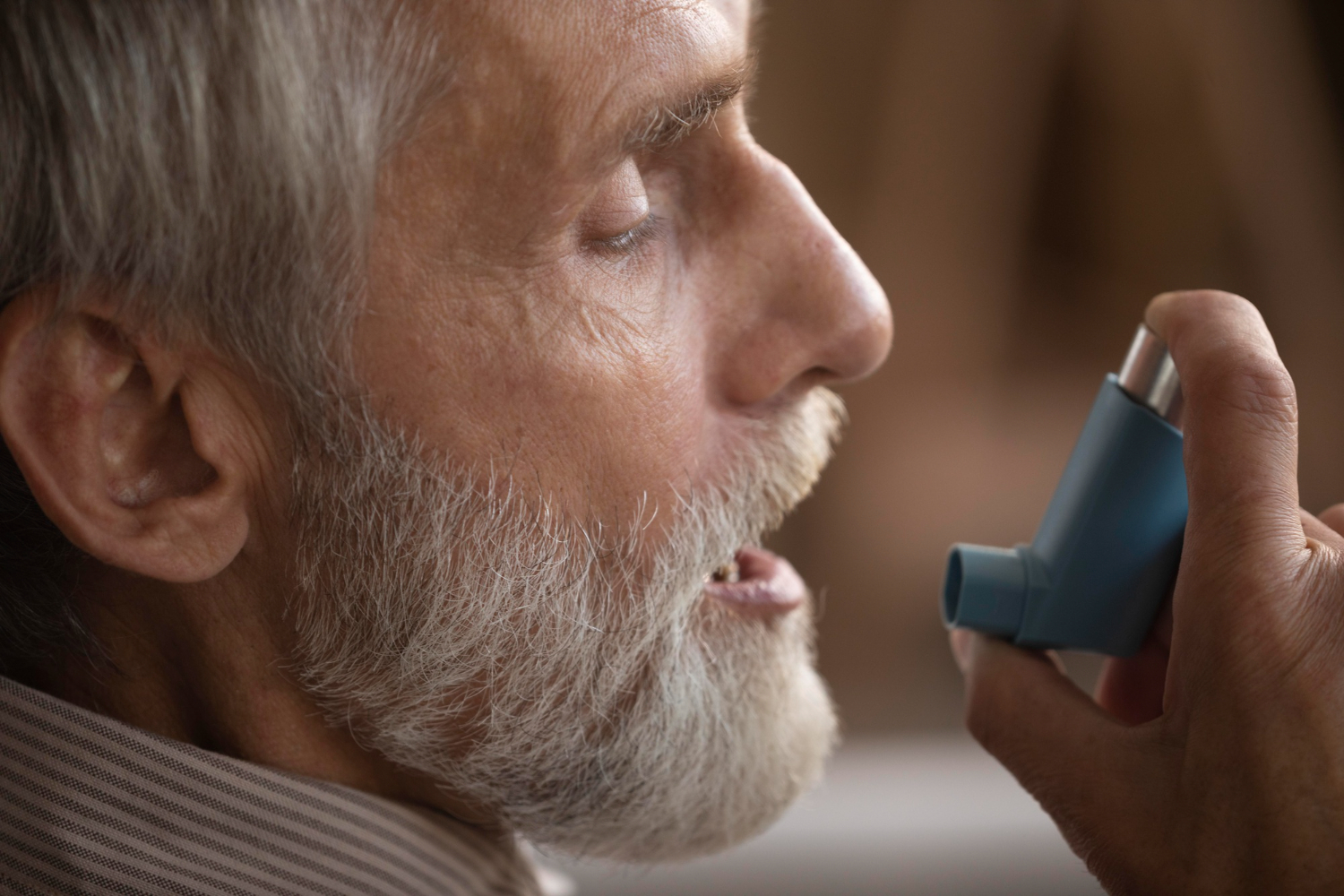
Asthma is a common lung disease that makes it hard to breathe. It affects millions of people, including children and adults, all over the world.
What Is Asthma?
Your lungs have small air passages called airways. In people with asthma, these airways can get inflamed (swollen) and narrowed, making it harder for air to get in and out.
When airways narrow:
- Breathing becomes difficult
- The person may cough
- Wheezing (a whistling sound) may happen when breathing out
- Chest can feel tight or heavy
What Causes Asthma?
Doctors don’t know one exact cause of asthma, but several things are linked to it:
Genetics
Asthma often runs in families. If your parents or siblings have asthma, you’re more likely to have it too.
Allergies
Things like dust mites, pollen, animal fur, or mold can trigger symptoms in people with asthma.
Environment
Air pollution, cigarette smoke, and strong smells can make symptoms worse. Some research shows that things in your environment — like pollution or allergens — interact with your immune system and can trigger asthma attacks.
Other Risk Factors
- Respiratory infections (like colds or the flu)
- Being overweight
- Exposure to smoke or chemicals
- Urban pollution
What Are the Symptoms?
Asthma symptoms can change over time and from person to person. The most common ones are:
- Wheezing
- Cough (especially at night or early morning)
- Shortness of breath
- Chest tightness
Sometimes these symptoms go away for a while, but they can suddenly get worse — this is called an asthma attack.
An asthma attack can be scary and needs quick help, especially if:
- You can’t catch your breath
- You can’t speak more than a few words
- Your lips or nails turn bluish
If this happens, you should get emergency help right away.
How Is Asthma Diagnosed?
A doctor usually:
- Asks about symptoms
- Listens to your lungs
- Does breathing tests (like spirometry) to see how well air moves in and out of your lungs
How Is Asthma Treated?
There is no cure for asthma yet, but it can be controlled so people live full, active lives.
Inhalers
These are the most common treatments.
- Rescue inhalers help quickly during an asthma attack
- Controller inhalers reduce inflammation and help prevent attacks
Avoiding Triggers
Learning what makes your symptoms worse — like smoke, pollen, or cold air — and avoiding these triggers helps a lot.
Asthma Action Plan
A plan made with a doctor can help you know what to do daily and when symptoms get worse.
Living with Asthma
Most people with asthma can go to school, do sports, and live normally when:
- They take prescribed medicine
- They avoid triggers
- They check their breathing regularly
Keeping up with vaccines, like the flu shot, can also help prevent infections that might trigger asthma symptoms.
Conclusion:
Asthma is a common lung condition that can make breathing difficult, but it can be well controlled with proper treatment and care. By understanding symptoms, avoiding triggers, and using medications correctly, people with asthma can live healthy and active lives. Ongoing research continues to improve asthma treatment and management.
References
- World Health Organization – Asthma facts
https://www.who.int/news-room/fact-sheets/detail/asthma - National Institutes of Health (NHLBI) – What IsAsthma? https://www.nhlbi.nih.gov/health/asthma
- Mayo Clinic – Asthma: Symptoms and Causes
https://www.mayoclinic.org/diseases-conditions/asthma/symptoms-causes/syc-20369653 - National Institute of Environmental Health Sciences – Asthma overview
https://www.niehs.nih.gov/health/topics/conditions/asthma - CDC – About Asthma
https://www.cdc.gov/asthma/about/index.html
About the Author:
Mehwish Khan is a Doctor from Karachi, Pakistan. She is working as a Respiratory Therapist in Ontario and is also aiming to take her Canadian and US medical licensing exams in order to work as a Doctor either in Canada or US. She has co-authored two research publications which were published in international journals.