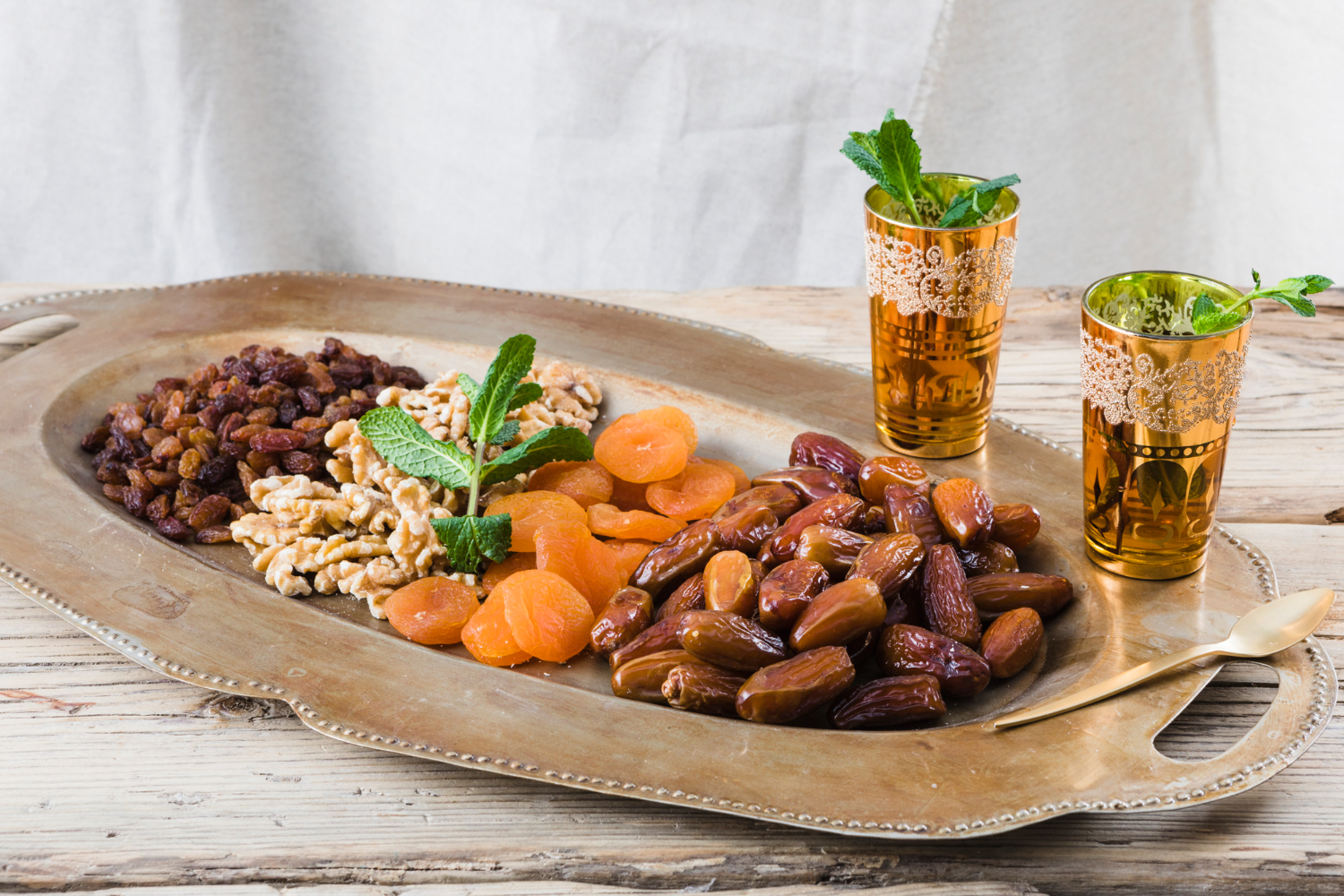
Eating is a task we do every day; in Islam, it is more than just filling our stomach and satiating our hunger; it is a form of ibadah to Allah the Almighty. Our meals become a great source of physical and spiritual blessing when we eat with gratitude, good manners, good intentions, and moderation. Islam guides us in every aspect of life, including how we should eat our meals.
The Holy Qur’an and the Holy Prophet Muhammad (sa) teach us easy-to-follow habits we should follow to keep our bodies healthy, and our souls connected to Allah the Almighty. Our society is fast-paced and busy; in this environment of haste and greed, many people often struggle with overeating and unhealthy food consumption. Fast food, big portions, social media food trends, and busy lifestyles can make it hard to eat healthy food in moderation. In this article, I will present the benefits of eating in moderation through the Sunnah of the Holy Prophet Muhammad (sa), Qur’anic verses, and hadith references.
Taking care of our bodies is a huge part of our faith as Muslims. The Holy Quran is a guide for our lives from Allah the Almighty, and it teaches us that food is a divine gift from Allah, and we should be grateful for it. We see this in the Holy Qur’an. Allah tells the believers:
“O children of Adam! Look to your adornment at every time and place of worship and eat and drink but exceed not the bounds; surely, He does not love those who exceed the bounds.”1
(7:32)
This particular verse from the Holy Qur’an tells us that we should eat and drink within bounds, but we should never harm our bodies by overeating.
Moderation is a key part of showing our gratitude to Allah for all the blessings he has given to us. A straightforward way of showing our gratitude can be by following the Holy Prophet Muhammad (sa )’s guidance of saying “Bismillah” (In the name of Allah) before starting our meal and saying duas before eating, after finishing our meal, and saying “Alhamdulillah” (All praise belongs to Allah).
Food should not be wasted at all and should not be taken for granted. The Holy Prophet (sa) gave us clear instructions of etiquettes for eating. He says, “Kill not your hearts with excessive eating and drinking. There is no vessel worse for a person to fill than his stomach. A few mouthfuls should suffice to keep him on his feet. But if he must eat more, then let him fill one-third of his stomach with food, one-third with drink and leave one-third for easy breathing.”2
This one-third rule that the Holy Prophet (sa) has taught us protects and safeguards our health since overeating can lead to dire health consequences overtime such as discomfort, sleepiness, nausea, indigestion, and long-term health problems like obesity and type 2 diabetes.3 Following this sunnah helps us feel energised and lighter. This leads to improvement in prayer, studies, and work. This Sunnah also helps us as Muslims to control our greed and gluttony.
Islam teaches its believers that our bodies are Amanah (trust) from Allah the Almighty, and that we will be held responsible for how we care for them. This is why we must ensure that we protect our bodies, minds, and souls from all harm and evil. We will be held accountable for the ways we harm our bodies to Allah.
The Holy Qur’an emphasises this when Allah the Exalted says to the believers:
And spend for the cause of Allah, and cast not yourselves into ruin with your own hands, and do good; surely, Allah loves those who do good.”
(2:196)
In this verse, Allah is telling Muslims that harming their bodies is a great sin. Overeating and eating unhealthy food is a form of harming our bodies and health. When we choose to eat with moderation, we are pleasing Allah and taking care of our bodies according to his commands.
The Holy Prophet (sa) has given us further guidance on this matter, instructing all Muslims, “Your eyes have a right over you; your body has a right over you; your family has a right over you, and your wife and children have a right over you. Therefore, you may pray indeed, but it is also important to sleep.” 4. This Hadith is crucial for every Muslim to follow. It teaches us that taking care of our health physically is an obligation as a Muslim and a great way of worshipping Allah the Almighty.
Eating balanced, healthy meals, drinking a healthy amount of water, and avoiding overeating are all part of our faith and obligations as Muslims. As Muslims, we look up to the Holy Prophet Muhammad (sa), and he preferred to live a simple and modest life. This also applied to his meals; he preferred to eat whole and natural meals derived from the simplest of ingredients.
Our beloved Hudur, Hazrat Khalifatul Masih V (aba) has reminded us of the Holy Prophet (sa)’s modest way of eating. In his Friday sermon (April 30th, 2004), he stated: “… there would be days when even some discarded date would not be available for him to eat. After prophethood, the Holy Prophet (sa) did not eat bread made with milled wheat flour, rather his bread would be made of coarse barley. In his supreme sense of contentment, the Holy Prophet (sa) referred to vinegar as a ‘fine’ broth. Once for the duration of two months, food was not cooked in his house, and they survived by eating dates, drinking water, and at times, his neighbours would send some milk to drink.”5 Natural and wholesome foods which the Holy Prophet (sa) used to eat include dates, barley bread, milk, honey, figs, water, and olive oil.
Food is a huge part of our culture, and with this comes excessive food waste and unfair distribution of food, for example instead of wasting so much money and food on extensive weddings, we should follow the example of simplicity from The Holy Prophet (sa) and donate food and money to the poor.
We should never waste food since that is a great sin; food is a blessing that we should be extremely grateful for and respectful toward. Eating is an act we do every day, but through the teachings of Islam, we can make it an act of worship and a means to strengthen our spiritual bond with Allah the Almighty.
When we eat moderately and with gratitude, we are protecting our health and well-being while also strengthening our relationship with Allah. May we all be successful in following the proper way of eating in Islam and may it bring us peace spiritually and physically.
Ameen.
Works Cited
1 “Read Qur’an.” Al Islam, www.alislam.org/quran/app/1. Viewed December 1, 2025.
2 “Chapter 4: The Daily Life of a Muslim Woman.” Pathway to Paradise, Al Islam, https://www.alislam.org/book/pathway-to-paradise/daily-life-of-muslim-woman/. Viewed December 1, 2025.
3 Klein, Samuel. “Why Does Obesity Cause Diabetes?” Cell Metabolism.
https://pmc.ncbi.nlm.nih.gov/articles/PMC8740746/?utm. Viewed December 1, 2025.
4 “Uthman bin Maz’un (ra).” AlIslam.org www.alislam.org/articles/uthman-bin-mazun/. Viewed December 1, 2025.
5 Summary April 30, 2025, Friday Sermon. Al Islam. https://www.alislam.org/friday-sermon/printer-friendly-summary-2004-04-30.html Viewed December 1, 2025.