Hazrat Amīrul Momineen Khalifatul Masih V, May Allah be his Helper, in his Friday sermon delivered on October 8, 2004, from Glasgow, UK, advised the Jama’at that we should make greater effort in smaller towns and villages, for the inhabitants of these places are more likely to listen to and accept the message of Islam.
By the sheer grace of Allah, the Almighty, Jama’at Ahmadiyya Calgary has greatly benefited from this advice since then and shifted its focus from holding one large annual event in Calgary to going out to several smaller towns and villages, holding numerous programs annually. This has resulted in tremendous, blessed outcomes, reaching a much larger and receptive audience to introduce the peaceful teachings of Islam and developing cordial relations with community leaders and opinion makers from all walks of life.
One such initiative, which has been established since 2008, is the North Tablīgh Tour. In this tour, a dedicated team from Calgary travels to the extreme northern towns of Alberta, British Columbia, and the Northwest Territories and holds various outreach events and interfaith conferences in these regions.
Continuing this tradition for the 15th year, a 25-member delegation embarked on the North Tablīgh Tour from Sep 20-24, 2024: a four-day-four-night, 3800 KM journey across three provinces to engage in discussions on Faith, Truth, and Mental Health. Six distinct events were held, each catering to the unique concerns of the host community. Maulana Aizaz Khan Sahib especially joined the group from the National Markaz on the advice of Missionary In charge Sahib.
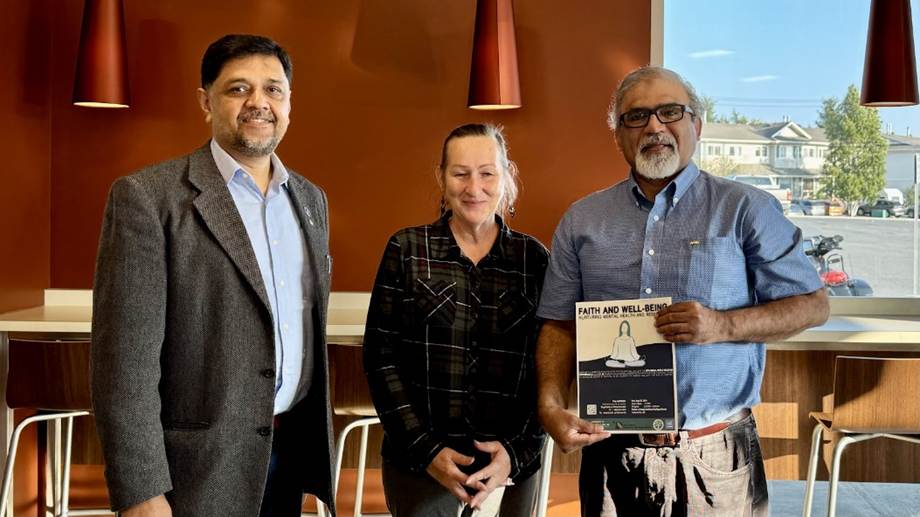
Bashir Islam (right) and Kalim Ahmed (left) extending an event invite to former Premier of the Northwest Territories, Hon. Caroline Cochrane
A pre-event visit to prepare for these events was made earlier by a smaller team from Aug 15-21, covering an even larger area spanning 5000 KM.
A Focus on Faith, Truth, and Mental Health
Two central themes—”Faith and Well-being: Nurturing Mental Health and Resilience” and “Truth and Faith: How Do We Know What to Believe”—were chosen in consultation with local communities. Mental health, in particular, has become a pressing issue in smaller and remote communities, especially after back-to-back disasters of wildfires, floods and subsequent evacuations in the Northwest Territories. The recent displacement of communities and destruction of property due to these natural disasters has compounded the already existing challenges of isolation, stress, and a lack of mental health resources. The events addressed this by discussing the emotional, physical, and spiritual tools, especially in the light of Islamic teachings, that individuals can use to navigate these difficult times. Indigenous elders, healthcare professionals, and religious scholars provided insights into how spirituality and community support can be instrumental in building resilience.
In contrast, the topic of Truth and Faith was selected for more academic settings, specifically for events held at educational institutions. The theme resonated with an audience increasingly concerned about the complexities of truth and misinformation in a digital age.
The world today finds itself overwhelmed by a flood of information, much of it unverified and even false. The rapid pace of modern communication technologies often allows rumours and misinformation to spread before the truth even has a chance to emerge. This situation has posed a significant challenge, especially for those who are sincerely searching for the truth but feel inundated by the vast amount of conflicting information. As a result, the events aimed to explore how individuals can navigate these modern challenges in the search for truth and understanding.
Exploring Key Questions on Truth and Faith
At the core of the Truth and Faith discussions were several profound, epistemological questions:
- What is the relationship between faith and justified belief?
- Are philosophy and the sciences the only valid pathways to understanding reality and truth?
- What role does religion play in the pursuit of knowledge and truth?
- Should faith inform our search for truth, and if so, how?
- Can religion, philosophy, and science be allies in combating the misinformation that pervades modern discourse?
The presenters, including scholars and religious leaders, addressed these questions by drawing on their respective traditions. Maulana Aizaz Khan Sahib, presenting an Islamic perspective, emphasized that Islam teaches us that God has given human beings reason and rationality as tools to navigate the complexities of life, but that these faculties should be complemented by spiritual guidance. Below is a brief description of all six events:
1. Grande Prairie, Alberta
Held on September 21, 2024, at Northwestern Polytechnic – a prestigious seat of learning – in northern Alberta, the 8th Annual Voices for Peace Conference explored Truth and Faith. Moderated by Dr. Duff Crerar – a historian and scholar of comparative religions, with panellists from various faiths and philosophies, the event encouraged deep reflection on how we come to know and believe in a world where truth is often elusive.
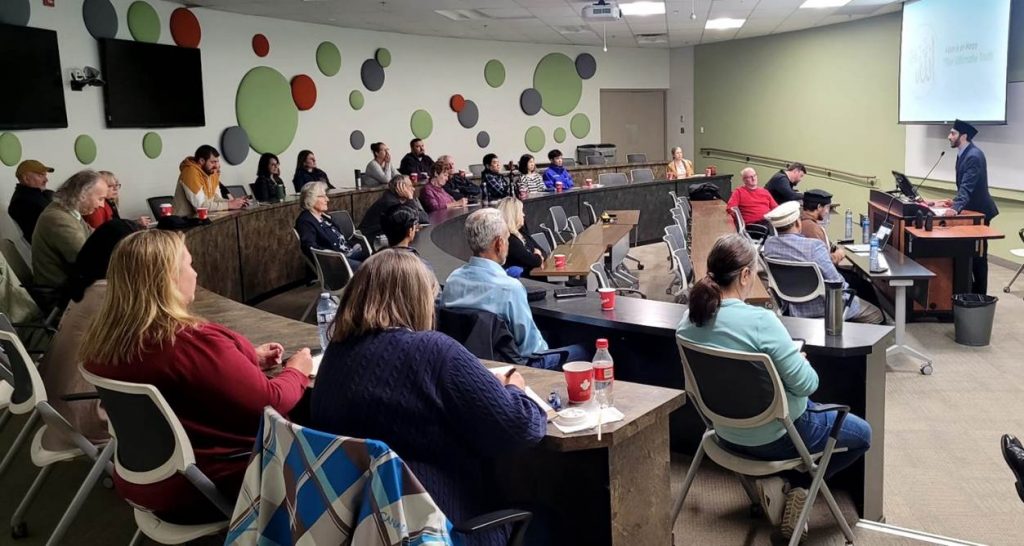
Imam Aizaz Khan addressing at Northwestern Polytechnic, Grande Prairie, AB
2. Dawson Creek, British Columbia
Later that same day, Dawson Creek – a small town in northeastern BC – hosted the 7th Annual Voices for Peace Conference at Northern Lights College. Under the same theme, the event featured dialogues between Christian and Islamic scholars, emphasising the unity of faith and reason in seeking truth.
3. Peace River, Alberta
The 8th annual Voices for Peace event in Peace River took place that evening, moderated by former councillor and local community leader, Wanda Laurin. The discussion expanded on the relationship between Indigenous spirituality, Christianity, and Islam, and how each tradition offers insights into the pursuit of truth and mental well-being. Local Councillor Marc Boychuck presented the Christian perspective, while a respected elder Margaret Kappo from Sturgeon Lake Cree Nation, presented the Indigenous perspective. Imam Zahir Ahmad Sahib of Calgary presented Islamic teachings on how to avoid and cure mental health issues.
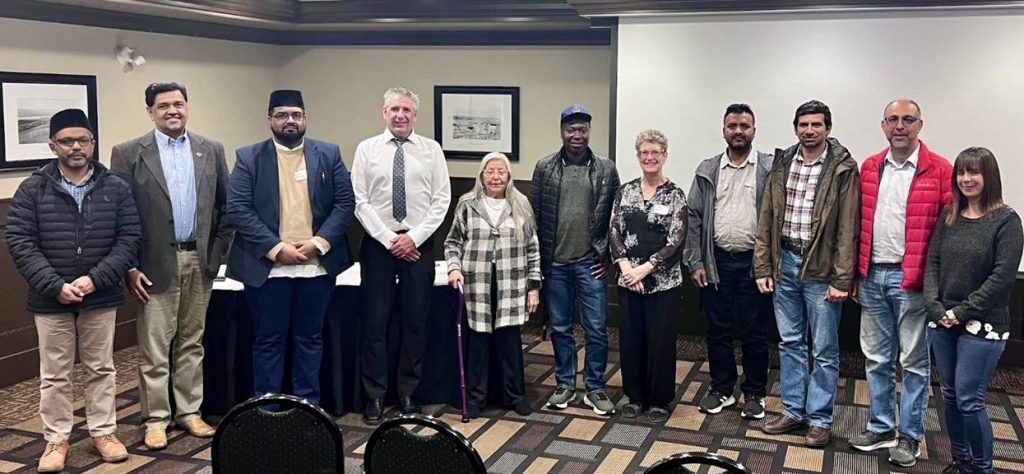
Group Photo of Panellists with the organizing committee at Peace River, AB.
After holding three simultaneous events in northern Alberta and BC, the destination was Hay River in the Northwest Territories, where the team was to spend the next three nights as guests of Chief April Martel of K’atl’odeeche First Nation.
4. Yellowknife, Northwest Territories
Yellowknife, the northernmost capital in Canada, often referred to as “The Edge” and the “End of Trail,” held its 15th Annual Voices for Peace Conference on September 22, 2024, at the prestigious Prince of Wales Northern Heritage Centre. The event was moderated by Deputy Mayor Garret Cochrane and featured Dr. Kemi Kandola – Chief Public Health Officer of the Northwest Territories, alongside former Deputy Minister Roy Erasmus – a mental health practitioner, Dr. Patric Scott – an acclaimed author and former CBC broadcaster – representing Christianity, and Maulana Aizaz Khan from Islam.
Imam Aizaz Khan Sahib spoke about the vital role of prayer in daily life, emphasising its profound connection to faith and well-being. He remarked, “This topic is incredibly important, especially for us as faith leaders, since we often become the first responders in times of need.” He explained the wisdom and philosophy behind Islamic prayer, noting that beyond its purpose as an act of worship, it also fosters a strong sense of community. We become more aware of the struggles of others and can position ourselves to offer support and relief where needed.
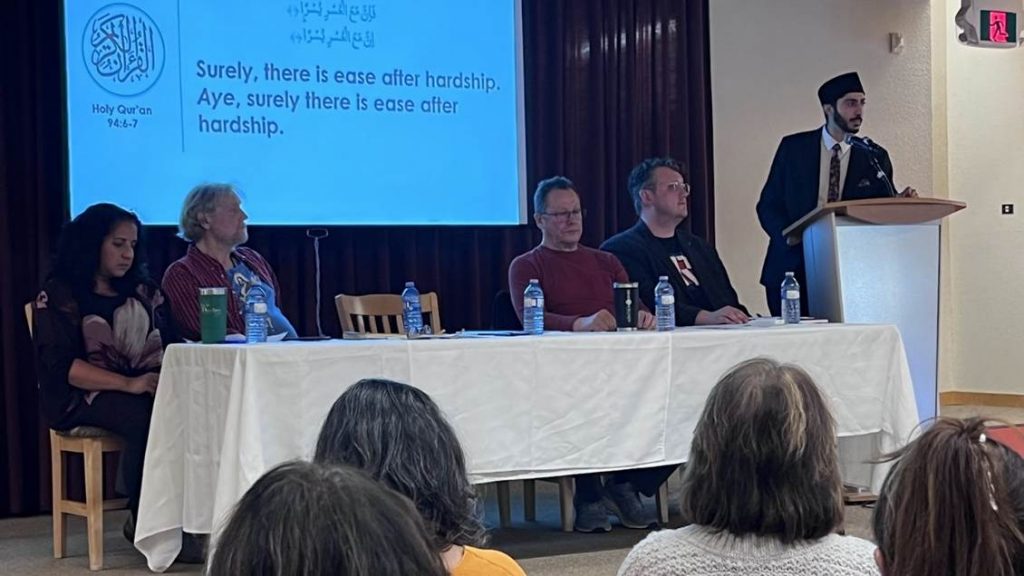
Maulana Aizaz Khan Sahib presenting the Islamic Perspective
The town of Yellowknife holds deep significance, being seen as a realisation of the Promised Messiah’s prophecy, “I shall cause thy message to reach the corners of the earth.” Adding to the historic nature of this year’s conference was the presence of Saleem Khan Sahib, a 95-year-old elder of the Jamā’at born in Qadian. He travelled all the way to Yellowknife to personally witness the fulfilment of the prophecy that Islam’s message would reach the remotest corners of the earth. In a dignified ceremony held by the local Jama’at, Saleem Khan Sahib shared his life journey, how his father Karim Khan Sahib – a companion of Hazrat Sahibzada Abdul Latif Sahib Shaheed, fled Khost to settle in Qādiān, offering a deeply emotional moment of reflection for all attendees.
5. K’atl’odeeche First Nation Reserve, Northwest Territories
To honour the host community of the Tablīgh Team and to celebrate our longstanding friendship, a BBQ was held on September 23, 2024, at the K’atl’odeeche First Nation Reserve. Over 120 people attended, including Indigenous Elders, local High School staff, and community members. The BBQ was a heartwarming gesture of goodwill, allowing participants to engage in meaningful dialogue. Humanity First—Calgary donated 65 school bags to local students, with each bag containing a personal message from students at the Ahmadiyya Muslim School in Calgary. Former chief Roy Fabian accepted the gifts on behalf of the community, and they were presented to the local school principal in a touching moment of unity and service.
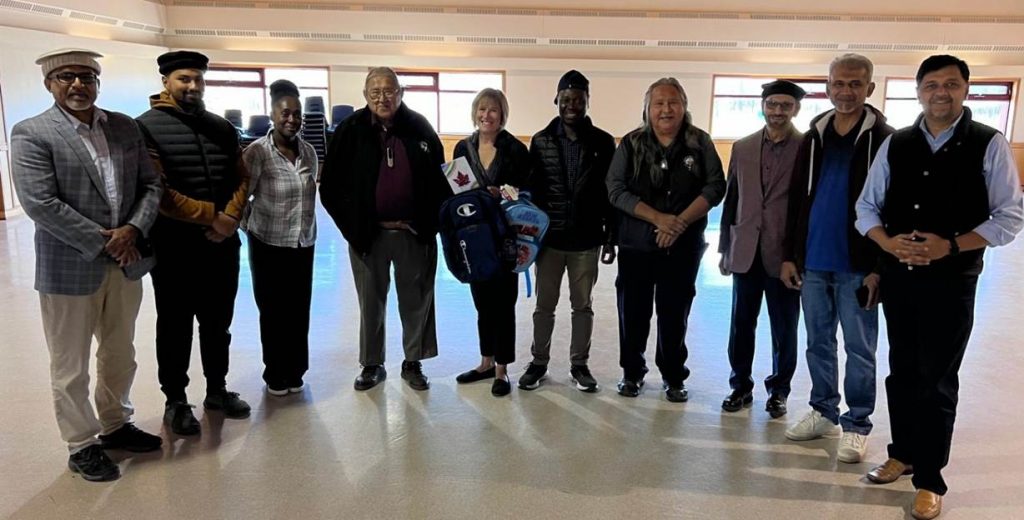
Presentation of School Bags to Principal Deborah Ried of Chief Sunrise Education Centre
6. Hay River, Northwest Territories
The final event of the tour, held on September 23, was focused on Mind, Body, and Spirit – Nurturing Mental Health and Resilience, an issue of growing concern in Hay River after the severe flooding and wildfires. Moderated by Mayor Kandis Jameson, the discussion featured Indigenous elder Roy Fabian and local School Principal and healthcare professionals, who explored how faith and community are key to building resilience. Imam Mozaffar Ahmad Sahib of Yellowknife presented the Islamic teachings and mentioned that most of the mental health issues are caused by unfulfilled materialistic desires. His presentation expounded on the Quranic verse, “Surely, in the remembrance of Allah do hearts find comfort.” (13:29)
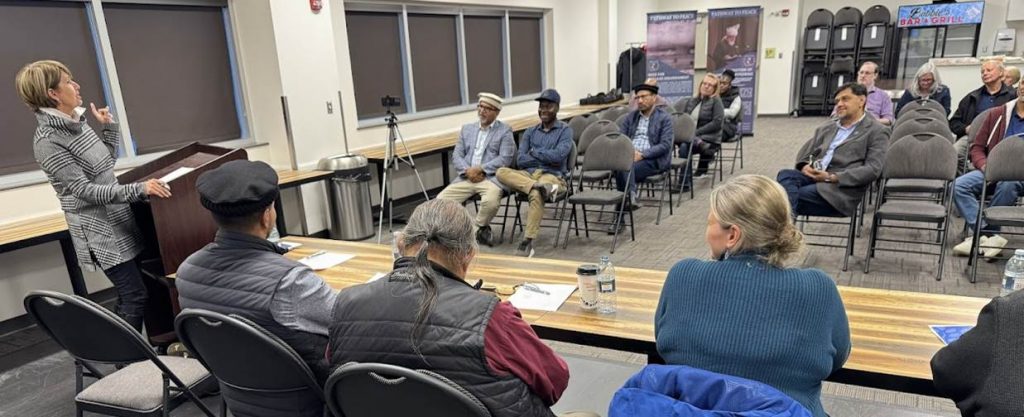
HW Kandis Jameson – Mayor of Hay River, addressing the event
Media Coverage
Being the 15th iteration of these events in northern communities, the tour received significant media attention from all major regional outlets, including CBC North, Cabin Radio, CKLB Radio, Yellowknifer, Radio Taiga, and L’Aquilon. These outlets conducted multiple interviews with organizers and produced in-depth reports on the event, focusing on its community-centred approach and its relevance to ongoing discussions around local issues. The event’s message reached a broad audience through a combination of local radio, digital platforms, print publications, and social media, collectively engaging thousands. This extensive media attention helped to promote the peaceful message of Islam-Ahmadiyyat.
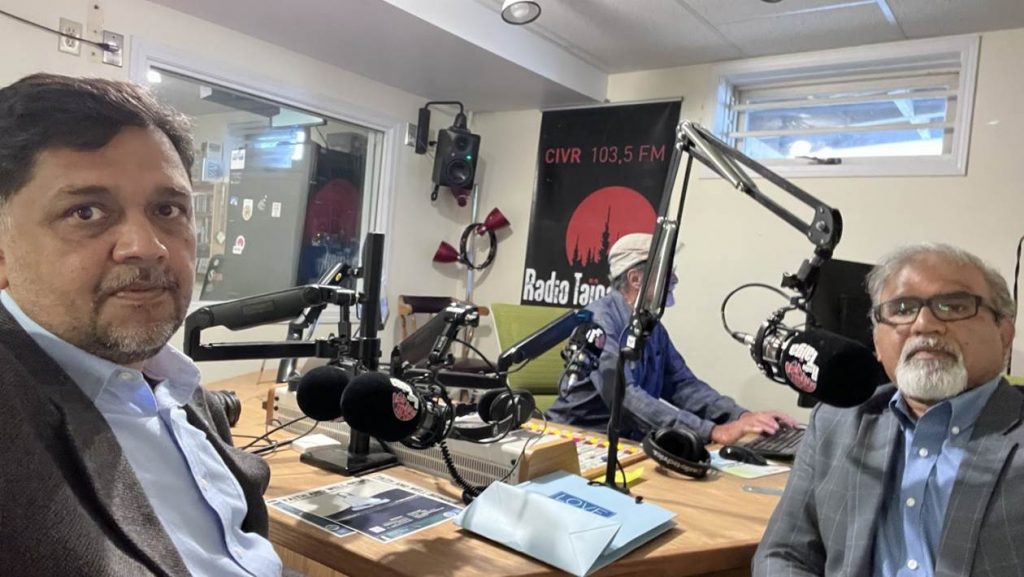
Basheer Islam (right) and Kalim Ahmed are with the local media.
Conclusion
This year’s Northern Tabligh Tour has not only continued its mission of spreading the peaceful message of Islam but has also deepened its impact by addressing relevant and pressing issues. The themes of mental health and truth resonated strongly with local communities, especially in the face of the region’s recent struggles with natural disasters. The 15th iteration of the tour, supported by unprecedented media coverage, stands as a testament to the lasting and meaningful presence of the Ahmadiyya Muslim Jama’at in extreme northern Canada. Through thoughtful dialogue and community engagement, the Jamā’at continues to fulfil the prophecy of spreading peace to the farthest corners of the earth.