
Note: This story is published as originally submitted and has not been edited, as to preserve the author’s intent, voice, and authenticity.
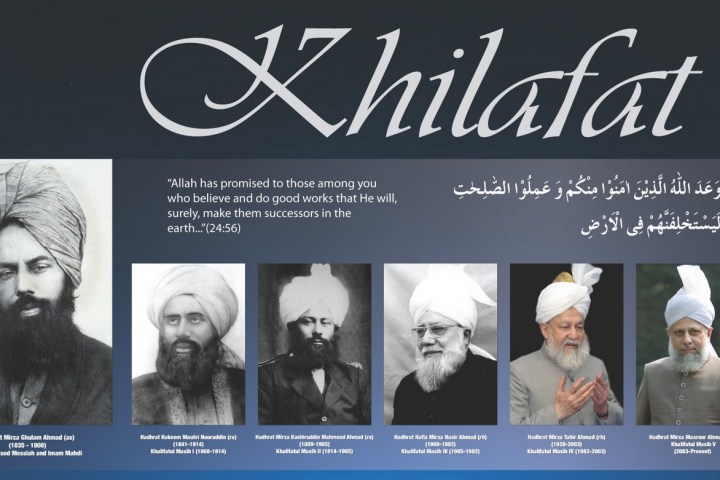
My name is Abdus Salam. I am an Ahmadi by birth, born and raised in Lahore, Pakistan. My parents and grandparents were also Ahmadis from birth, and my great-grand parents were companion of Hazrat Mirza Ghulam Ahmad (AS) of Qadian all were deeply devoted to their faith.
Throughout my life, my family and I have been forced to conceal our beliefs from friends at school, neighbors at home, and colleagues at work. We have always had to attend our religious gatherings in secret. In school, I was forced to sit through Islamiyat classes, listening to teachings that directly contradicted my faith and attacked my beliefs, yet I remained silent, unable to utter a word in my defense.
The religious persecution of my family intensified during my father’s lifetime. He served as an I.T. Manager and Administrator at his company, which had a policy of selecting one employee each year to perform the Hajj pilgrimage. In 2011, my father was chosen for this honor. However, to fulfill the visa and legal requirements, he was required to sign a “Declaration for Muslims.” The document stated:
“I am a Muslim and believe in the absolute and unqualified finality of the prophethood of Muhammad (peace be upon him), the last of the prophets. I do not recognize any person who claims to be a prophet in any sense of the word… I consider Mirza Ghulam Ahmad Qadiani to be an impostor nabi and also consider his followers… to be Non-Muslims.”
Because of his faith, my father refused to sign a declaration that branded his beliefs as “imposter” or “non-Muslim.” This refusal made his Ahmadi identity public. Immediately, his seniors, colleagues, and subordinates launched a malicious and hateful campaign against him. They were determined to drive him out of the company. Their efforts eventually succeeded, and my father was fired solely because of his religion, bringing his 20-year career to an abrupt and unjust end.
The persecution did not stop with his dismissal. My father’s former colleagues tracked him to our neighborhood, telling our neighbors that we were Ahmadis and did not deserve to be treated with humanity. Soon, these verbal attacks turned into death threats.
Within few months, On September 26, 2013, the situation turned fatal. While returning from a visit to his sister’s home, my father was involved in a violent traffic accident under suspicious circumstances. We received a call from the rescue team instructing us to rush to General Hospital Lahore. The medical report was devastating he had sustained severe internal trauma and critical brain injuries. My father fought courageously for three days in the intensive care unit but his brain and internal injuries were too severe for him to survive.
He passed away on September 29, 2013.
The tragedy did not end there. While we were still mourning his death, my mother received a terrifying suspicious phone call. The callers claimed they were responsible for the accident. They told her, “The way we killed your husband, we will do the same to your children.” That phone call destroyed any feeling of safety we had left. It showed us that religious hatred truly has no limits.
Due to the constant threats, my mother decided to move us to her parents’ house. However, the situation there was even worse. My grandfather, Bashir Zeervi, and his older brother, Saqib Zeervi, were very prominent members of the Ahmadi community. Because of their prominence, many strangers began visiting our home and knocking on our door. They were suspicious and kept trying to investigate our real identity, questioning whether we were Ahmadis. Once they confirmed the truth, their curiosity turned into open hatred and hostility. We lived in constant misery, fearing for our lives every single day.
Eventually, the local community president warned us of an immediate danger. He told us there was a high risk of a sudden home invasion or a violent crackdown at the residence. He was especially worried because the house contained a large amount of Ahmadi literature; if we were caught with it, we could have faced severe legal consequences. He advised us to leave at once. We fled to my aunt’s house in Township, Lahore. By this time, we were completely broken emotionally and physically from the trauma of my father’s funeral and the exhaustion of constantly moving. We realized then that in Pakistan, there is no longer a safe place for a known Ahmadi. Left with no other choice, we decided to flee the country.
We contacted a travel agent to secure a visa for any country we could reach quickly. The agent arranged visas for Thailand for the whole family. However, our first attempt to leave on February 2, 2014, failed. Whether because of our faith or the influence of those who persecuted us, we were not allowed to board the plane and were sent back.
For the next week, we lived in total isolation, terrified of what might happen next. We spent that time desperately trying to secure new tickets so we could leave Pakistan alive. Finally, on our second attempt on February 11, 2014, we successfully boarded our flight and reached Thailand.
The Struggle for Refuge in Thailand
When we arrived in Thailand, we were completely alone. At the airport, we had no idea where to go or who to turn to. Fortunately, the local Ahmadi community helped us find an apartment. We filed for asylum and eventually received refugee status, but life did not get easier.
In Thailand, being a refugee is very difficult. You cannot live freely, you are not allowed to work or study, and it is almost impossible to get medical help. Without a legal status, we lived in a state of constant fear and uncertainty. Between the global refugee crisis and the lack of resettlement options, we began to lose hope. The stress took a heavy toll on us, leading to deep depression and health problems.
However, our hope was restored when my aunt and cousin in Canada sponsored us with the help of Humanity First. After years of waiting, I finally passed my background checks and medical exams. After five and a half long years of struggle, we received our tickets to Canada. We arrived on July 22, 2019, just before the pandemic began.
A New Beginning in Canada
After arriving in Canada, my aunt, cousins, and relatives along with the invaluable support of Humanity First helped us begin our new lives. Most importantly, the local Ahmadiyya community helped us resettle in Bradford, Ontario. They assisted us with every detail, from getting a SIM card and opening a bank account to finding a family doctor and furnishing our home. They taught us how to use the transit system and introduced us to the local and national community.
Beyond the help of Allah, none of this would have been possible without them. My local community president even personally helped me obtain my driver’s license. I worked hard, moving from one job to the next, and I am now proudly working at Air Canada Cargo. I am a Canadian citizen and a taxpayer who respects all rules and regulations. I am a responsible member of this society, and what makes me happiest is that I can finally live freely.
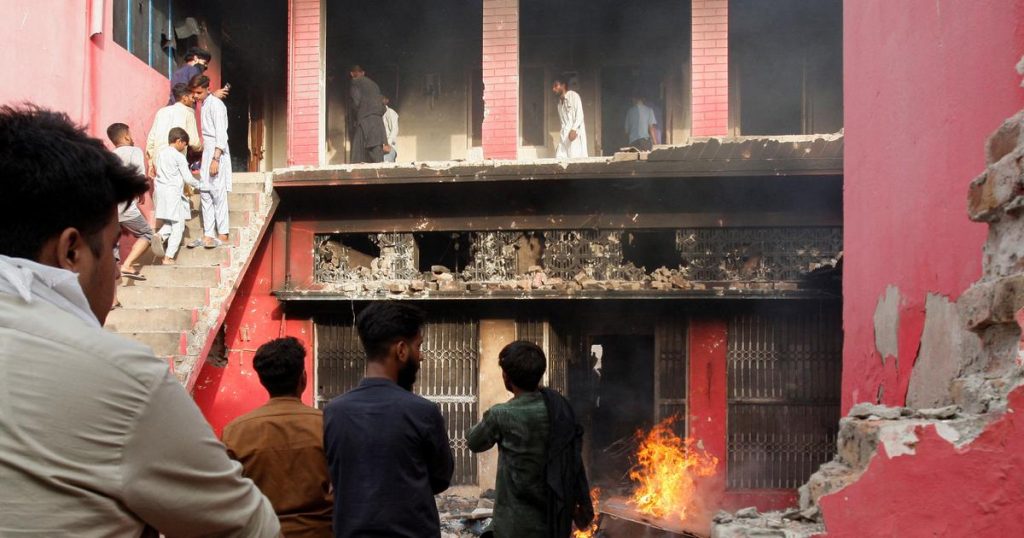
In Canada, I can attend our religious events and the annual Jalsa Salana without fear. I can study my faith, read our literature, and greet anyone openly. Looking back, I know the decision my family made 12 years ago was worth it. The situation in Pakistan has only grown worse for Ahmadis; our mosques are being destroyed, students are being expelled from schools, and many are being killed or imprisoned under false charges.
With the global refugee crisis and the closure of many sponsorship programs, hope is fading for many others. I feel incredibly blessed to be where I am today, living a life of peace, safety, and purpose.
Note from Editors:
Persecution of the Ahmadiyya Muslim Community is a systematic and widespread phenomenon. It is most prominently institutionalised in Pakistan, but also occurs in several other Muslim-majority nations, including Algeria, Indonesia, and Bangladesh. This persecution stems from theological disputes over the finality of prophethood, which have led many mainstream religious groups to declare Ahmadi Muslims as heretics or non-Muslims.