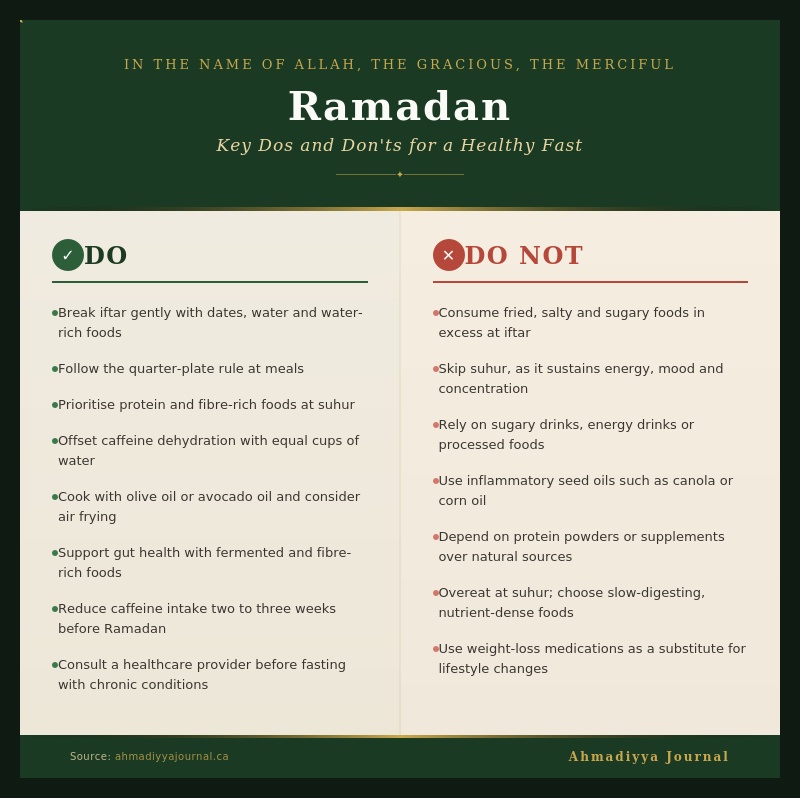
Do:
- Begin iftar with dates, water and water-rich foods such as fruit, soup and salads to gently rehydrate the body.
- Follow the quarter plate rule at meals, filling half the plate with vegetables, one quarter with whole grains and one quarter with protein.
- Prioritize protein and fibre-rich foods at suhur, such as eggs, oatmeal, Greek yogurt, chia seeds and nut butters, to sustain energy.
- Drink a cup of water for every cup of tea or coffee to offset caffeine-related dehydration.
- Use olive oil or avocado oil for cooking, and consider air frying as a healthier alternative to deep frying.
- Incorporate fermented foods such as yogurt and fibre-rich vegetables to support gut health and immunity.
- Begin reducing caffeine intake two to three weeks before Ramadan to minimize withdrawal headaches.
- Consult a healthcare provider before fasting if managing chronic conditions or prescription medications.
Do not:
- Consume fried, salty and sugary foods in excess at iftar, as these burden the heart, spike blood sugar and cause energy crashes.
- Skip suhur, as it plays a key role in maintaining energy, mood and concentration throughout the fasting day.
- Rely on sugary drinks, energy drinks or processed foods to break the fast.
- Use inflammatory seed oils such as canola or corn oil for regular cooking.
- Depend on protein powders or supplements when natural protein sources are available, particularly for youth.
- Overeat at suhur in the belief that larger meals will sustain energy longer; slow-digesting, nutrient-dense foods are more effective.
- Use weight-loss medications such as Ozempic as a substitute for lifestyle modifications, including diet and exercise.
Compiled from the Pre-Ramadan Webinar held on February 8, 2026