Dear respected brothers,
Assalamu Alaikum Warahmatullahi Wabarakatuhu.
Welcome to the online version of our second Tajneed Conference. I appreciate that you have taken time out of your schedules and made the effort to attend this program. May Allah, the Almighty, bless your efforts, your sense of responsibility and your commitment to the Jamaat. May He grant you immense benefits through this gathering. Ameen.
We have gathered here today with a clear and practical objective. First, we want to benefit from the guidance provided by Syedna Hazrat Khalifatul Masih (aa) that is related to Tajneed. Second, we want to understand why a comprehensive system of Tajneed is essential. Third, we want to reflect on how the system should function. And fourth, to consider the practical steps required to keep Tajneed accurate, complete and up to date.
To appreciate the importance of Tajneed, I would like to take you back to March 1889, a defining moment in the history of the Jamaat. This was the moment when the Promised Messiah (as) was divinely instructed to take Bai’at and formally establish the Jamaat. Just before the first Bai’at, that is Bai’at al-Ula, he published a short but profoundly significant tract titled Guzarish-i-Zaruri, meaning “An Important Request.” In this announcement, addressed to those who intended to enter into Bai’at, the Promised Messiah (as) referred to a Quranic verse: “He united your hearts in love, so that by His grace, you became as brothers.” He then explained how this unity was to be nurtured and preserved.
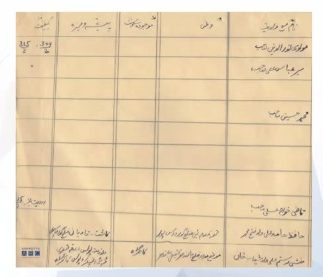
Hazrat Masih Maud (as) wrote: “It has occurred to me that some benefits and advantages of the Bai’at that are destined for you are subject to having your name along with your father’s name, your permanent and temporary address and if possible, your background written in a book.”
Huzoor (as) further stated: “Once a considerable number of names have been recorded, a list should be prepared, printed and sent to everyone who has pledged allegiance.” And then he clarified the deeper purpose behind this system. Huzoor (as) said: “This system through which a large group of righteous individuals will be woven together in collective unity will become manifest before all mankind.” And Huzoor (as) continued: “Through this means, those who have pledged allegiance shall very swiftly become acquainted with one another. They shall remember one another in absentia through benevolent prayers, and they shall be ready to extend sympathy to one another on every occasion and in every circumstance.”
From this foundational guidance, it becomes crystal clear that the Promised Messiah (as), under divine direction, envisioned a systematic, organized and living record of the members of the Jamaat. What began as a handwritten register evolved, by the grace of Allah, into the comprehensive system we now call Tajneed.
Alhamdulillah, this system is not merely administrative. It is spiritual. It is organizational, and it is foundational to the Nizam-e-Jamaat. But why does it matter today?
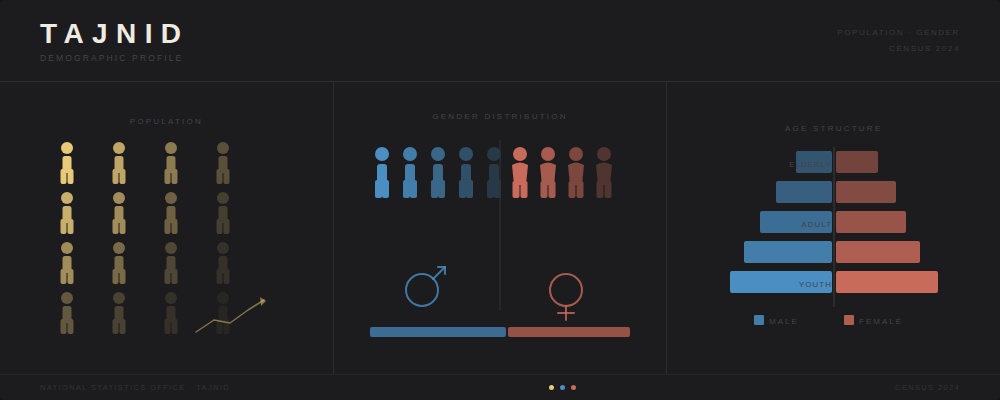
We live in a data-driven world. Every effective organization, whether commercial or non-commercial, relies on accurate, current and reliable data to plan, to grow and to serve. For the Jamaat, Tajneed is our data. It is not the data of one department. It is the data of the entire Jamaat.
Now consider: when the Tajneed is accurate, Tarbiyat can reach the right members. Tabligh can engage the maximum number of members in their programs. Talim programs can be planned effectively. Maal can prepare realistic budgets. Talimul Quran initiatives can be targeted properly, and national and local events can be organized efficiently.
When the Tajneed is outdated or incomplete, its impact is felt across all departments. Consider the example of Tarbiyat programs that are carefully prepared at Markaz and conveyed to the national and local Jamaat for implementation. However, if member information is inaccurate, addresses are outdated, family information is incomplete or age groups are misclassified, then even well-designed initiatives lose effectiveness. In such cases, effort is made, but results remain limited at best.
In this sense, Tajneed can be described as the first thread in the fabric of the Nizam-e-Jamaat. If this thread is weak, the entire structure is affected.
Those of you present today, serving as General Secretaries or Assistant Secretaries Tajneed, have an important responsibility. At the local level, your role directly supports the functioning of the Nizam by ensuring that accurate and verified information is available.
Another point which I would like to highlight is the importance of personal contact and relationships with members of the Jamaat. In recent times, we have come to rely heavily on technology and alternative digital means of communication. While technology is undoubtedly beneficial, overreliance on it, especially for collecting and verifying member data, can be problematic. Digital systems should support our work but not replace our personal effort. Accurate Tajneed cannot be achieved through system-generated information alone. It requires direct engagement at the grassroots level.
In one of his meetings, Hazrat Khalifatul Masih (aba) emphasized that Tajneed should not rely solely on system-generated information. He stated: “It is not correct to rely solely on AIMS. Do your own hard work.” Huzoor (aba) further advised that our task is to go door to door and verify. Collect the Tajneed at the grassroots level and then update it.
This guidance should serve as a strong motivation for all of us to prioritize personal contact, verification and responsibility in our Tajneed work. Although this guidance was given to Khuddamul Ahmadiyya UK some time back, all instructions of Hazrat Khalifatul Masih (aba) apply to us all, wherever they are given, whenever they are given.
In conclusion, I encourage all of us to approach the Tajneed with due care and seriousness, recognizing its essential role in supporting the broader objectives of the Jamaat. For without the Tajneed, we fail at achieving the lofty goals Sayyidna Hazrat Masih Maud (as) laid out at the outset, back in March 1889, where he wanted us all, under Quranic instruction, to become as brothers.
May Allah bless your efforts, accept your services and enable us all to contribute positively to the progress of the Jamaat of the Promised Messiah (as). Ameen.