The Holy Qur’an tells us why Allah divided humanity into nations and tribes. It was not so that one people might rule another, but so that they might come to know one another.[1] It is a hopeful verse. It assumes that people who begin as strangers can end as neighbours.
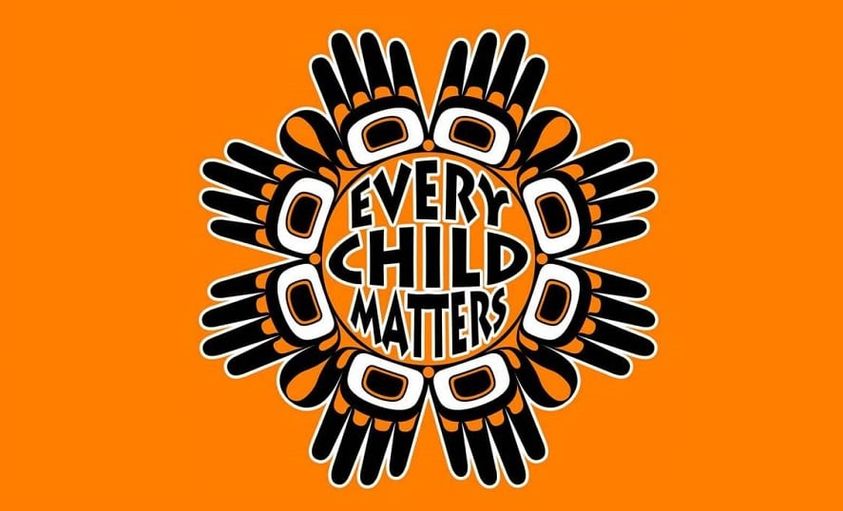
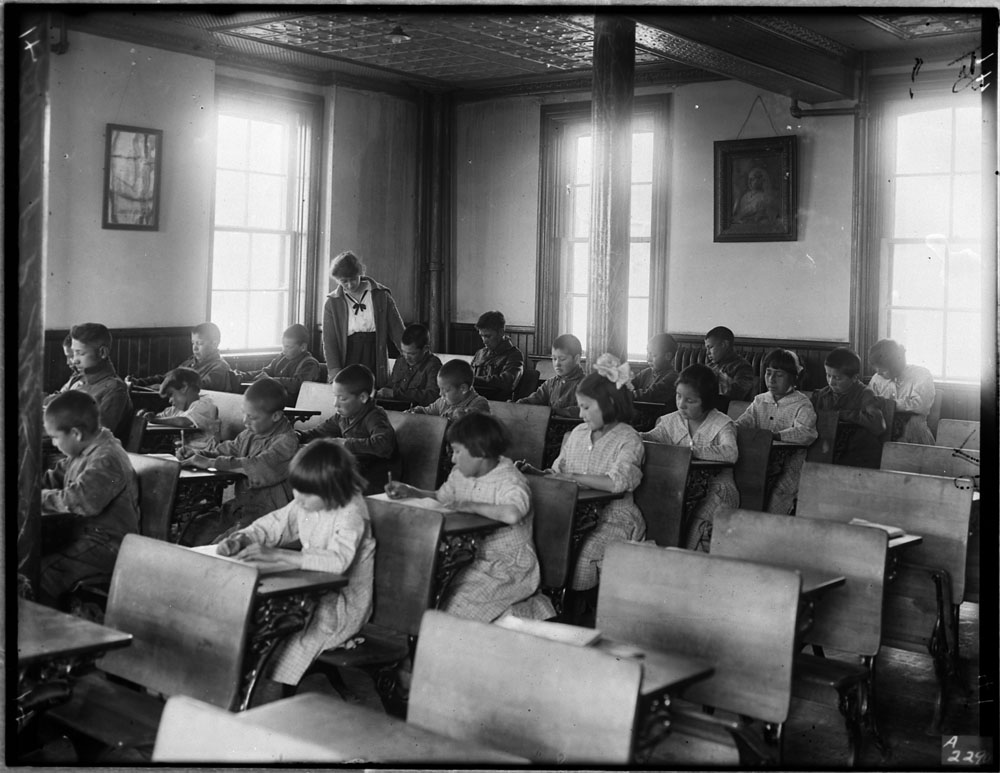
This September 30th, Canadians mark the National Day for Truth and Reconciliation, a day built on that same hope. Its name also sets an order. For more than a century, the residential school system separated over 150,000 Indigenous children from their families and communities.[2] Many of them never came home. Before strangers can become neighbours, that truth has to be heard. The Holy Qur’an asks for the same order, truth first and reconciliation after, and the life of the Holy Prophet (sa) shows how it is lived.
What lay beneath
People often say the residential schools grew out of a belief that one people stood above another. The belief was real, but it did the work of a cover story. After six years of research, the Truth and Reconciliation Commission of Canada concluded that the government had pursued the policy to free itself of its legal and financial obligations to Indigenous peoples and to gain control of their land and resources.[3]
The cover story was centuries old. In 1452, Pope Nicholas V issued Dum Diversas, authorising the King of Portugal to reduce Saracens, meaning Muslims, along with pagans and other unbelievers, to perpetual slavery.[4] Later decrees extended the same claim to the lands of the Americas, and together they came to be known as the Doctrine of Discovery. In 2023 the Vatican formally rejected it, acknowledging that those decrees did not reflect the equal dignity and rights of Indigenous peoples.[5] The first people named in the first of those decrees were Muslims.
A wrong done for gain needs a reason, and the reason soon needs another. Once people start believing themselves to be more intelligent than another, they start believing that their civilisation is far superior to the others. Then, they justify that God Himself has approved their conduct. Each reason makes the next taking easier.
The Holy Qur’an leaves none of them standing. The same verse that speaks of nations and tribes ends by naming the only honour that counts before Allah, which is righteousness.[1] The property of others is not to be consumed by any means, especially false ones.[6]
The order the Qur’an sets
Before there can be healing, someone must be allowed to speak. Allah does not like evil to be spoken of openly, the Qur’an says, except by one who has been wronged.[7] A survivor who describes what happened in a residential school is not disturbing the peace. That testimony is a right Allah Himself has protected, and the first duty of everyone else is to listen.
The harder duty falls on those who did not suffer. Believers are to stand firm for justice as witnesses for Allah, even when the truth is against themselves, their parents or their kin.[8] They are to remain just even towards a people they dislike.[9] Telling the truth about strangers costs nothing. The verse asks for the truth about our own families and our own nation.
A wrong done in his name
The Holy Prophet (sa) had sent Hazrat Khalid bin Walid (ra) to Banu Jazimah to invite them to Islam, not to fight them.[10] Through haste and an error of judgement, prisoners from the tribe were killed. Hazrat Khalid (ra) had no evil intention,[11] and the Muhajirin and Ansar who were with him refused to kill the prisoners in their charge.[10]
When the news reached the Holy Prophet (sa), he raised both his hands and said twice, “O Allah, I absolve myself from whatever Khalid has done!”[10][12] Then he sent Hazrat Ali (ra) to the tribe. For every person who had been killed, Hazrat Ali (ra) paid the blood money. For every belonging that had been taken, he paid its worth, down to the wooden bowl from which a dog had drunk. When all of it was settled and some money remained, he handed that over as well, in case there was a loss that nobody had yet named.[10][13] Only after that, and after his apology, was Hazrat Khalid (ra) forgiven.[10][11]
The disavowal came first, spoken openly before Allah. The payment came next, carried to every household. Forgiveness came last.
In 2008, the Prime Minister of Canada made a formal apology to former students of the residential schools on behalf of the Government of Canada.[2] The apology has been spoken. What remains is much larger. Still unfinished. What remains is the slow, practical work of repair with each community and each family affected.
The mercy of Mecca
For years the Quraish of Mecca had tortured the Holy Prophet (sa) and his followers and driven them from their homes.[14] When he returned to the city in victory, he asked them how they thought he would deal with them.[14][15] They stood before the man they had driven out and waited for his answer.
He responded in the words of Hazrat Yusuf (as), “No blame shall lie on you this day”,[16][17] and told them they were free.[15]
The mercy was his to give because the injury had been his to bear. The Holy Qur’an praises forgiveness that brings about real reform.[18] Reconciliation has two sides. Those who did wrong must admit it and repair what can be repaired. Those who were wronged hold the gift of forgiveness. Islam holds this gift of forgiveness in the highest regard, and the Holy Prophet (sa) gave it more fully than anyone, before or since. Yet it remains a gift and never a debt. Nobody else can offer it on behalf of those who were hurt, and nobody has the right to demand it of them.
Other nations have arrived at the same place through harder roads. After apartheid, the Truth and Reconciliation Commission in South Africa granted amnesty only to those who made a full disclosure of their political crimes.[19] The price of a fresh start was the whole truth. The Commission in Canada said much the same, describing reconciliation as awareness of the past, acknowledgement of the harm, atonement for its causes, and a real change in behaviour.[20]
“But we were not there”
Many Muslims in Canada arrived long after the last residential school closed, and some ask a fair question. Why should we answer for wrongs that were done before we came?
Islam answers part of that question. No soul bears the burden of another.[21] Nobody is guilty of a sin their grandparents committed, and still less of a sin committed by strangers long before they arrived.
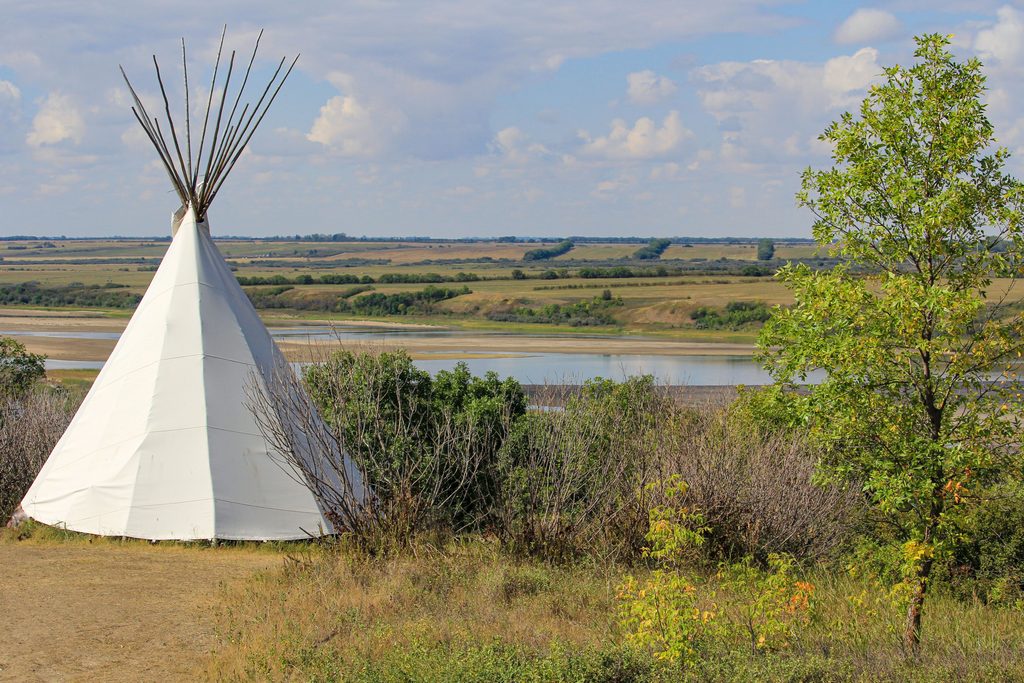
Guilt does not pass down, but benefit does. Every newcomer who settles in Canada builds a life on land that was opened through treaties, some of them never honoured. The Commission asked that newcomers be taught this history.[22] Since 2021, every new citizen has sworn to observe the laws of Canada, including the Constitution that recognises and affirms the Aboriginal and treaty rights of First Nations, Inuit and Métis peoples.[23]
The Holy Prophet (sa) did not kill anyone at Banu Jazimah, yet because it was done in the name of Islam, he owned it and paid for it. We, the Canadian Ahmadi Muslims, did not build the residential schools. We have taken the name of this country as our own, and with it a share of what it was built upon. It is part and parcel of collective civil duty to undo the harm done by the settlers.
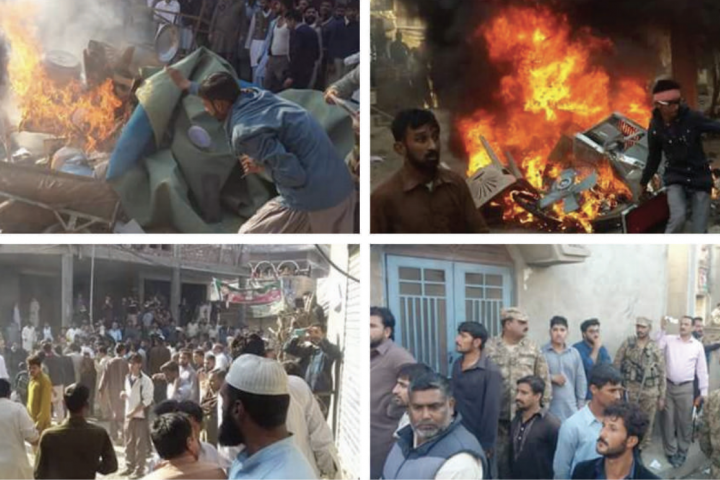
Many Ahmadi Muslim families are in Canada because of what happened in Pakistan in 1974, when the state took it upon itself to decide on our behalf whether we were Muslim or not.[24] We know what it is for a state to decide who you may be and what you may call yourself. That memory should make us better listeners. It should never become a comparison.
What does this mean?
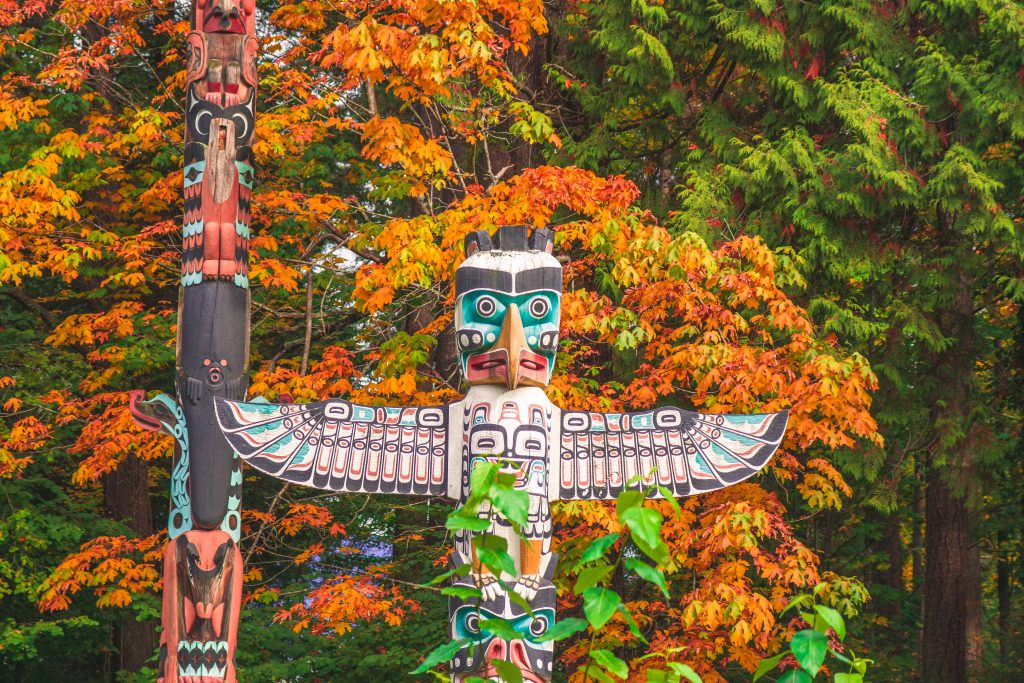
On this day, the word forgiveness belongs to Indigenous peoples, to offer if and when they choose. Our part is to listen, to learn the true history of the land on which our mosques now stand, and to stand with those who were hurt.
The Holy Prophet (sa) was the most forgiving of all people, and he never used forgiveness to step around the truth. On 30 September, may we follow his example and let the truth come first.
References
- The Holy Qur’an [Al-Hujurat, ch.49:v.14]. https://readquran.app/49:14
- Government of Canada, Statement of Apology to Former Students of Indian Residential Schools, 11 June 2008. https://www.rcaanc-cirnac.gc.ca/eng/1100100015644/1571589171655
- National Centre for Truth and Reconciliation, “Remembering the Truth and Reconciliation Commission of Canada Closing Ceremony”. https://nctr.ca/exhibits/remembering-the-truth-and-reconciliation-commission-of-canadas-closing-ceremony/
- Courthouse Libraries BC, “Doctrine of Discovery”. https://www.courthouselibrary.ca/how-we-can-help/our-legal-knowledge-base/doctrine-discovery
- Vatican News, “Church defends Indigenous peoples. Doctrine of Discovery was never Catholic”, 30 March 2023, reporting the Joint Statement of the Dicastery for Culture and Education and the Dicastery for Promoting Integral Human Development. https://www.vaticannews.va/en/vatican-city/news/2023-03/vatican-formally-repudiates-doctrine-of-discovery.html
- The Holy Qur’an [Al-Baqarah, ch.2:v.189]. https://readquran.app/2:189
- The Holy Qur’an [Al-Nisa, ch.4:v.149]. https://readquran.app/4:149
- The Holy Qur’an [Al-Nisa, ch.4:v.136]. https://readquran.app/4:136
- The Holy Qur’an [Al-Ma’idah, ch.5:v.9]. https://readquran.app/5:9
- Hazrat Mirza Masroor Ahmad (aba), Friday Sermon, 15 August 2025, Muhammad (sa), The Great Exemplar. https://www.alislam.org/friday-sermon/2025-08-15.html
- Hazrat Syed Zain-ul-Abideen Waliullah Shah Sahib (ra), Sahih al-Bukhari, Translation and Commentary, Vol. 9, pp. 193 to 199 (as cited in reference 10).
- Sahih al-Bukhari, Kitab al-Maghazi, Hadith 4339 (as cited in reference 10).
- Ibn Hisham, Al-Sirah al-Nabawiyyah, Dar Al-Kotob Al-Ilmiyah, Beirut, p. 756 (as cited in reference 10).
- Hazrat Mirza Masroor Ahmad (aba), Friday Sermon, 4 July 2025, summary by The Review of Religions. https://www.reviewofreligions.org/47054/friday-sermon-summary-4th-july-2025-the-victory-of-makkah/
- Ibn Hisham, Al-Sirah al-Nabawiyyah, Dar Al-Kotob Al-Ilmiyah, Beirut, p. 744, as cited in the full text of the 4 July 2025 sermon. https://www.alhakam.org/friday-sermon-4-july-2025
- The Holy Qur’an [Yusuf, ch.12:v.93]. https://readquran.app/12:93
- Al-Baihaqi, Al-Sunan al-Kubra, Vol. 9, p. 200, Hadith 18275 (as cited in reference 15).
- The Holy Qur’an [Al-Shura, ch.42:v.41]. https://readquran.app/42:41
- South African History Online, “Truth and Reconciliation Commission (TRC)”. https://www.sahistory.org.za/article/truth-and-reconciliation-commission-trc-1995
- Anglican Journal, “Residential schools a form of cultural genocide, says TRC report”, June 2015. https://anglicanjournal.com/residential-schools-a-form-of-cultural-genocide-says-trc-report/
- The Holy Qur’an [Al-An’am, ch.6:v.165]. https://readquran.app/6:165
- Crown-Indigenous Relations and Northern Affairs Canada, “Newcomers to Canada”, Truth and Reconciliation Commission Calls to Action 93 and 94. https://www.rcaanc-cirnac.gc.ca/eng/1524506203836/1557512859985
- Ontario Council of Agencies Serving Immigrants, statement on the new Oath of Citizenship, 23 June 2021. https://ocasi.org/node/907
- Fazal Masood Malik and Farhan Khokhar, “The Wall That Did Not Break”, Parts 1 to 4, Ahmadiyya Journal, 6 to 9 September 2026.