Maple, Ontario, 5 and 6 September 2026
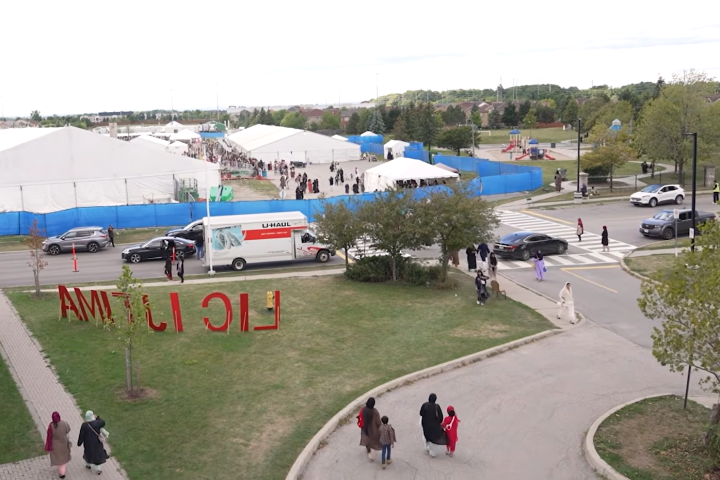
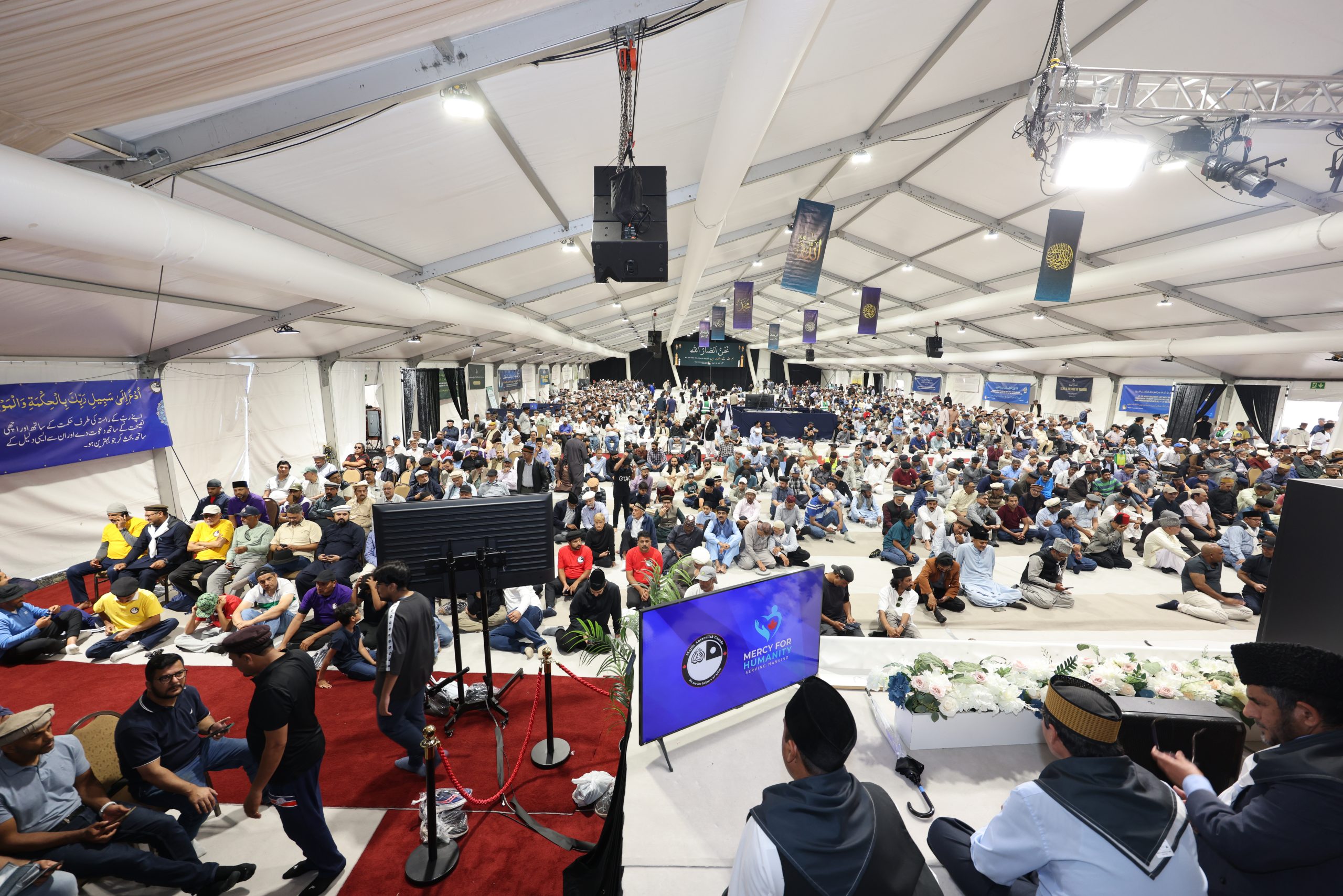
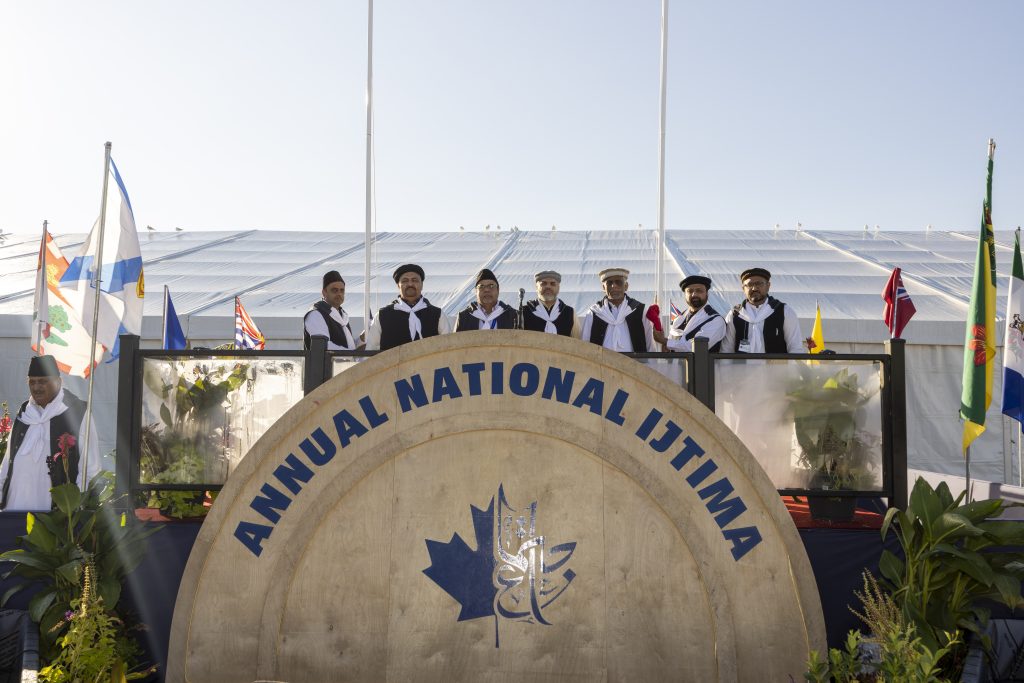
More than 3,300 members of Majlis Ansarullah Canada gathered at the Baitul Islam Complex in Maple, Ontario, on 5 and 6 September 2026 for their 39th National Ijtima. Registration recorded 3,336 Ansar and 186 guests, bringing total attendance to 3,522.
The two days returned again and again to one central theme, that the elders of the community must reform themselves first if they are to anchor their homes. Between sessions, the grounds filled with sports, long-distance cyclists and volunteers preparing for the day ahead.
Opening
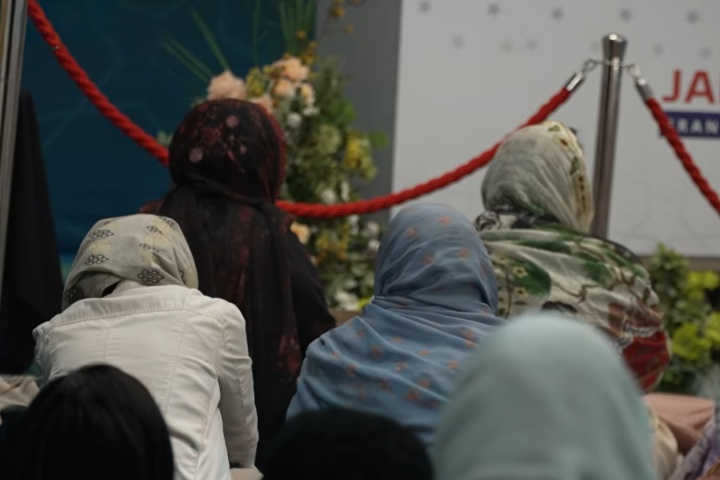
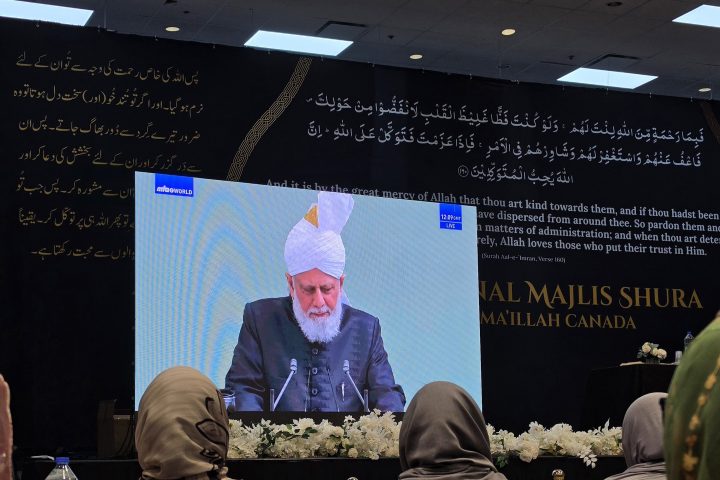
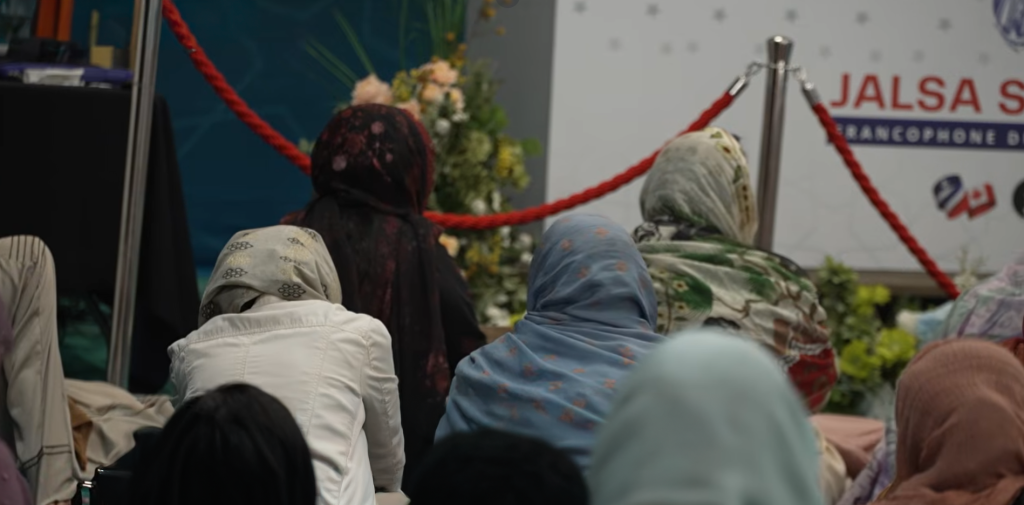
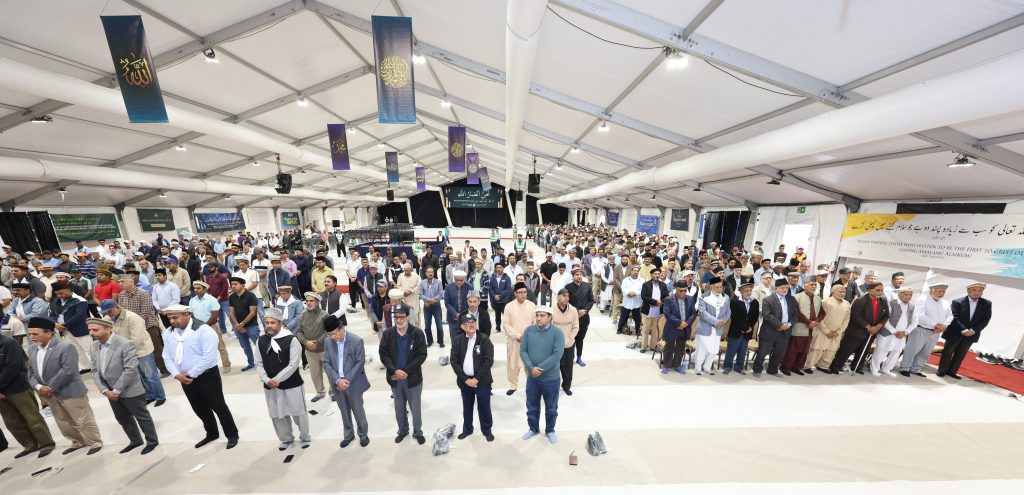
The Ijtima opened in the main marquee, placed temporarily on the grounds of Baitul Islam, on Saturday morning with a recitation from Surah Al-Nur and the Ansar pledge (ahd). Sadr Ansarullah Shahid Mansoor Sahib then read, in Urdu and English, a special message from Hazrat Khalifatul Masih V (aba) to the Ijtima. Over the weekend, attendees also gathered in the marquee to watch, live via MTA, the addresses of Huzoor (aba) at the 50th Jalsa Salana Germany.
Candid talk about the home
In a special session on Saturday afternoon, Sadr Sahib spoke honestly and openly about parenting, marriage and the emotional life of the home. He described two families facing the same problem: a teenage son drawn into a relationship outside marriage. The first family, with little religious grounding, found itself helpless. The second spoke to their son with candour and empathy, drawing on Islamic principles, and guided him away from the relationship without shutting him out.
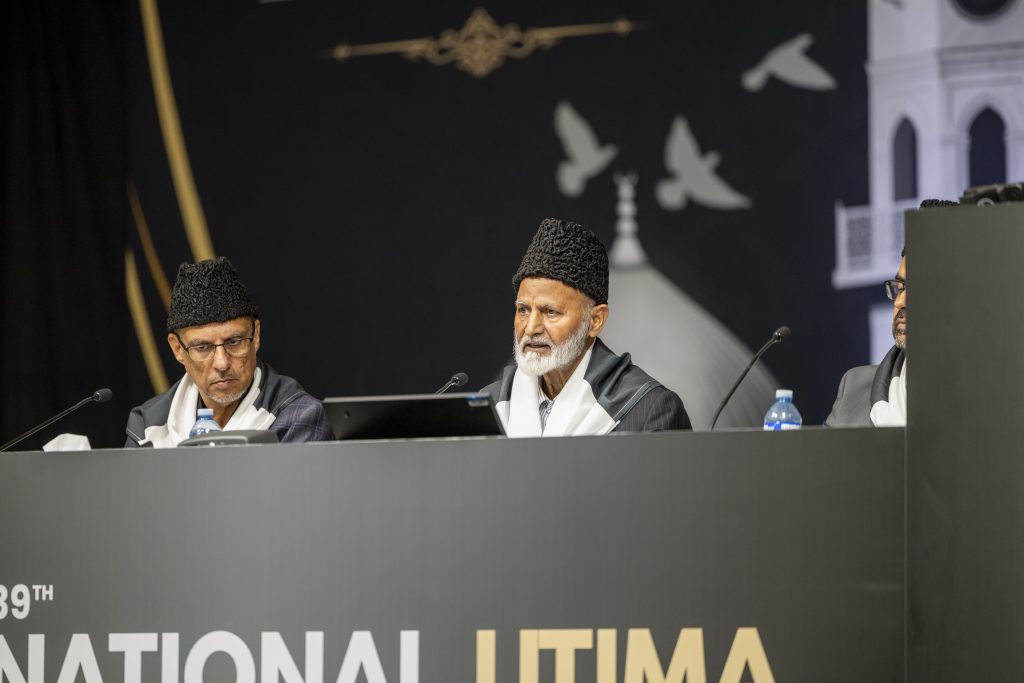
Sadr Sahib warned that possessiveness over children can become a form of shirk, associating partners with Allah. He recalled the account of Hazrat Mufti Fazl-ur-Rahman Sahib (ra), a companion of the Promised Messiah (as), whose young son died after a long fever. The Promised Messiah (as) later told him that his love for the child had reached the level of associating partners with God, and assured him that God would grant him other children. Five sons were later born to him, and all lived long lives. Huzoor (aba) related the same account in his Friday Sermon of 10 April 2026.
He urged elders to stop burdening young couples with extravagant wedding customs and constant interference, and asked fathers to build calm homes where words are gentle. Sadr Sahib closed the session by reminding Ansar of three prayers Huzoor (aba) has asked them to recite, one hundred times each. They are durood sharif, invoking blessings on the Holy Prophet (sa); istighfar, in the words astaghfirullaha rabbi min kulli dhambin wa atubu ilaih (I seek forgiveness from Allah, my Lord, for all my sins and turn to Him); and a prayer for protection, rabbi kullu shai’in khadimuka, rabbi fahfazni wansurni warhamni (O my Lord, everything serves You. O my Lord, protect me, help me and have mercy on me).
Workshops
Later that afternoon, a workshop titled Parenting in the Age of AI and Social Media, presented by Mirza Tahir Ahmad Sahib and Faraz Ahmed Sahib, took up the same concern from another direction. The presenters described what social media is doing to young people, from constant comparison and shrinking attention spans to peer pressure, harmful content and a growing dependence on likes. They advised parents to know which apps their children use, to set clear family rules on screen time, and to keep devices out of bedrooms at night. Seen through an Islamic lens, they said, life online calls for the same modesty (haya) in speech and imagery as life offline, and the same care to avoid backbiting (ghibah).
On artificial intelligence, the presenters weighed its value for learning, writing and explaining difficult ideas against its risks, among them cheating, intellectual laziness, false information and the harvesting of data from minors. They proposed simple household rules. Children should not use AI for schoolwork in secret. Parents should try the tools themselves first. Children should attempt their work on their own before turning to AI, and should be able to explain in their own words what they learned from it. Their closing advice was to anchor children offline through the Jama’at, the mosque, sports, books and family time, and to put character building ahead of surveillance.

A session on Rishta Nata, Issues and Their Solutions, organised by Qiadat Tarbiyat, presented the work of the national Rishta Nata department of the Jama’at, which helps members find suitable matches for marriage. It now holds 7,689 profiles from 62 countries, up from 27 countries in 2014, and active profiles have risen from 835 in 2014 to 2,018 this year. Since the launch of a new website in 2023, with self-serve profile exchange and greater control for members over who sees their profile, new registrations have grown from 29 to 75 a month and proposed matches from 200 to 1,200 a month. More than 1,700 profiles are now shared each month, and 1,683 candidates have been successfully matched.
The Saturday programme also included an interactive session titled Safeguarding Our Future Generation, and workshops on Nizam-e-Wasiyyat and Nizam-e-Nau, organised by Saf-e-Dom, retirement planning, and government services for seniors.
Sports, cyclists and volunteers
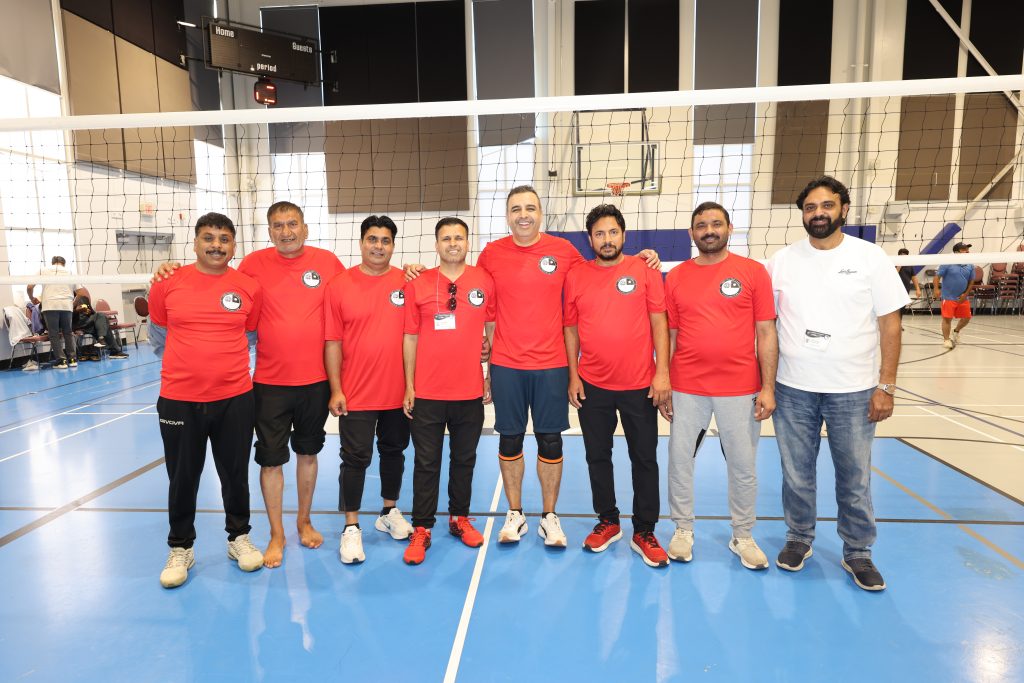
Outside the marquees, teams competed in 19 sports events across Ahmadiyya Park, Teston School Field and Tahir Hall, among them cricket, volleyball, tug-of-war, basketball, table tennis, athletics and golf. Toronto West won the Tier 1 cricket final, and Peace Village Muqami took the tug-of-war title. Older Ansar took part in brisk walking and observation competitions, while members of Saf-e-Dom played basketball and ran the 4x100m relay.
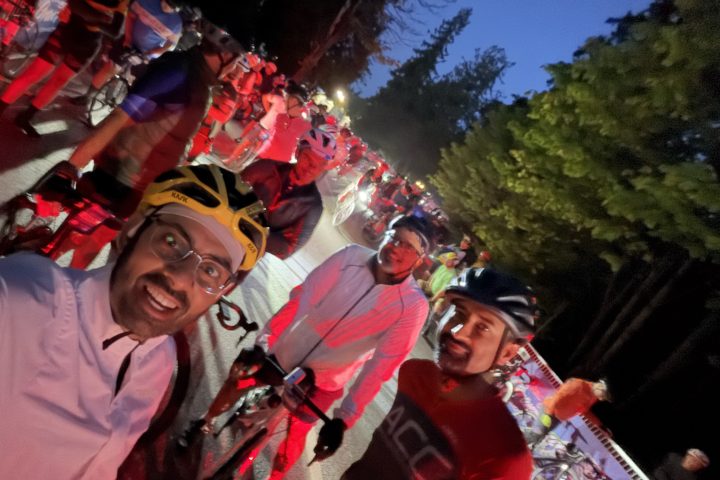
Forty-nine cyclists rode to the Ijtima as part of the Cycle Safar to National Ijtima. Among them was a group of eight who covered 470 kilometres from Ottawa.
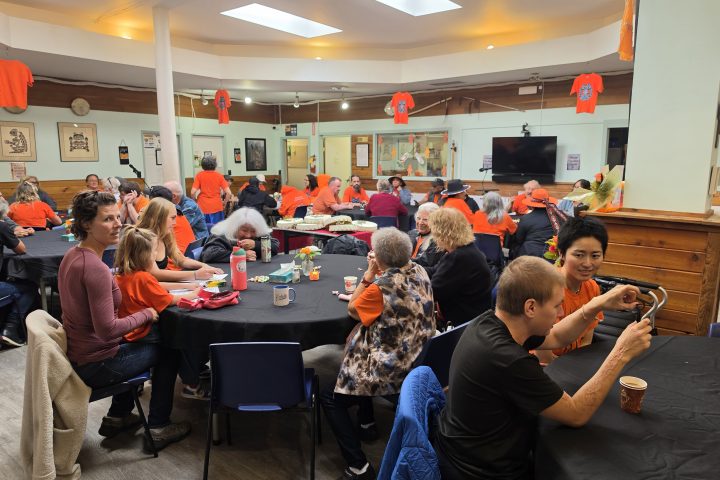
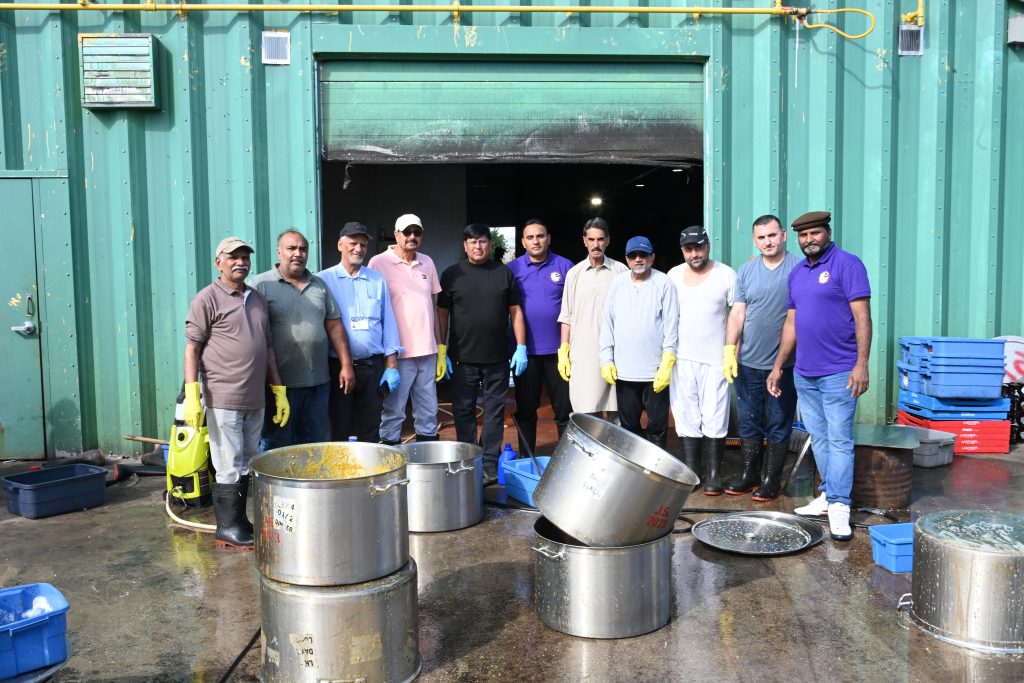
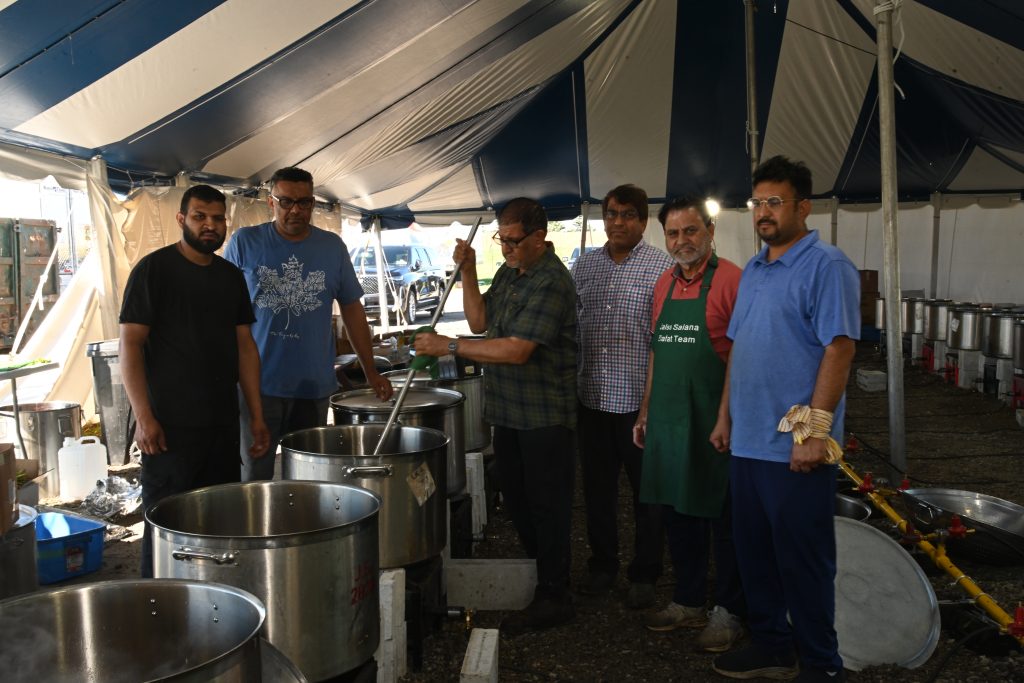
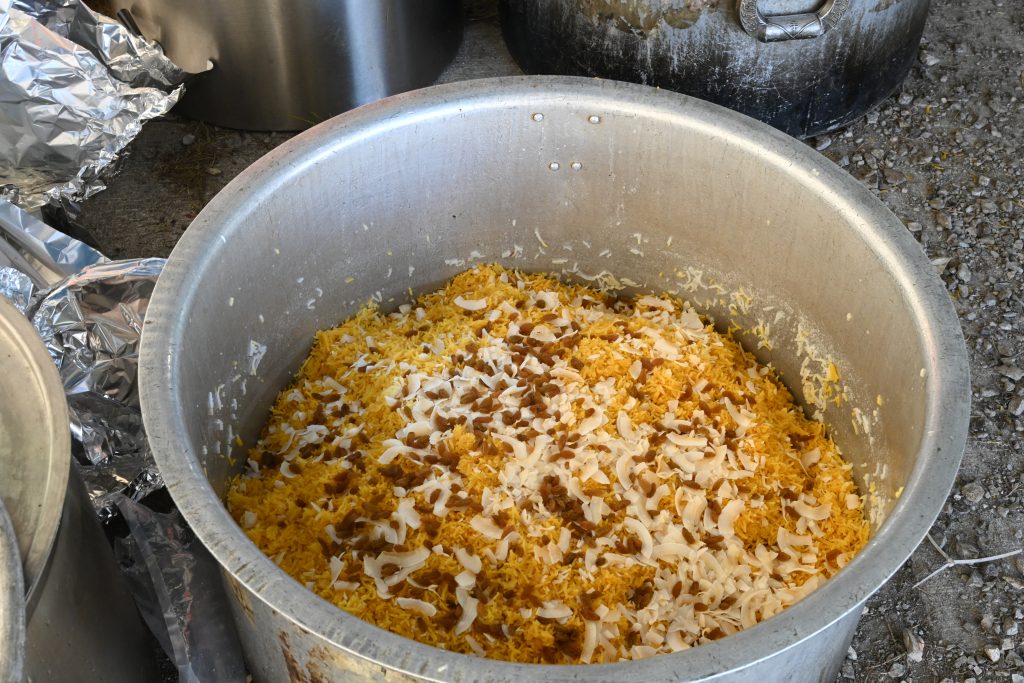
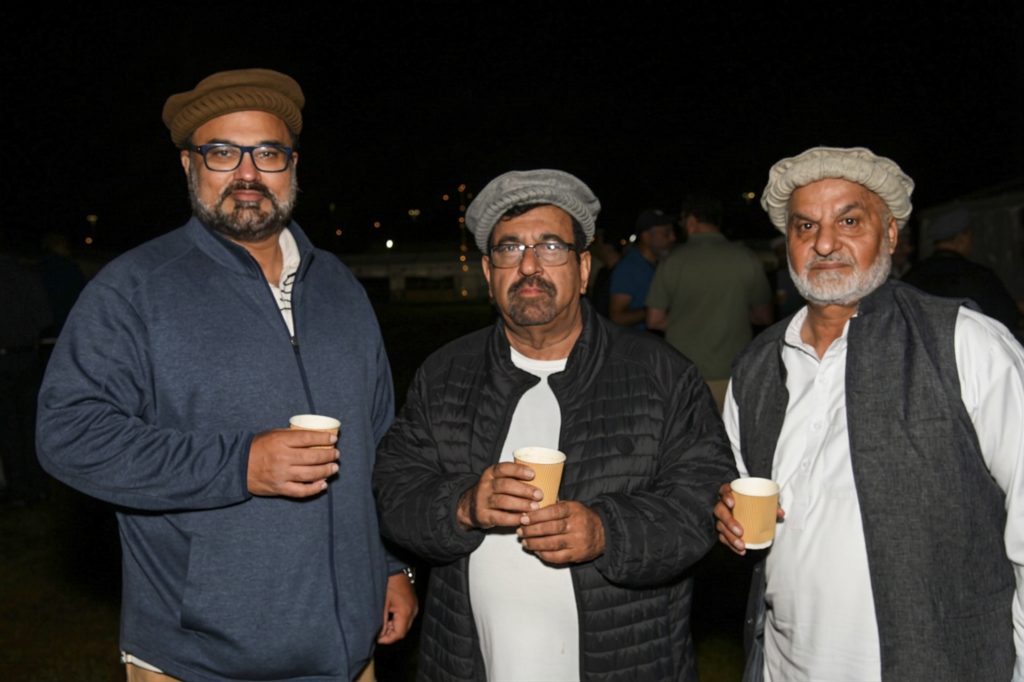
More than 500 volunteers and 66 nazimin kept the event running from various stations. Each morning at 6 a.m., after Tahajjud and Fajr, long lines formed for hot tea and eggs, and full meals followed through the day.
Among the attendees was Mirza Mohammad Arshad Khalid, who said he had lived in Rabwah for 15 years and had prayed ever since the 1983 Jalsa Salana for the chance to gather in this way again. At the Ijtima in Canada, he said, those memories had returned and the desire of his heart had been fulfilled.
Mercy for Humanity
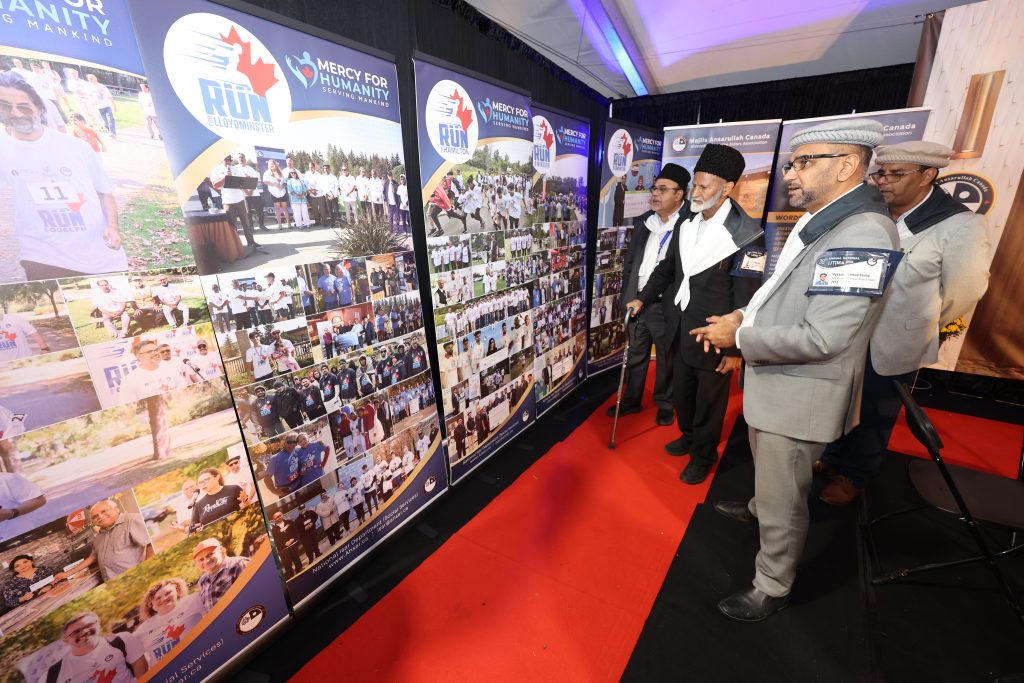
The Department of Isar presented relief projects funded by Canadian Ansar under its Mercy for Humanity initiative. In Senegal, a $100,000 model village project brought solar electricity and clean drinking water to more than 2,000 residents of Pir, who previously walked seven kilometres for water. A second project is under way in Bombatuma. Through the Water for Life programme, more than $180,000 has funded eight solar-powered water installations in Niger and Benin, alongside a purification plant at Baitun Nur Mosque in Belize City with a capacity of 146,000 gallons a year. In Canada, seven charity runs and walks in cities including Windsor, Hamilton, Calgary, Edmonton and Winnipeg raised more than $112,000 for local hospitals and shelters.
A message from Huzoor (aba)
At the closing session on Sunday afternoon, Sadr Sahib read the message of Huzoor (aba) in the gathering once more.
“The status and responsibility of Ansar demand that every Nasir should make righteousness (Taqwa), the observance of worship, and loyalty and obedience to Khilafat-e-Ahmadiyya prominent in his practical life,” Huzoor (aba) wrote. “Through his righteous conduct, a Nasir should not only strengthen his own faith but also set an excellent example for his children and the younger generation.”
Huzoor (aba) called on Ansar to infuse this spirit into future generations and to pray for them, writing that “We must nurture and train them in such a way that, despite all the filth and impurities in society, we will not let Satan succeed, and that we must strive to establish the kingdom of Allah the Exalted in the world, Insha’Allah.”
Huzoor (aba) then quoted the Promised Messiah (as), who said,
“Therefore, do what sets the best example and lesson for your children, and for that it is necessary to reform yourself first. If you become a righteous and pious person of the highest order, and you succeed in pleasing God Almighty, one can rest assured that Almighty Allah will deal benevolently with your children as well. There is an incident about Khidr and Moses, peace be on them, mentioned in the Holy Quran that they both worked together to make a wall which belonged to some orphan children. There, Almighty Allah says: وَكَانَ اَبُوْهُمَا صَالِحًا [Al-Kahf, ch.18:v.83] meaning that, their father was a righteous man. It is not mentioned what those children were like themselves. Therefore, strive to achieve this objective. You should always wish for the piety of your children.” (Malfuzat, English translation, vol. 7, pp. 477-478)
This, Huzoor (aba) wrote, is the fundamental principle to which the Promised Messiah (as) repeatedly drew attention, for the personal example of parents plays a pivotal role in the moral training of children. “May Allah grant every one of us the ability to become an outstanding example for our children.”
Purifying the soul and wealth
The concluding address, delivered by respected Amir Sahib Canada, Lal Khan Malik, took as its text four verses of Surah Al-A’la that the Holy Prophet (sa) would recite at Friday and Eid prayers, beginning “Verily, he truly prospers who purifies himself” [Al-A’la, ch.87:vv.15-18]. Amir Sahib set out a practical path to tazkiya-e-nafs, purification of the soul, and tazkiya-e-amwal, purification of wealth.
The Arabic root of tazkiya, he explained, carries the sense of both purity and growth. “A gardener prunes a tree, not to diminish it, but so that it may bear more fruit. Likewise, purification does not take away anything from a man; it causes him to flourish.” The word for success, falah, shares its root with fallah, the farmer, who cleaves the soil, labours, waits and then reaps. “Hence, falah is not a lottery,” he said. “It is a harvest, after a long period of hard work.”
The true purifier (muzakki), Amir Sahib reminded the gathering, is Allah Himself, though He has also appointed means, and the Khalifa of a Prophet is also a muzakki. “Every Friday, a voice reaches us from thousands of kilometres away. It reminds us, it admonishes us, and it polishes us.”
Surah Al-Mu’minun [Al-Mu’minun, ch.23:vv.2-10], Amir Sahib told the gathering, is the syllabus for this success. He walked through it one quality at a time, pausing over the lives of those whom Allah had purified.
Humility in prayer came first. The Holy Prophet (sa) would stand in night prayer until his blessed feet swelled and cracked, and when asked why, he replied, “Should I not be a grateful servant?” “The man who needed to do nothing more,” Amir Sahib observed, “stood in prayer the longest.”
Next came the weeds in the garden of the soul, useless talk and endless scrolling. Hazrat Khalifatul Masih I (ra), teacher, preacher and physician, never let an idle moment slip into emptiness. Between patients, he would open the Holy Qur’an. Amir Sahib turned the example back on his listeners. “When I have thirty free minutes, where do they go? To the screen, or to the Qur’an?”
The smartphone, he said, has brought temptation into the palm of the hand, and he did not spare his audience. It is not only the young who lose hours to TikTok and Instagram. Ansar do too. He told of a man, recorded in Hayat-e-Nur, who was tempted to sin and held his finger in a flame, again and again, until every finger was burned. “He burnt his fingers to protect his heart,” Amir Sahib said. “Today, we use our fingers to burn our hearts.”
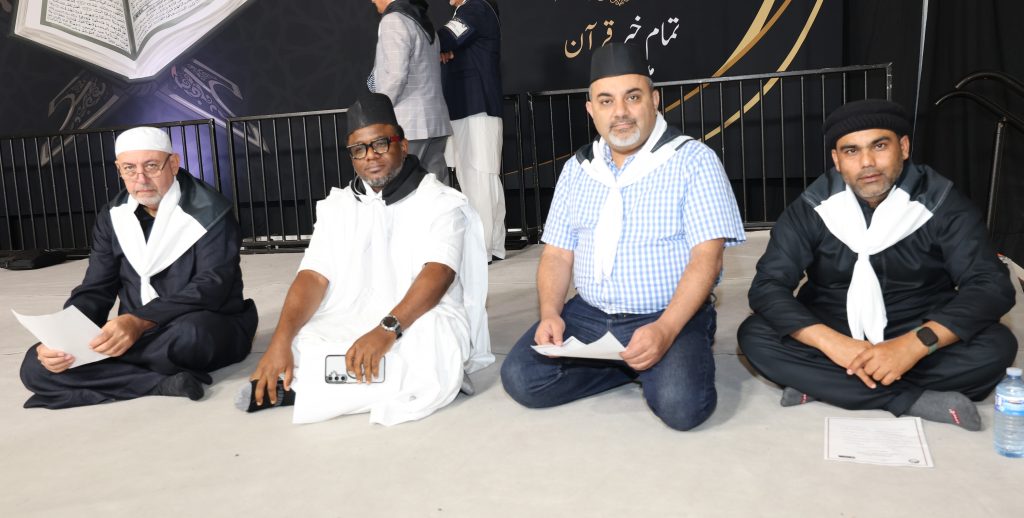
The most sacred covenant of all, he went on, is the family, and its test comes not on the prayer mat but at home. Once, having spoken to Hazrat Amma Jan (ra) in a slightly raised voice, the Promised Messiah (as) felt such remorse that he sought forgiveness from Allah, gave sadaqa and offered voluntary prayers. If that was the standard, Amir Sahib asked, how do we treat our wives and children when we are tired or frustrated? “Our children will not learn patience from our lectures. They will learn it from our actions.”
The list of virtues begins with prayer and ends with it, like the two walls of a fortress. The verb for guarding the prayers, yuhafizun, describes an action from both sides, he explained. Guard your prayers, and your prayers will guard you.
Then he turned to wealth. A poor companion, Hazrat Abu Aqil (ra), hauled water through the night to earn two measures of dates. One he kept for his family; the other he laid before the Holy Prophet (sa). The hypocrites sneered at a handful of dates, and Allah Himself answered them in the Holy Qur’an [At-Taubah, ch.9:v.79]. “Allah does not weigh the amount,” Amir Sahib said. “He weighs the sincerity behind it.” The same spirit lived on in three poor labourers from the village of Sekhwan, whom the Promised Messiah (as) praised because, every month without fail, they set aside a portion of their few annas for the faith.
That regular, honest giving, Amir Sahib said, is what the system of chanda lazmi rests on. He asked every Nasir to calculate his chanda on his true income and not on the figure declared for tax. “Am I purifying my full income,” he asked, “or the income that I am declaring to the government for tax purposes?”
Amir Sahib then led the silent prayer, and the Ijtima came to a close.
For this humble one, the Ijtima is a highlight of the year, awaited from one September to the next, and its close always leaves a sense of loss. Much of its pull is the people. Friends who live in distant cities, met only at gatherings like this, embrace between sessions as though no time has passed. Much of it, too, is the learning, two days in which a Nasir takes in more on faith, family and service than he could gather alone in months.
May Allah enable us to improve our lives in the light of these teachings, and to become His obedient servants. Ameen.