What to Do
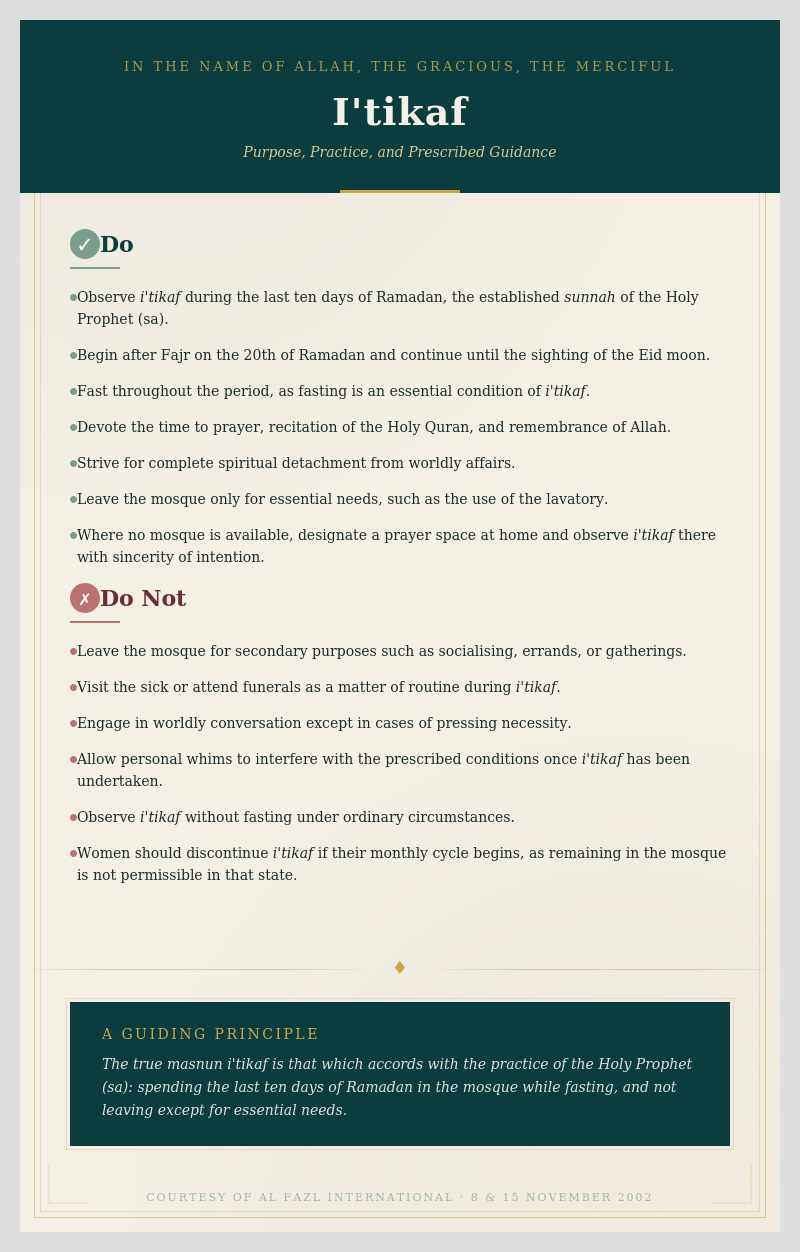
- Observe i’tikaf during the last ten days of Ramadan, as this is the established sunnah of the Holy Prophet (sa).
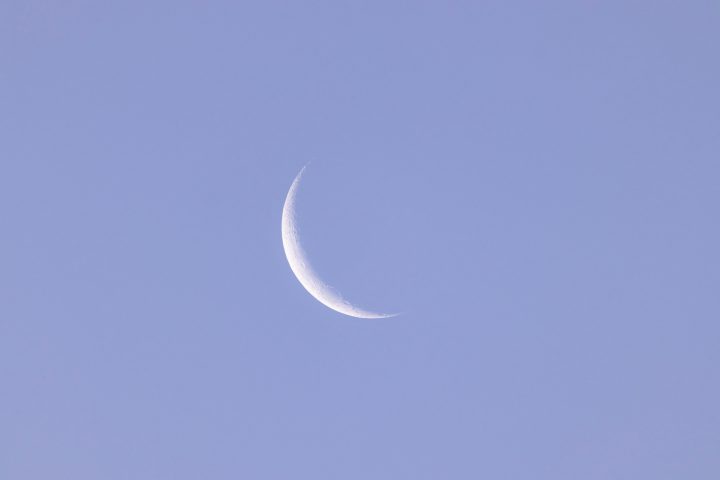
- Begin on the morning of the twentieth of Ramadan, after the Fajr prayer, and continue until the sighting of the Eid moon.
- Maintain the fast throughout the period of i’tikaf, as fasting is an essential condition.
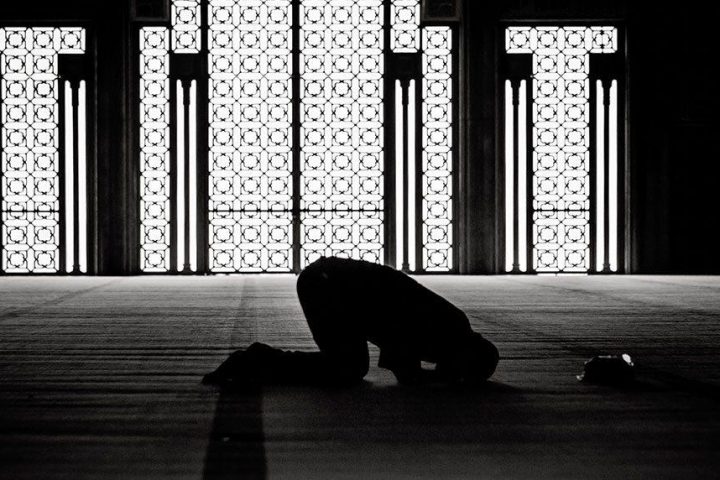
- Devote the time to the remembrance of Allah, prayer, recitation of the Holy Quran, and supplication.
- Strive for a state of complete spiritual detachment from worldly affairs.
- Leave the mosque only for essential human needs, such as the use of the lavatory.
- Attend the Friday prayer at the Jami’ mosque if observing i’tikaf in a smaller local mosque.
- If no mosque is available, designate a specific place of prayer within the home and observe i’tikaf there, understanding that Allah the Almighty rewards according to intention.
- Women who wish to observe i’tikaf may do so in the mosque if suitable arrangements exist, or otherwise in a designated prayer space at home.
What to Avoid
- Do not leave the mosque for secondary purposes such as socialising, attending gatherings, or running errands.
- Do not leave for visiting the sick or attending funerals as a matter of course. The sunnah of the Holy Prophet (sa), as narrated by Hazrat A’ishah (ra), is that the mu’takif should not leave for either of these purposes.
- Do not engage in worldly conversation except in cases of pressing necessity, as guided by the Promised Messiah (as).
- Do not allow personal preferences or whims to interfere with the prescribed conditions of i’tikaf once it has been undertaken.
- Do not observe i’tikaf without fasting under ordinary circumstances, as there is no record of the Holy Prophet (sa) or his Companions (ra) having done so.
- Women should discontinue i’tikaf if their monthly cycle begins, as remaining in the mosque in such a condition is not permissible.
A Guiding Principle
I’tikaf is a voluntary act of devotion. One is free to observe it or, given personal circumstances, to forgo it. However, once a person enters i’tikaf with the intention of following the masnun practice, its fulfilment becomes binding according to the prescribed conditions. The true masnun i’tikaf is that which accords with the practice of the Holy Prophet (sa): spending the last ten days of Ramadan in the mosque while fasting, and not leaving except for essential needs.