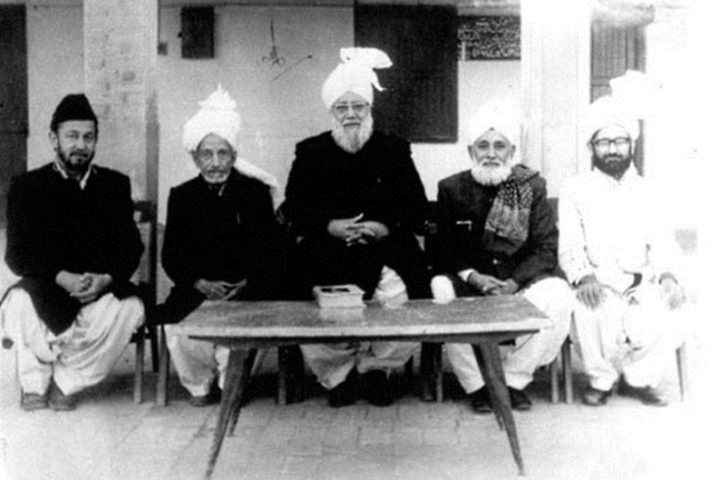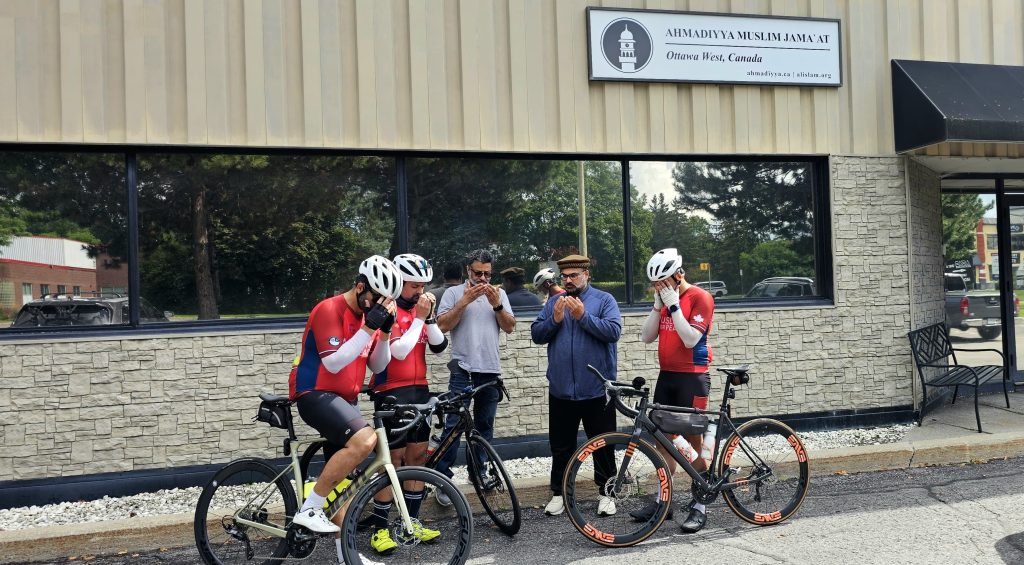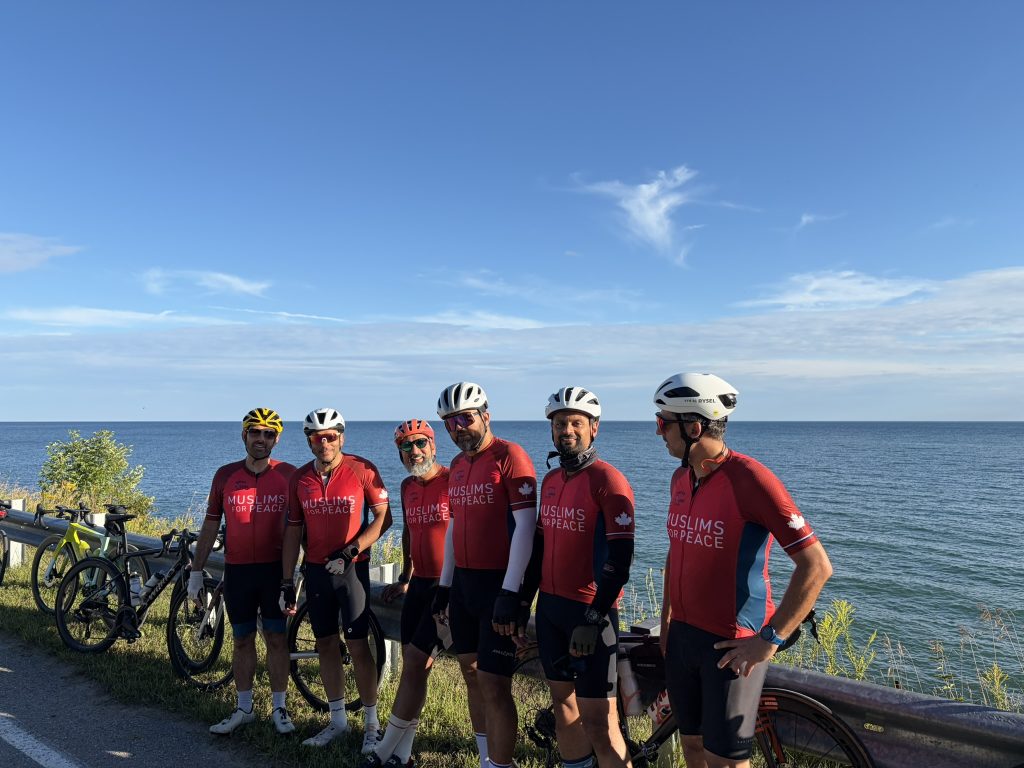
In August and September we recorded conversations with six men who lived through 1974. Abdul Sami Khan Sahib, then a boy of fifteen in Rabwah, later editor of Al Fazl and today a teacher at Jamia Ahmadiyya Canada. Chaudhry Hadi Ali Sahib, then eighteen and a student at Jamia Ahmadiyya, today Naib Amir of Jama’at Ahmadiyya Canada, with responsibility for the history of the Jama’at in this country. Mirza Muhammad Afzal Sahib, then in Jamia and warden of its hostel, afterwards a missionary in the United States from 1981 and in Canada from 2001. Lal Khan Malik Sahib, then working for the telephone department in Haripur Hazara, today Amir of Jama’at Ahmadiyya Canada. Dr Aslam Daud, then a schoolboy of twelve in Karachi, today the head of Humanity First Canada. Abdul Wahab Butt Sahib, then a young man living in the neighbourhood behind Rabwah railway station, later National Sadr Majlis Khuddamul Ahmadiyya Denmark for nine years and National Auditor for sixteen, now living in England.
Most Ahmadi Muslims in Canada today were not born when the National Assembly of Pakistan voted. Many of us were born here and have never lived a day under a law that decides on our behalf whether we are Muslim. That is a mercy. It is also a gap, because those events are the reason a great many of our families are in this country at all, and the people who can describe them from memory will not be here much longer.
This is the first of four parts.
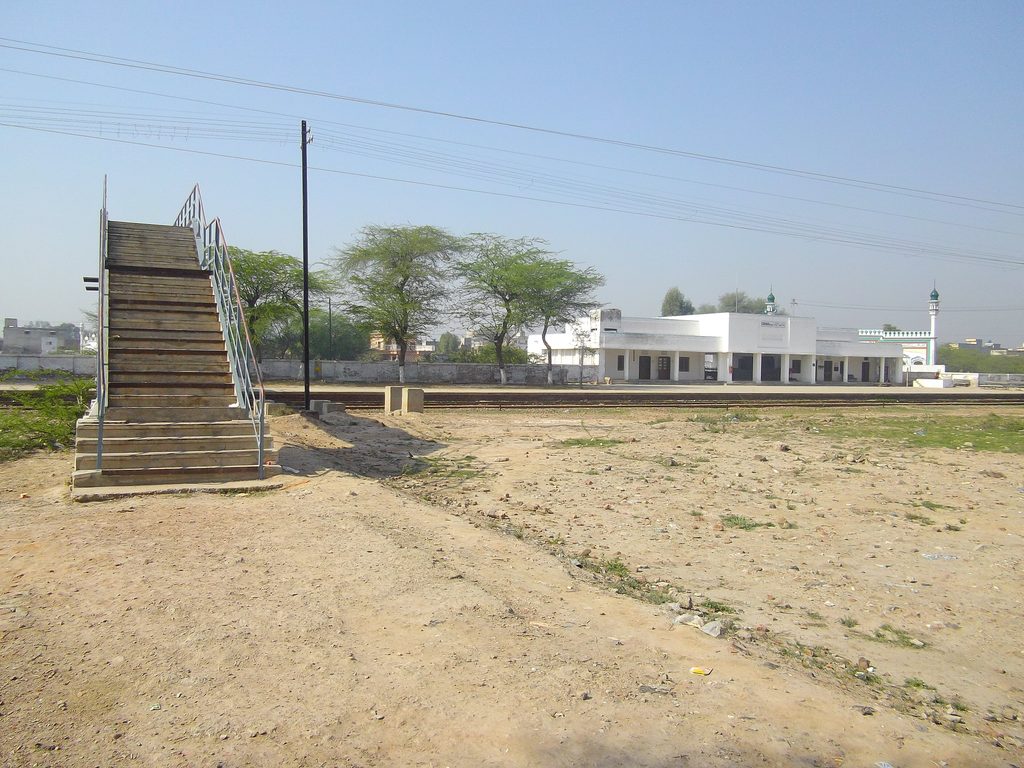
The platform
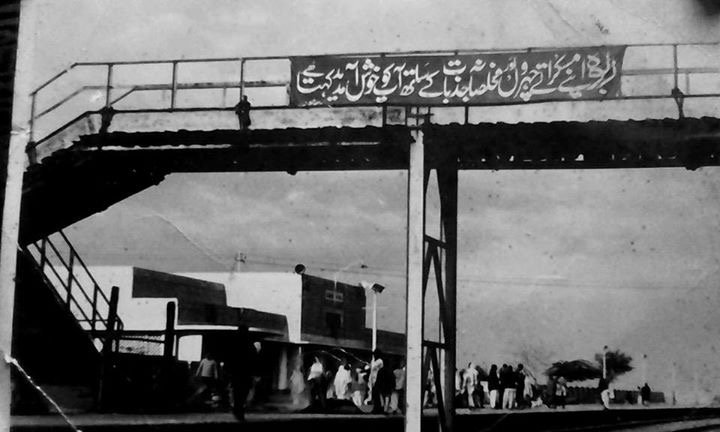
On the evening of 29 May 1974, a young man stood in the middle of the platform at Rabwah railway station with instructions to send people home.
Mirza Muhammad Afzal was warden of the Jamia hostel. His duty that day was narrow and specific. If any passenger came to the station to catch the train, he was to turn him back. Two other young men had been given the same duty, and the platform had been divided into sections and shared out between them so that no Ahmadi would be visible on any part of it. The station master had been told that nobody would be travelling from Rabwah that evening.
The reasoning was simple. If there is nobody here, nothing can go wrong.
A week or so earlier, a carriage carrying students of Nishtar Medical College in Multan had stopped at Rabwah on its way north. The students had abused people on the platform and had tried to provoke a disturbance, and had not managed it. While leaving, they announced that they would return on May 29th and do it again. Afzal Sahib did not hear this himself, but what reached him was that they had also said they would do whatever damage they could, and that the community should stop them if it dared.
That message reached the administration of Rabwah. Sadr Umoomi Chaudhry Bashir Sahib called a meeting of the Khuddam and of the neighbourhood representatives, and the instructions given were simply to avoid any interaction, hence preventing any instigation. Nobody on the station. Nobody on the train.
The Brewing Storm
Nothing about the threat was isolated, and the young men on that platform knew it.
Three months earlier, from 22 to 24 February 1974, the Second Islamic Summit Conference had met in Lahore, with heads of state and government from across the Muslim world.[1] Chaudhry Hadi Ali Sahib says that literature against the Jama’at had been placed on the desk of every delegate, and that one of the leaders in the room quietly passed a packet to the Jama’at, which is how Rabwah learned about what was being circulated.
What was under discussion, as he understood it, was larger than Pakistan. There was a proposal in the air that the Muslim world should be brought together under one political leadership and one spiritual head, with Zulfikar Ali Bhutto active in the first question and the King of Saudi Arabia, Faisal bin Abdulaziz Al Saud, as the Khalifa. The problem, according to them, was that one community already had a Khalifa. The two could not stand.
Before that, the Azad Kashmir assembly had already voted to declare Ahmadi Muslims as non-Muslim, the first legislature anywhere to do so.[2] In between this shameful event and the railway incident, came the floods of late 1973, among the most damaging in the history of the country, and for a season every available hand went to the rivers instead.[3] The agitation lost its heat, temporarily. It returned the following year by a different road.
The day of the incident
The train came in after Asr, in the failing light of a summer evening. A few passengers stepped down, looked along a platform with nobody on it, and climbed back into their carriage. Rabwah was a small station, and the stop was short.
One carriage came to rest directly in front of Afzal Sahib. Its interior lights were on. The train whistled and began to move, and through the windows he saw men inside grappling with one another. Then the emergency chain was pulled and the train stopped.
He read it the way anyone standing there would have read it. Ahmadis had been caught inside the carriage and were being beaten.
Some Khuddam had boarded the train further down the line, either in Bhalwal or Sargodha, precisely in case something of this kind occurred. They reached the same conclusion at the same moment. Afzal Sahib went up into the carriage. Within seconds, he says, the station seemed to be full of Khuddam, perhaps fifty of them, and to this day he does not know where they came from. The carriage was surrounded, and there was a fight.
He is careful about its scale, because he was in it. Nobody was injured badly enough to need hospitalization. A nosebleed from a punch. Two or three men were bandaged on the spot at the station.
Then the train pulled out, reached Chiniot, and the country caught fire.
The tongues in the bag
Within a day, agitation had begun in Faisalabad and spread outward. The clerics began crying out that their boys had been maimed at Rabwah and tongues had been cut out.
Both Afzal Sahib and Abdul Samee Khan Sahib describe the same object, independently, fifty-two years later. Clerics were carrying the tongues of goats in transparent bags and holding them up to crowds, instigating them and ‘proving’ that these were the tongues of Muslim students.
Nobody was listening to the Jama’at. Within days there were killings, arson and arrests across Pakistan, and it was on the false picture drawn by the clerics, and not on anything factual that had actually occurred on the platform in Rabwah, that the country acted.
What he thinks about it now
Mirza Afzal does not defend what he did, and he has had half a century to consider it.
His judgement is that the whole thing turned on a misunderstanding, and that the misunderstanding ruined the plan. If nobody had gone up into that carriage, he says, the train would have moved on, and nothing would have happened. In his own words, we poured oil on the fire, and we should not have done it.
Then he qualifies it twice, and both qualifications matter. The outcome would have been the same whether the Khuddam came or not, because the scheme required a fight and would have manufactured one out of whatever was available. And the men who went in intended to rescue people they believed were being beaten.
The face of Khilafat
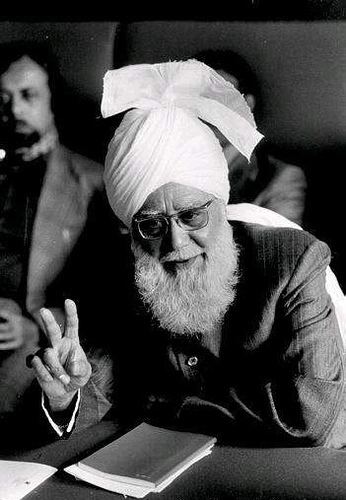
Two days later, on Friday 31 May, Abdul Samee Khan sat in Masjid Aqsa in Rabwah waiting for the sermon. He was fifteen. What he remembers first is not what was said, but the face of Khalifatul Masih.
Hazrat Mirza Nasir Ahmad, Khalifatul-Masih III (rh), looked concerned. His eyes were red, as though he had spent the night in prayer. His turban was not tied properly, and to the boy watching it seemed he had come straight from a meeting without the time to put it right.
What he said was difficult.
He opened with a verse in which the Muslim ummah is told not to grow weak and not to sue for peace when it is the one that will prevail, and that God is with it and will not let its works go to waste [Muhammad, ch.47:v.36].[4] Then he said that a very ugly scheme had been laid to ruin the country, that the fire was being fanned deliberately so that it would grow fiercer, and that where it was burning, it was burning more severely than the fire of 1953.[5] At that time, he said, the government of the day [in the 1950s] had acted with more prudence and more justice. If the reports now arriving were correct, the present government was doing neither.[6]
Twenty-one years earlier a court of inquiry had examined the disturbances of 1953 and had been unable to obtain from the assembled ulema an agreed definition of who is a Muslim.[7]
And then he turned to his own community.
He addressed the newspaper claim that five thousand Ahmadis had attacked the train, and refused to use the falsehood for shelter. That report was entirely wrong, he said. But if ten of your men appear to the enemy as a thousand, that is the glory of God, and it does not acquit you.[8]
Some men, he said, had fallen from their position, had set aside obedience to God and to His Messenger (sa), and had made themselves (inadvertently) partners in a scheme the enemy had prepared. He had nothing to offer in their defence beyond condemnation of what they had done. He did not know who they were. Whoever they were, he instructed, they should offer istigfar at least ten thousand times, and remain bowed before Him until He forgave them.[9]
The Jama’at has long remembered 1974 as the year the state turned on it. It is worth remembering where the Khalifa of the day began. On the first Friday of the crisis, with the country burning and his community being killed in it, he disciplined his own.
The warning
Mirza Afzal and the others were called in afterwards. Huzoor (rh) was severely displeased with them. They were disciplined, as he says, and they had to explain themselves and offer istighfar, and their only defence was that they had been briefed to prevent trouble, that preventing trouble had been the entire plan, and that what happened had happened through a misjudgement and not through intent.
But in the same meeting they were told something else; something far darker, something prophetic.
They were not told what would happen. They were told that action would be taken against the Jama’at. The road ahead was fraught with thorns.
By September, there was.
Part Two, on Rabwah under boycott, the arrests, and Sargodha jail, follows.
Notes
- Second Islamic Summit Conference, Lahore, 22–24 February 1974, United Nations Archives, S-0990-0003-06-00001, https://search.archives.un.org/uploads/r/united-nations-archives/a/5/5/a55a28d88f05038cd8b4acf467e706420fbf3ba1e839b4dceeac6562490bcad2/S-0990-0003-06-00001.pdf.
- The resolution of the Azad Jammu and Kashmir Assembly is variously dated in published accounts, and the corresponding provision was later carried into the Azad Jammu and Kashmir Interim Constitution Act, 1974, art. 44. See Azad Jammu and Kashmir Interim Constitution Act (VIII of 1974), Art. 44, PLD 2023 1 (High Court Azad Kashmir), Writ Petition No. 2753 of 2016, decided 22 January 2020. This article therefore gives no date for the resolution itself.
- National Disaster Management Authority, Government of Pakistan, Floods of 1973, https://www.ndma.gov.pk/storage/publications/September2025/5a7DeS9RPoaFUxreIcmm.pdf.
- Mirza Nasir Ahmad, Khalifatul-Masih III, Friday Sermon delivered at Masjid Aqsa, Rabwah, 31 May 1974, in Khutbat-e-Nasir, vol. 5 (Rabwah: Nazarat Isha’at, Sadr Anjuman Ahmadiyya Pakistan), 577. The verses recited are [Muhammad, ch.47:v.34, 36].
- Khutbat-e-Nasir, vol. 5, 578.
- Khutbat-e-Nasir, vol. 5, 578.
- Report of the Court of Inquiry Constituted under Punjab Act II of 1954 to Enquire into the Punjab Disturbances of 1953 (Lahore: Superintendent, Government Printing, Punjab, 1954), 218.
- Khutbat-e-Nasir, vol. 5, 579.
- Khutbat-e-Nasir, vol. 5, 579–580.
Testimony from Mirza Muhammad Afzal, Abdul Samee Khan, and Chaudhry Hadi Ali is drawn from interviews recorded by the authors in August 2026 and is not cited separately.