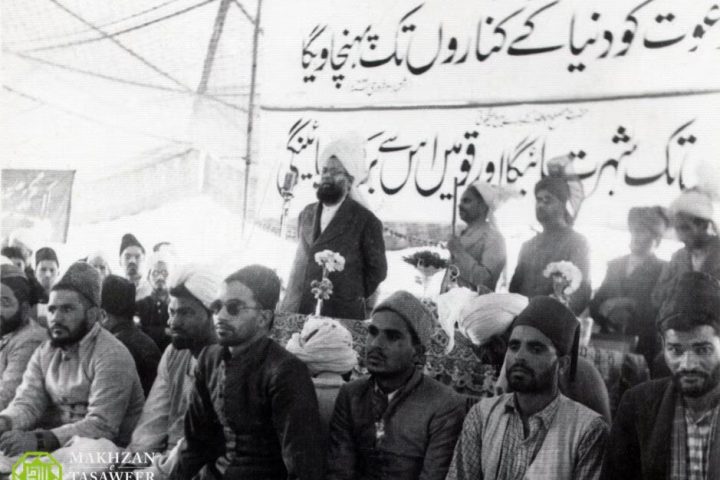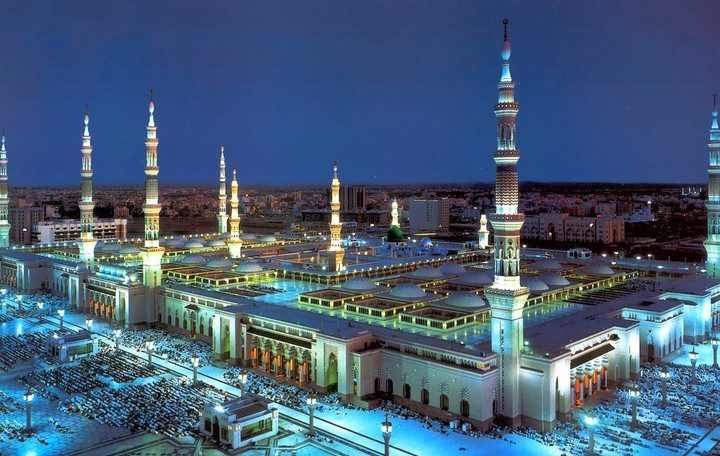
In 1947, the subcontinent was torn apart. With partition came not only the rupture of borders but a fracturing of the careful work of generations. The fields of training and propagation, once tended with such devotion, now lay weakened. It was in this moment of crisis that Hazrat Musleh Mau’ud (ra), initiated Waqf-e-Jadid (New Dedication). The movement was born to advance collectively what the great Sufis of Islam had once accomplished as individuals, walking from village to village, heart to heart.
Hazrat Khalifatul Masih III (ru) explains,
“When Hazrat Musleh Maud (ra) saw that the Jama’at had not fully performed its duties in education, training, and propagation, instead of admonishing the Jama’at for its negligence, he launched a new movement called ‘Waqf-e-Jadid.'” (Khutbat-e-Waqf-e-Jadid, p. 95)
When initiating this movement, Hazrat Musleh Maud (ra) presented three noble Sufis as models:
“I wish that if there are young men who desire to follow in the footsteps of Hazrat Khawaja Moinuddin Chishti (ra) and Hazrat Shihabuddin Suhrawardi (ra), they should dedicate their lives directly before me so that I may employ them to teach Muslims. Our country is not deserted in terms of population, but it has become spiritually desolate. Even today, it needs Chishtis, it needs Suhrawardis, and it needs Naqshbandis. If people like Hazrat Moinuddin Chishti (ra), Hazrat Shihabuddin Suhrawardi (ra), and Hazrat Fariduddin Ganj Shakar (ra) are not raised, then this country will become even more spiritually desolate than Makkah was at one time in terms of population.” (Khutbat-e-Waqf-e-Jadid, p. 4)
The names he invoked were not chosen at random, for these were the very men who had once transformed a spiritually barren land into a garden of faith.
The Righteous of the Ummah
Allah the Exalted never abandoned Islam in any era. After the Holy Prophet (sa) came the Companions of the Messenger. After them arose the Tabi’in (Successors), then the Tab’a Tabi’in (Successors of Successors), and then, through the Sufis, Allah the Exalted preserved Islam across the centuries. These souls played a vital role in connecting God’s creation to God in every corner of the world. This was the blessing that emanated from the Holy Prophet, peace be upon him, and was distributed generation after generation, century after century, until it flowed through the existence of the Promised Messiah (sa), and now spreads to every corner of the world through his Khulafa.
The Promised Messiah (as) writes,
“From the time of our Master and Lord, the Holy Prophet (sa), until today, in every century, there have been godly people through whom Allah the Exalted showed heavenly signs to other nations and continued to guide them. Such as Hazrat Syed Abdul Qadir Jilani, Junaid Baghdadi, Moinuddin Chishti Ajmeri, Shah Waliullah Dehlavi, and Sheikh Ahmad Sirhindi, may Allah be pleased with them all. And such miracles are recorded in the books of scholars that even a bigoted person, despite severe prejudice, must eventually admit that these people possessed extraordinary spiritual wonders.” (Kitab-ul-Bariyyah, Ruhani Khazain, Vol. 13, pp. 91-92)
Islam in India is the result of the spiritual attention, prayers, and influence of those saints who lived in this country
Malfuzat, Vol. 4, p. 523
Hazrat Musleh Maud (ra) illustrates this with an amazing example:
“The greatest ocean of the spiritual world is Muhammad (sa), the Messenger of Allah, peace be upon him, but from him, several spiritual rivers flowed into the world. One river of Shariah (Divine Law) flowed, then a river of Tasawwuf (Sufism) flowed. In Sufism, magnificent people like Junaid, Shibli, Moinuddin Chishti, Bahauddin Naqshbandi, and Shihabuddin Suhrawardi passed, and then all these rivers merged into The Promised Messiah, peace be upon him.” (Sair-e-Ruhani (9), pp. 23-24)
Yet rivers must flow somewhere, and these spiritual currents found their way to the sub-continent, a land that desperately needed them.
The Transformation of India
The Sufis played a decisive role in spreading Islam, particularly in India, which was once spiritually barren. The Promised Messiah, peace be upon him, refuting the allegation that Islam spread by the sword, says,
“It is entirely false that Islam spread in India through the sword. Islam in India is the result of the spiritual attention, prayers, and influence of those saints who lived in this country. These saints, having annihilated themselves before Allah, became living embodiments of the Quran and manifestations of the Holy Prophet, peace be upon him. Then Allah bestowed upon them a spiritual attraction, and their effect continued upon those of pure disposition.” (Malfuzat, Vol. 4, p. 523)
Just as in ancient times, India was a haven of ignorance and distance from God, and the Sufis transformed that spiritual darkness into light, turning idol-worshippers into devotees of the One God, the spiritual desolation of our current era calls for such Sufis today. But to understand what made these men capable of such transformation, one must return to the source from which they all drank.
The Fountain from Which All Rivers Flow
Allah the Exalted declares in the Holy Quran,
“And as for those who strive in Our path, We will surely guide them in Our ways.” [Al-Ankabut, 29:70]
The being who strove most ardently in the way of Allah was the Holy Prophet Muhammad, peace and blessings of Allah be upon him. In the Cave of Hira, he would live disconnected from worldly comforts, spending his time in solitude and devotion. His yearning for God was so intense that even the disbelievers of Makkah were compelled to say, “Muhammad has fallen in love with his Lord.”
Allah the Exalted expressed this yearning,
“And thy Lord will soon give thee, and thou wilt be well pleased. Did He not find thee an orphan and give thee shelter? And He found thee wandering in search of Him and guided thee unto Himself.” [Al-Duha, 93:6-9]
This ardent devotee of God (sa) returned from the Cave of Hira as the Greatest Guide. The quality of a true believer is not only that he himself seeks the pleasure of God, but that he strives to connect God’s creation with their Creator.
The Promised Messiah, peace be upon him, says,
“That strange event which occurred in the deserts of Arabia, in which hundreds of thousands of dead were brought to life in a short time. Do you know what that was? It was indeed the prayers of one annihilated in God, offered in dark nights, which created an uproar in the world.” (Barakaat-ud-Du’a, Ruhani Khazain, Vol. 6, p. 11)
It is this noble tradition of striving in the way of Allah, of connecting His creation to their Creator, of spiritual purity and selfless service, that the Waqf-e-Jadid calls us to embody today.
Note: This article is an extracted translation of the original that appeared in Al Fazl Online on October 26, 2022.