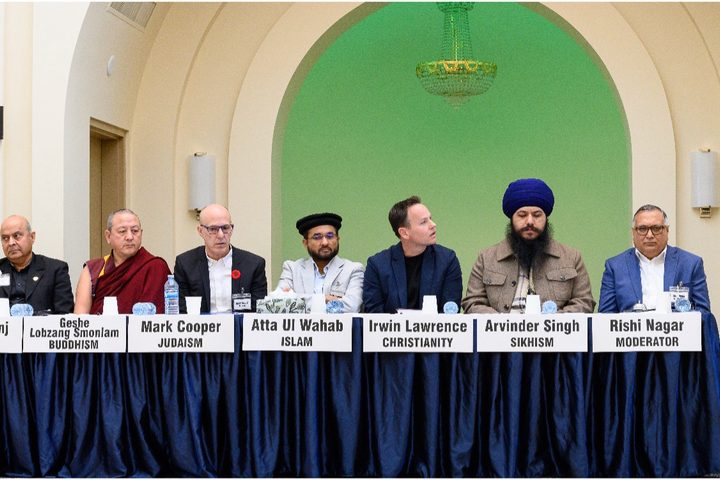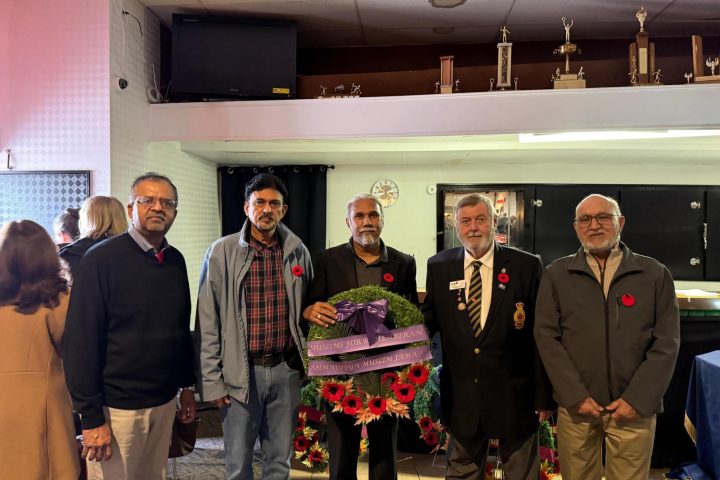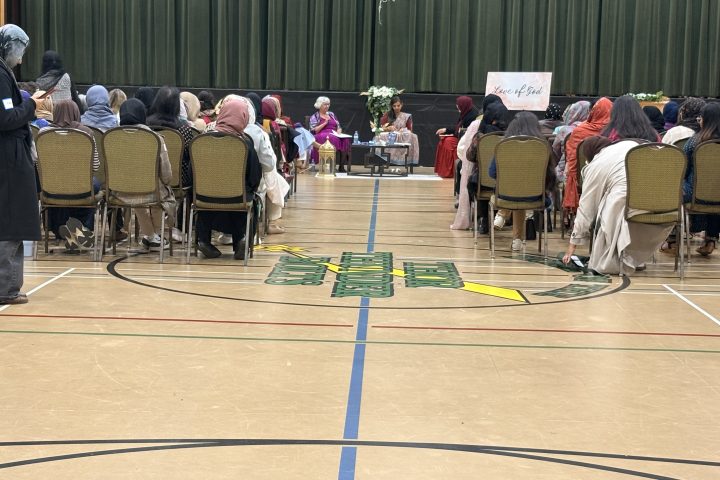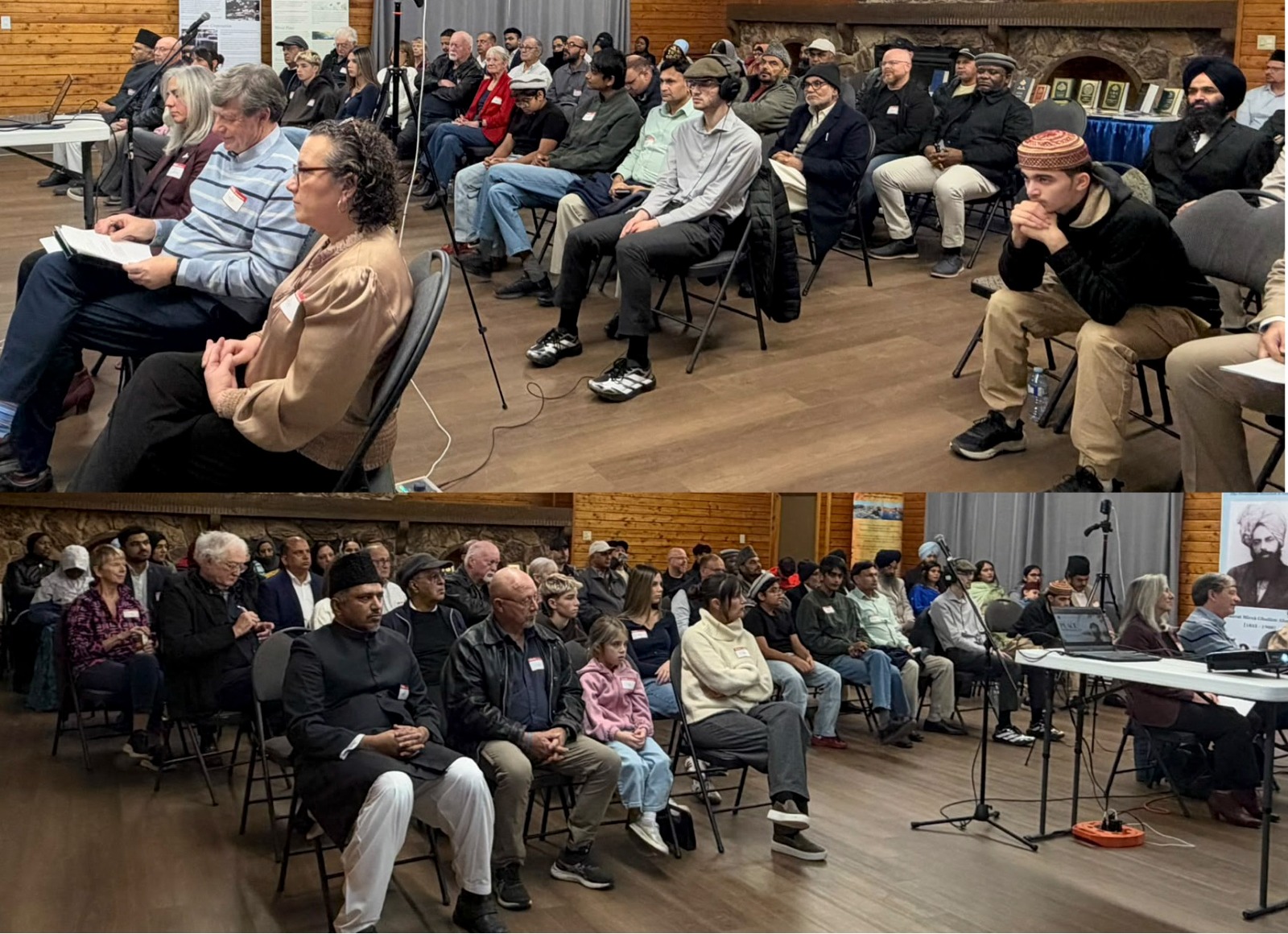
On the afternoon of Saturday, 21 November 2026, around a hundred people gathered at the Centennial Rotary Lodge in Moncton for the Interfaith Peace Conference 2026, hosted by the Ahmadiyya Muslim Community New Brunswick. Hindu, Jewish, Christian, Sikh and Muslim speakers, joined by a city councillor, came to the podium with one question before them. How is peace built, in practice, among people who differ?
Wissam Alburaki, president of the Ahmadiyya Muslim Community in New Brunswick, opened the afternoon. He spends his working days caring for newborns in a neonatal intensive care unit. “Babies begin life fragile, innocent and equal,” he said. “The Holy Qur’an tells us that we were made into peoples and tribes so that we may know one another. We are not strangers to each other.”
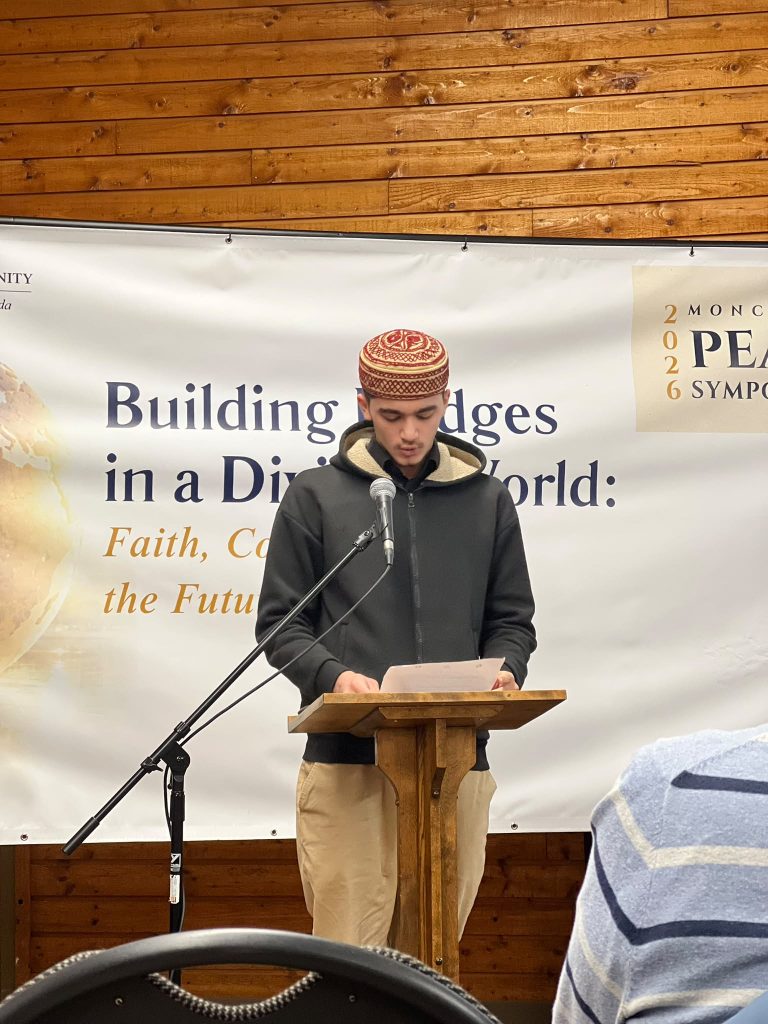
Hisham Alburaki, a Grade 10 student, then recited that very verse with an English translation. “O mankind, We have created you from a male and a female; and We have made you into tribes and sub-tribes that you may know one another.” [Al-Hujurat, ch.49:v.14]
Introduction to the Jama’at
Fazal Malik introduced the Ahmadiyya Muslim Jama’at, founded in 1889 in Qadian, India, by the Promised Messiah (as), and today present in more than 200 countries under the guidance of the Fifth Khalifa, Hazrat Mirza Masroor Ahmad (aba). “Our founder taught that the struggle for faith is to be waged with the pen, through logic, love and good moral character, never with the sword,” he said, recalling the Qur’anic principle that there is no compulsion in religion [Al-Baqarah, ch.2:v.257]. Formally established in Canada in 1966, the community is, in his words, “entering our 60th year.”
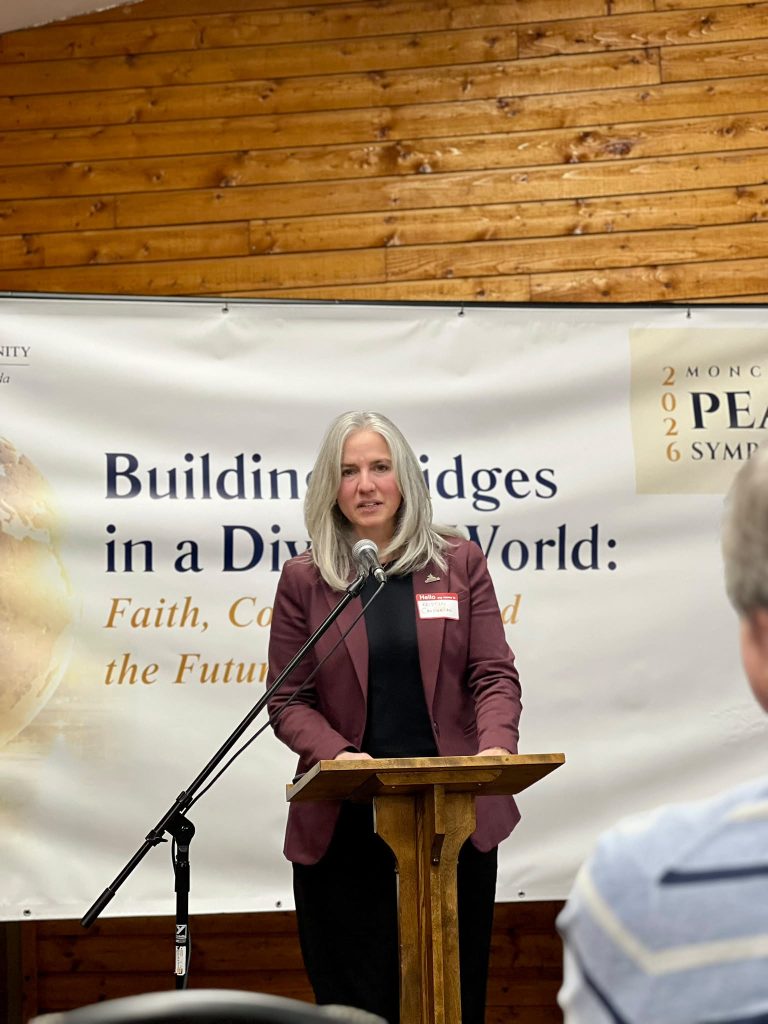
Bringing greetings on behalf of Moncton City Council, Councillor Dr Kristin Cavoukian called the motto of the community “a powerful principle” and described Moncton as a city “where people of different backgrounds, cultures, languages and faiths can build a shared future.”
Many traditions, shared values
Naman Sharma, speaking for the Hindu community in place of Pandit Vinayak Phadnis, began with the Sanskrit teaching Vasudhaiva Kutumbakam, the world is one family. “Hindu traditions teach us respect for others, compassion, and to recognise the divine in every living being,” he said. “We do not need to share a religion to share values.” On the panel he spoke of the image worship he learnt from his grandmother and of praying three times a day, practices that give his life structure and meaning.
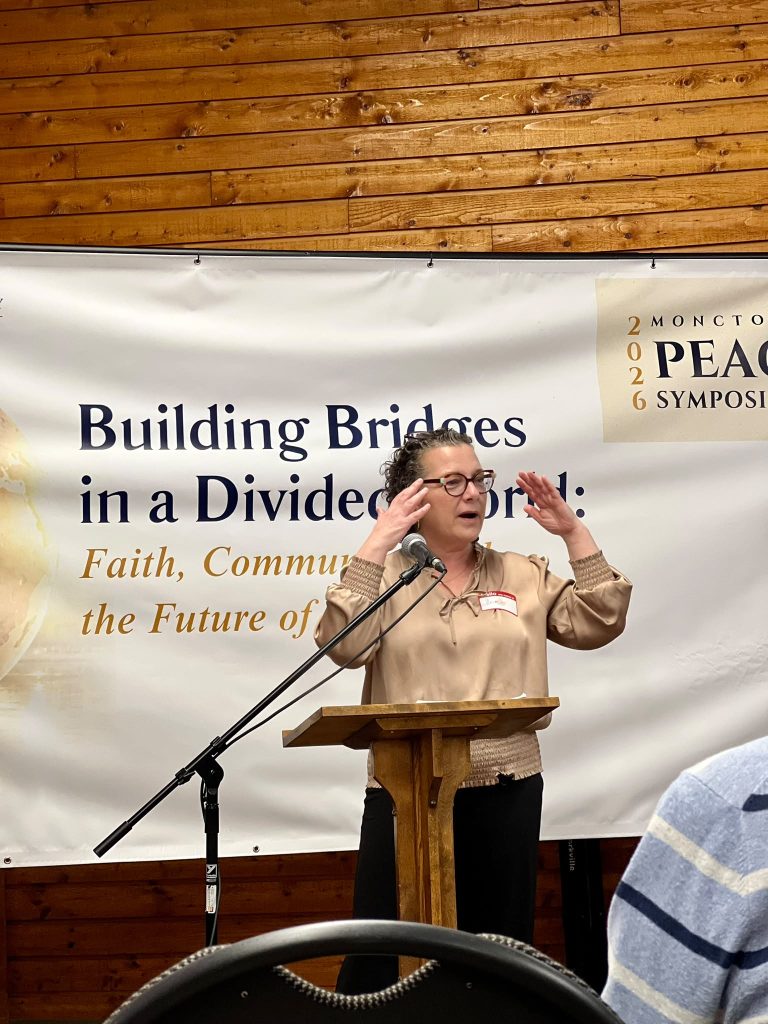
Lori Ann Roness, speaking for Tiferes Israel Congregation, the only synagogue in Moncton, asked listeners to picture the “backpack” each person carries, packed with histories, loyalties, fears and hopes. “Judaism teaches that peace is an obligation,” she said. “We are not only to seek peace but to pursue it, and to share in tikkun olam, the repair of the world.” Drawing on thirty years of work with Indigenous communities, she added that trust cannot rest on good intentions alone. “It must be earned through relationships, humility, accountability and listening.”
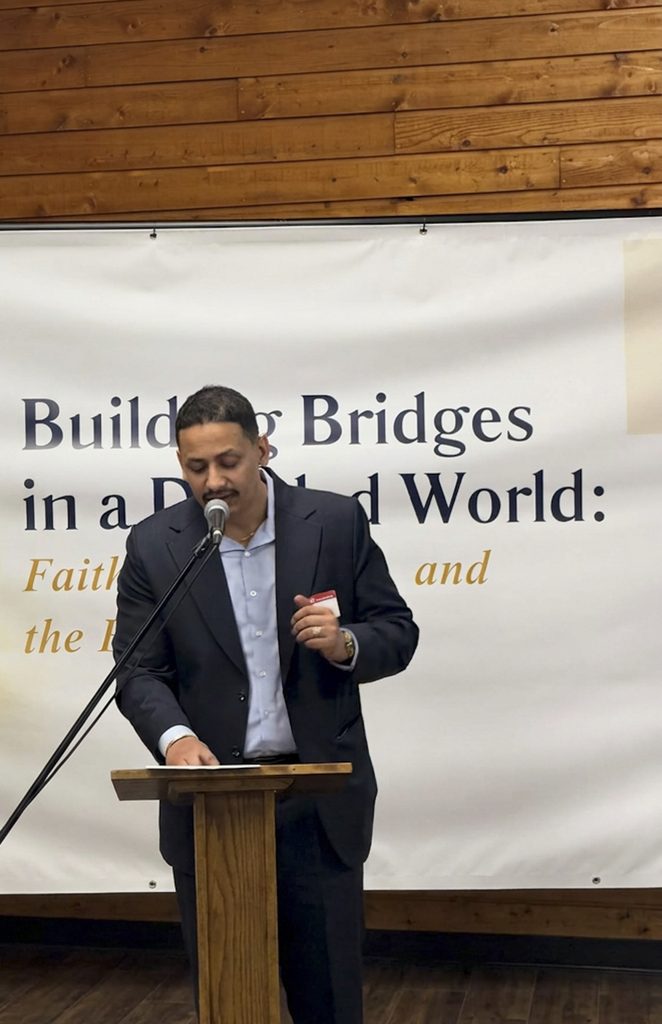
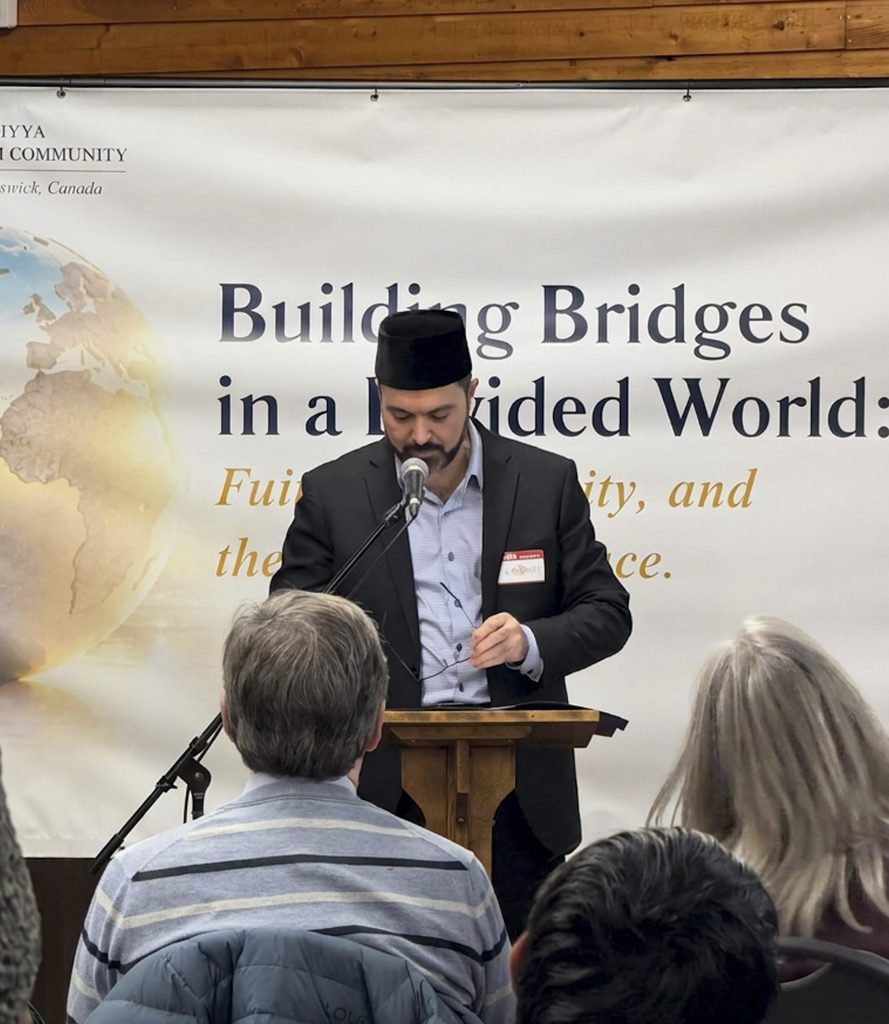
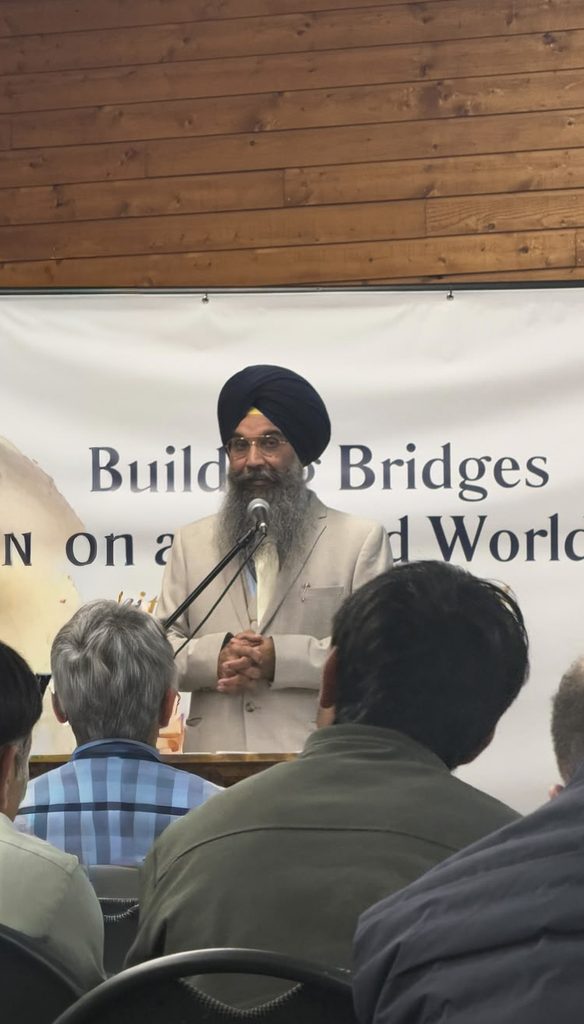
Rev. Steve Berube, offering a Christian reflection, spoke of the peace Jesus left to his followers and of how easily religious words are twisted. “As followers of Jesus, we have to seek the truth in a post-truth age and refuse to let faith be bent into hatred,” he said. On the panel he recalled Muslim neighbours in Greater Moncton who feared for their safety after 9/11, and the bitter anglophone and francophone divide of the 1970s and 1980s, which eased as people met one another. Peace, he said, “requires both inner reflection and the courage to approach a stranger and begin a conversation.”
Balwant Singh, president of the Atlantic Khalsa Darbar Sikh Temple in Shediac Bridge since its founding in 2019, spoke of the community kitchen that also serves as a food bank for the Shediac area, open to people of every faith and background. On the panel he explained two principles at the heart of Sikh life, Kirat Karni, earning a living honestly through hard work, and Naam Japna, the constant remembrance of God. “We work honestly, we remember God, and we share what we have,” he said. “That is how we welcome a newcomer, with food and with warmth.” He invited everyone to visit the temple on a Sunday and share a meal sitting together on the floor.
A covenant of neighbours
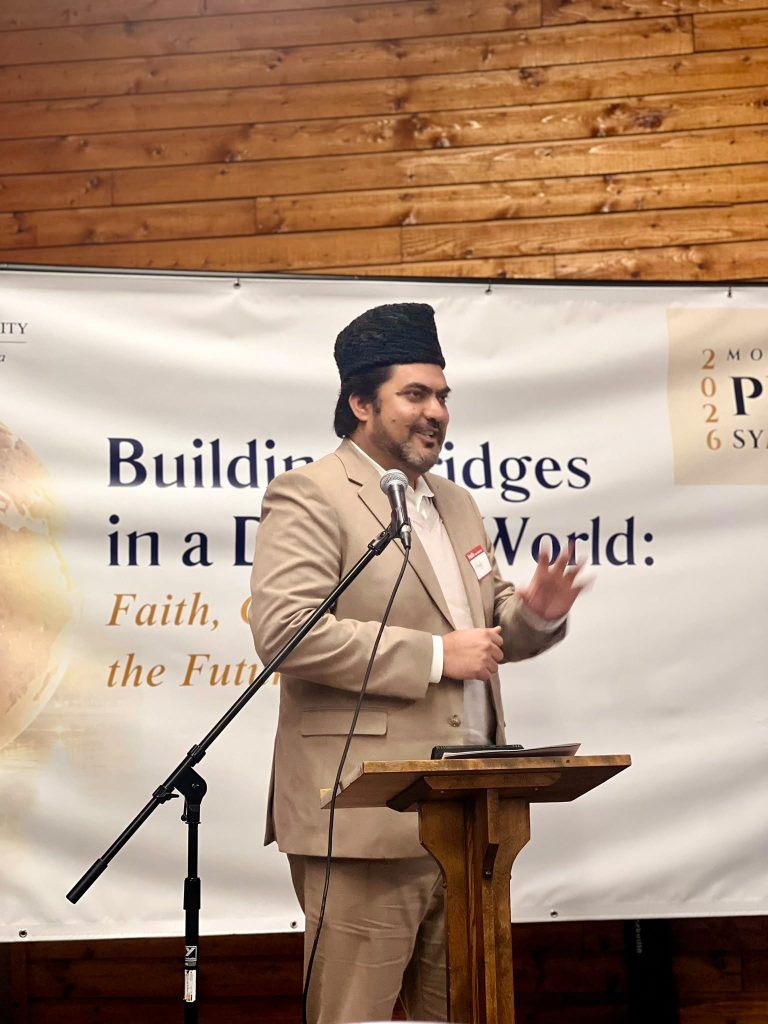
Imam Zahid Abid, missionary of the Ahmadiyya Muslim Jama’at in the Maritimes, held up the Charter of Medina as a model. After the Holy Prophet Muhammad (sa) migrated to Medina, he said that warring tribes and Jewish clans agreed through consultation to a covenant of religious freedom, shared security and mutual care. He pointed to the Qur’anic command that enmity must never lead a people away from justice [Al-Ma’idah, ch.5:v.9], and recounted how the Holy Prophet (sa) stood in respect as a Jewish funeral procession passed, reminding his companions that the deceased was a human being.[1]
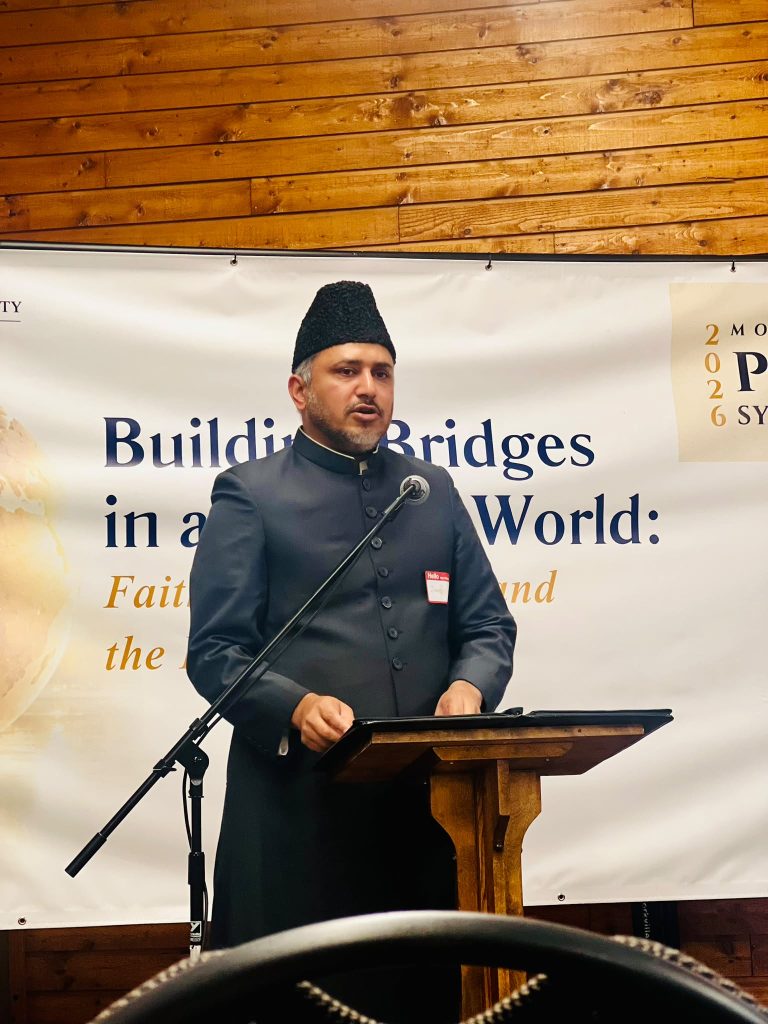
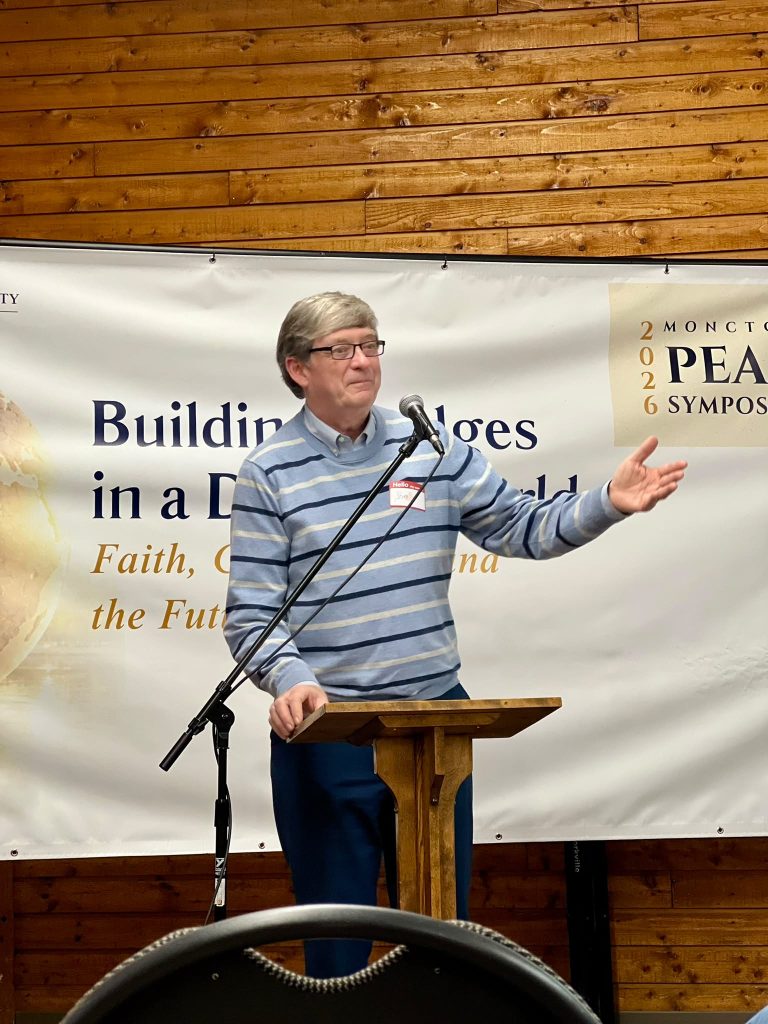
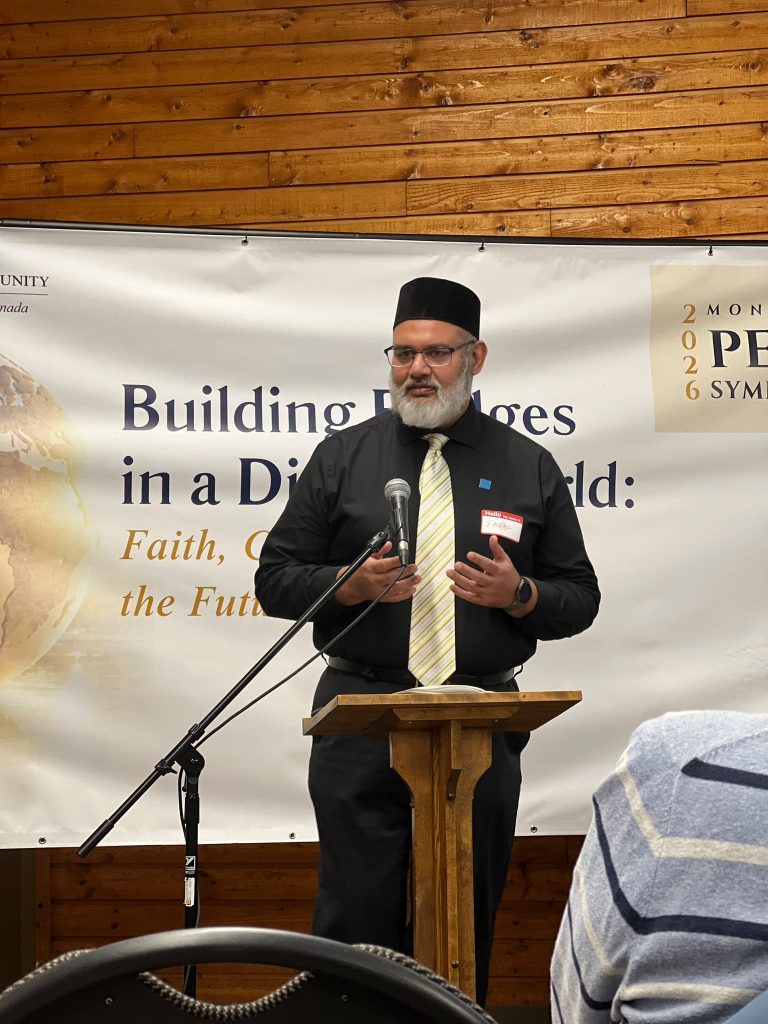
On the panel, Imam Abid took on the claim that Islam spreads by force. “Islam teaches freedom of religion and conscience. There is no compulsion in faith,” he said. “Jihad means struggle, striving to improve oneself, to become a better Muslim and to draw closer to God.” He recalled how his father, newly arrived in Canada, shovelled the driveway of the neighbour next door along with his own. Young Ahmadis, he said, “do not have to choose between being good Muslims and good Canadians,” and Canada could become “a covenant country” through justice and service across faiths.
Questions from the floor
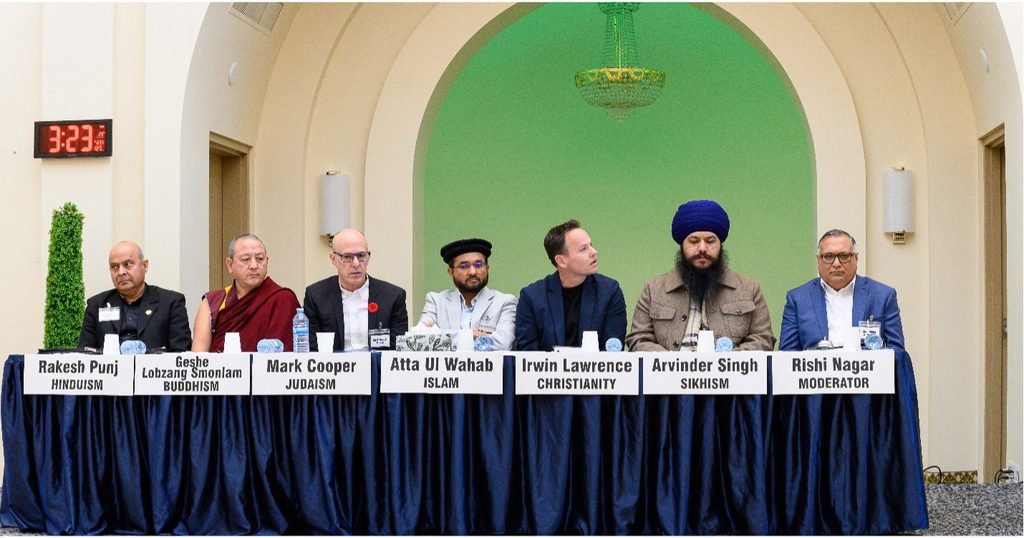
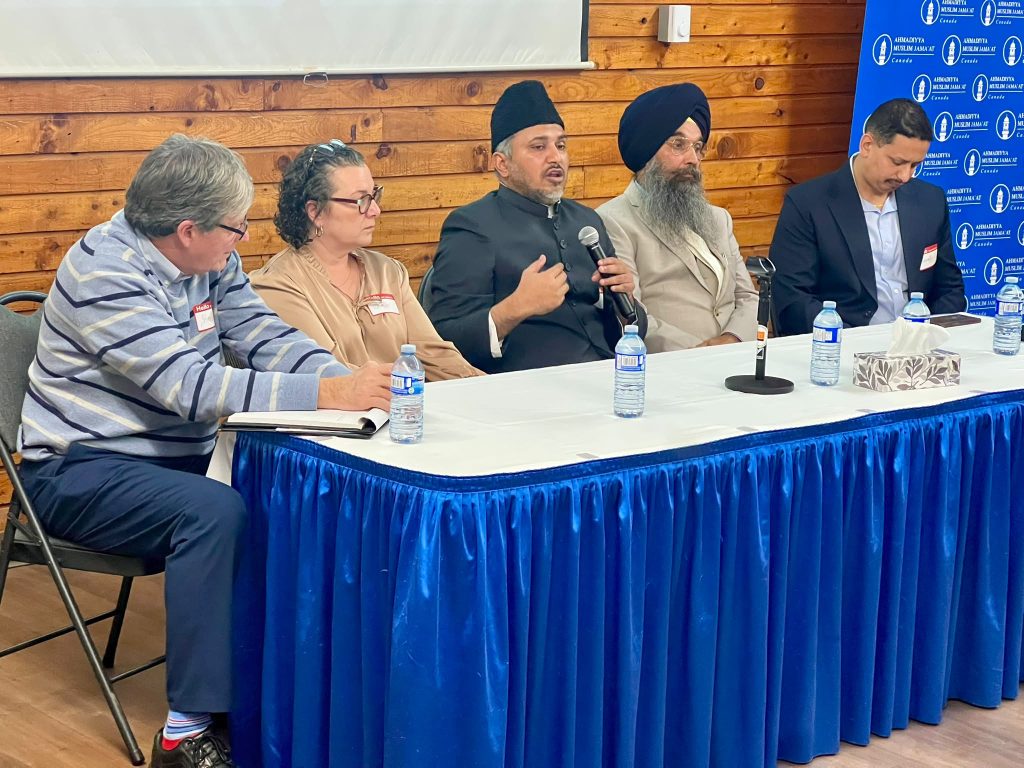
With all the presenters forming the panel, a lively question-and-answer session was moderated. Imam Abid traced much of the present frustration in the region to economic strain rather than to religion, recalling how his own mother wept for the home she had left when the family arrived in the 90s. “From finite resources, you cannot have infinite profit,” he said. Ms Roness, who moved to Moncton from Toronto in 2002, said the growing diversity of the city now feels to her like coming home. Mr Sherman argued that a universal basic income would ease the insecurity that turns neighbours against newcomers, and the panel named housing and food insecurity as the most pressing shared needs in Atlantic Canada.
A silent prayer
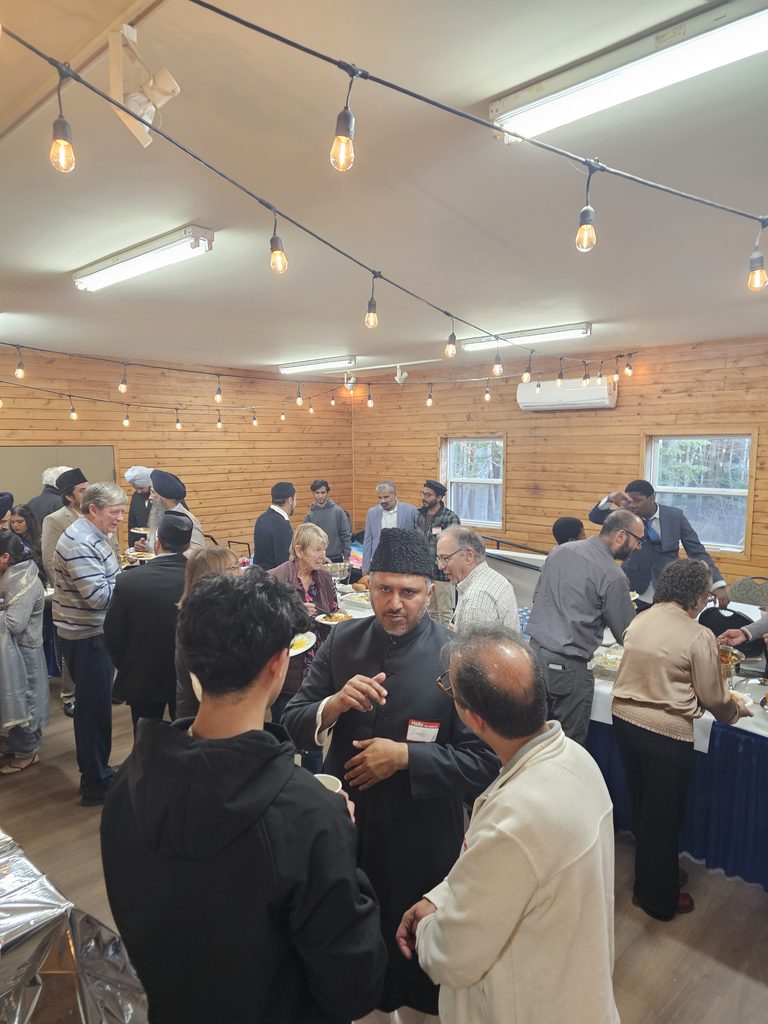
Shams Ahmad, Amir for Atlantic Canada, closed the conference by acknowledging how hard peace is at every level, from quarrels at home to conflicts between nations. “Ego, grievances and the feeling of not being heard are what lead people to fight,” he said. He then invited everyone to pray. “In the Muslim way, we raise our hands in silent prayer. Join us, or pray in your own way, for peace in your homes, your communities and the world.” Then, true to the motto Love for All, Hatred for None, guests and presenters sat down together to share a homemade meal.
References
- Sahih al-Bukhari, Kitab al-Jana’iz, hadith 1312.