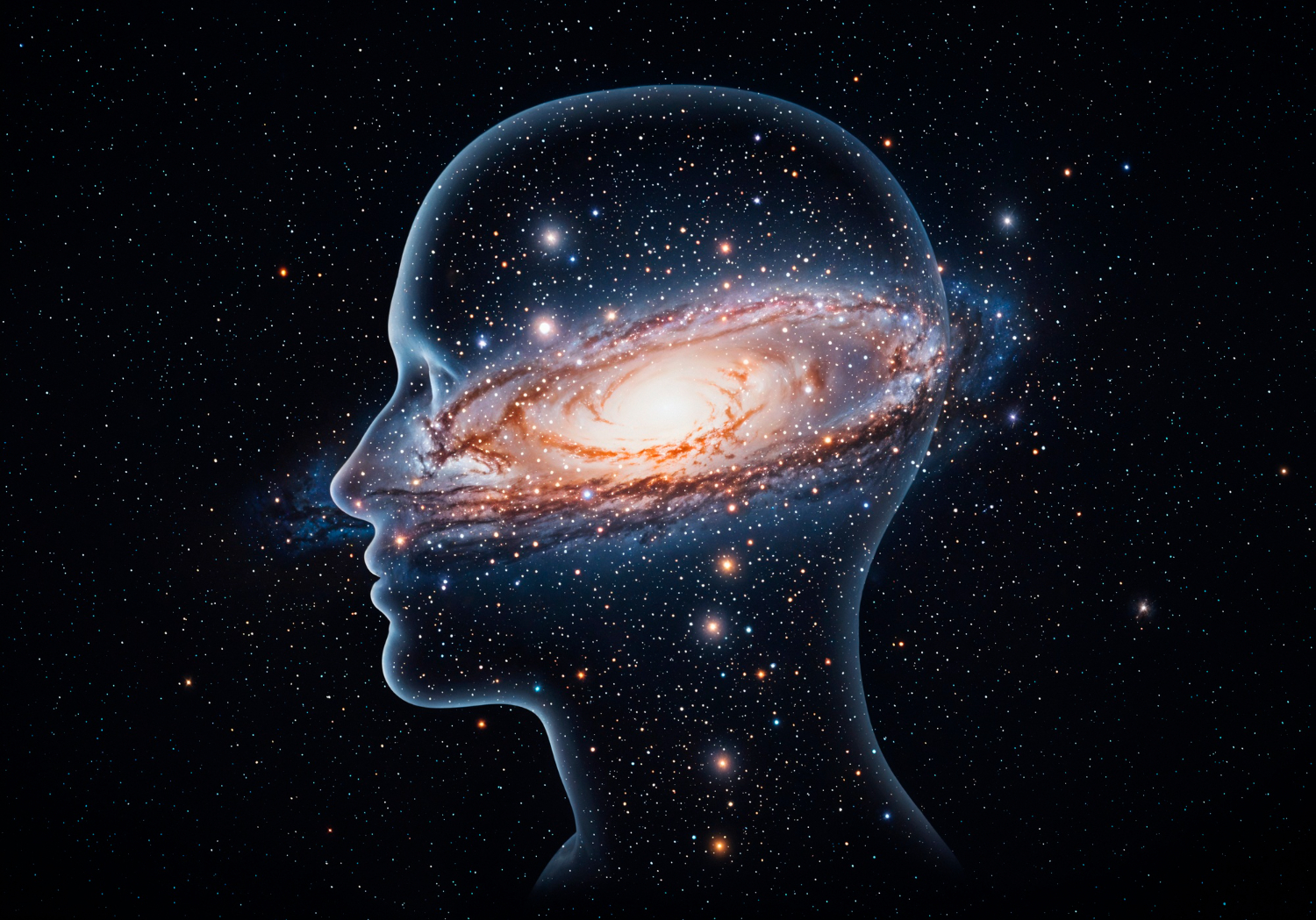
The Arabic term Ulul Albab (أولو الألباب) is a profound Quranic expression that is commonly translated as “People of Understanding”.
One of the most beautiful aspects of this concept is how widely it is applied. The term Ulul Albab appears 16 times in the Holy Quran. At a cursory glance it may appear to be used in different contexts not related to each other. However, a more detailed analysis reveals a deep connection and theme.
The Roots of the Word
The term is a compound phrase consisting of two parts:
- Ulul (أولو): This is a plural noun meaning “possessors of,” “owners of,” or “those who have.”
- Al-Albab (الألباب): This is the plural of the word Lubb (لُبّ).
The Root: L-B-B (ل ب ب)
The literal, physical meaning of lubb in Arabic refers to the kernel, pith, or core of a fruit or a nut (like the meat inside a walnut shell).
- In a metaphorical sense, it refers to the purest essence of the human intellect. An intellect that has been refined by faith, humility, and consciousness of Allah.
- It represents a mind that has been stripped of the “husk” or “shell”—meaning it is free from whims, prejudices, superficiality, and distractions.
Hadhrat Khalifatul Masih III (ra) spoke about this topic in a Friday sermon:
“There is a distinction between ‘aql and lubb. When base desires (hawā al-nafs) become mixed into the ‘aql and it no longer remains pure, the Arabic language still refers to it as ‘aql. However, the Arabic language will not use the term Ulul Albab for such people, because lubb means pure, unadulterated intellect that has reached the pinnacle of purity.” Anvarul Quran, vol:1, page:536-537
Before we delve into the overall theme and concepts of the 16 instances of the word Ulul Albab in the Holy Qur’an. Let’s begin with the verses that describe who the Ulul Albab are:
Remembering Allah and pondering over His Creation
“In the creation of the heavens and the earth and in the alternation of the night and the day there are indeed Signs for people of understanding,
Who remember Allah standing, sitting and lying on their sides and ponder over the creation of the heavens and the earth, which impels them to supplicate: Lord, Thou hast not created all this without purpose, Holy art Thou; shield us then from the torment of the Fire.” [2:191-192]
These verses explain that the Ulul Albab are the people who remember Allah in everything they do, always. They look at the signs and ponder over the creation of the heavens and the earth.
The Ulul Albab are thus the people who perform Dhikr (remembrance) and Tafakkur (reflection, pondering). Dhikr and Tafakkur are the two unique and amazing faculties that Allah has granted human beings. The Ulul Albab make use of both these faculties.
To become Ulul Albab one not only has to be consistent in the remembrance of Allah but also must ponder over the creation of the universe which ultimately leads one to the true meaning and purpose of all creation.
Their reflection over the creation of the universe is not superficial. It is a deep reflection that ultimately results in the understanding that Allah has not created without purpose.
If we compare this conjecture with the research and reflection that most scientists do, they ponder over the signs and the creation of the universe, but they arrive at a very different conclusion. They conclude that the Universe came into being without any creator and without any purpose.
The Promised Messiah (as), while commenting on these verses, states:
“That is, when wise and sensible persons reflect on the structure of the earth and the heavenly bodies and ponder over the alternation of the day and the night, they discover therein reasons in support of the existence of God. Thereupon they seek divine help for greater enlightenment and they remember God standing, and sitting, and lying on their sides, whereby their intellects are sharpened and their pondering over the structure of the earth and heavenly bodies impels them to affirm that this firm and orderly system could not have been created in vain but is a manifestation of divine attributes.” The Philosophy of the Teachings of Islam, page:186-187
In his Quran Class no 49, Hadhrat Khalifatul Masih IV (rh), touched upon this concept in a very thought-provoking way and explains why this verse ends with “…shield us then from the torment of the Fire.”
Huzoor says that objects that do not have a purpose are ultimately discarded or used as fuel. For example, old wooden boxes etc. may be used to burn a fire.
So, people, who are not Ulul Albab, when they ponder over the creation of the universe, they arrive at a conclusion that this is all created without any purpose. If one is not aware of the purpose it is impossible to play one’s part in fulfilling the purpose.
Such people will end up being used as fuel, just like broken pieces of wood. That is why, when the Ulul Albab arrive at the conclusion that Allah has not created in vain, they follow it by asking Allah’s mercy from the torment of fire.
Essence over Appearance
“Tell them: That which is useless and that which is useful are not alike even though the abundance of that which is useless may appear pleasing to you. So be mindful of your duty to Allah, O ye who possess understanding, that you may prosper.” [5:101]
The Ulul Albab prioritize substance over form. They understand that the “pure” and the “impure” are not equal, even if the sheer volume of the impure seems impressive. They are not swayed by popularity or trends; they seek the “kernel” of goodness.
Social and Moral Integrity
“Is he who knows that what has been revealed to thee from thy Lord is the Truth, like one who is blind? It is only those gifted with understanding who take heed;
Those who fulfill Allah’s pact and break not the covenant;
Who join together the ties of kinship that Allah has bidden to be joined, and fear their Lord, and dread the evil reckoning;
Those who are steadfast in seeking the favour of their Lord, and observe Prayer, and spend secretly and openly out of that with which We have provided them, and overcome evil with good. For them is the best reward of the Hereafter:” [13:20-23]
The Ulul Albab are not merely people of knowledge, they are people of action:
- Fulfill their Covenants: They are men and women of their word.
- Maintain Ties: They uphold family and social bonds.
- Seeking favours of Allah: They are always seeking favours of Allah, with prayers and actions.
- Repel Evil with Good: Their intelligence makes them emotionally resilient; they don’t react to negativity with more negativity but seek to de-escalate through kindness.
Critical Thinking and “The Best Speech”
“Who listen to the Word and follow the best thereof, that it is they whom Allah has guided and it is they who are possessed of understanding.” [39:19]
Here Ulul Albab are described as those who “listen to speech and follow the best of it.” This highlights a remarkable openness and intellectual humility. They are not dogmatic or closed-minded; they filter information through a moral and rational sieve, retaining the truth and discarding the noise.
The Ulul Albab use reasoning, but not all people who use reasoning are Ulul Albab. Let’s investigate the prevailing concept of Critical Thinking and how Ulul Albab, although using reasoning, are different from people following the concepts of pure Critical Thinking:
| Aspect | Modern Critical Thinking | Ulul Albab |
| Purpose of thinking | ||
| Core aim | Arrive at accurate conclusions | Arrive at truth that leads to right actions |
| End goal | Knowledge, problem-solving | Guidance, taqwa, and accountability |
| Sources of Knowledge | ||
| Empirical evidence | Central | Valued and reflected upon |
| Logic & reasoning | Central | Essential but subordinate to revelation |
| Revelation | Usually excluded | Primary criterion |
| Ethics & Decision-Making | ||
| Ethics | Often a separate discipline | Integral to reasoning itself |
| Majority opinion | Sometimes persuasive | Irrelevant to truth |
| Action as Proof of Understanding | ||
| Action | Optional application | Necessary validation of understanding |
| Knowledge-action gap | Common | Considered a failure of intellect |
| Scope of Intelligence | ||
| Focus | Cognitive skills | Heart, mind, and conscience |
| Intelligence | Mainly mental | Moral-spiritual intelligence |
Thematic Grouping
Now let’s look at a thematic grouping of all 16 verses that mention the term Ulul Albab:
1. Intellect That Reflects on Creation (Cosmic & Natural Signs)
Theme: Thinking deeply about the universe leads to faith, humility, and certainty. True intellect does not stop at observation; it reaches meaning, truth and purpose
- 3:191 – Creation of heavens and earth as signs for Ulul Albab
- 39:22 – Rain reviving the earth as a sign of resurrection
- 38:30 – Qur’an revealed for deep reflection
2. Intellect Guided by Revelation (Qur’an as Criterion)
Theme: Understanding submits to divine guidance rather than trying to reshape it. Ulul Albab recognize revelation as the highest source of truth. They accept all revelation without distinction and distortion.
- 3:8 – Clear vs. ambiguous verses; acceptance without distortion
- 14:53 – Qur’an as a universal proclamation and warning
- 40:55 – Torah as guidance and reminder for people of understanding
3. Moral Discernment & Ethical Judgment
Theme: Understanding is shown through ethical clarity, not popularity or convenience. Intellect is validated through moral choices.
- 5:101 – Pure vs. impure; majority does not define truth
- 39:19 – Listening carefully and following what is best
- 2:180 – Justice (qiṣāṣ) as preservation of life
4. Learning from History & Human Experience
Theme: Past events are lessons, not just stories for entertainment. History is a classroom for those who reflect.
- 12:112 – Stories of the prophets as guidance
- 38:44 – Trial and restoration of Prophet Ayyub (as)
- 65:11 – Consequences faced by previous communities
5. Taqwa , Knowledge, Wisdom & Spiritual Insight
Theme: Knowledge is transformative only when paired with humility and wisdom. Knowledge without God-consciousness is incomplete. Faith is lived, not merely understood.
- 2:270 – Gift of ḥikmah given to whom Allah wills
- 39:10 – Are those who know equal to those who do not?
- 2:198 – Hajj: taqwa is the best provision
- 13:19 – Recognizing truth leads to righteous conduct
Conclusion
The Ulul Albab are the guided thinkers in Islam. They epitomize the faculties of Dhikr (remembrance) and Tafakkur (reflection, pondering). They use reasoning and logic but do not blindly follow it, their guiding light is revelation.
They refine their minds and purify their hearts; they move beyond the “husks” of a superficial life and join the ranks of those who truly understand the core of existence.
They are not just thinkers and philosophers; action is central to their conduct. Any gap or discrepancy between knowledge and action is seen a weakness of their intellect.