The Wall
Second of four parts, drawn from conversations recorded in August with five men who lived through 1974. Part One ended on 31 May, with Hazrat Khalifatul-Masih III (rh) telling a group of young men that action would now be taken against the Jama’at on a very large scale.
A sixth witness joins the account here, Abdul Wahab Butt Sahib, then a young man of Rabwah, later National Sadr Majlis Khuddamul Ahmadiyya Denmark for nine years and National Auditor for sixteen, now living in England.
Haripur Hazara
Lal Khan Malik Sahib, then Qaid of the local Majlis Khuddamul Ahmadiyya, was working for the telephone department at a research centre in Haripur Hazara, in a departmental colony where the staff was housed. When the disturbances began, he learned that a mob was coming for his house.
He locked it, left his children with a neighbouring Ahmadi family, and went somewhere else, somewhere nobody would know to look.
The mob came and broke the doors. The house was government property, so they did not burn it. They did, however, carry everything inside it into the courtyard and set fire to that instead.
Three other Ahmadi families lived in the same colony, and when they heard what had happened, they left for wherever they could go, locking the doors and taking the keys with them. Lal Khan Malik and a friend, Habib-ur-Rahman Khan Sahib, a deputy superintendent of a jail, worked out that the same thing would be done to those three houses next. So the following night they brought a truck, broke the locks of the three empty homes, carried out everything they could and moved it to safety.
Then he went to Rawalpindi and stayed in the house of a friend, in effect in hiding, and did not go back to his job or his home until after the vote in September.
He went, at some point in this, to his director general, expecting the ordinary sympathy of one man for another. He was told that perhaps the Jama’at had instructed him to burn his own possessions, so that Ahmadis could present themselves to the world as victims.
Fifty-two years later he recounts this without raising his voice, and observes only that this was the man who had a moral responsibility towards his staff.
Karachi
Dr Aslam Daud was about twelve, a pupil at St Patrick’s High School in Karachi, living on the north side of the city. News was arriving from Punjab that Ahmadis had been attacked. Karachi was, by the grace of Allah, mostly safe.
Then the walls of the city began to change. Walking to school, walking to the market, he started to see hurtful messages written on them. Qadianis are unbelievers. Qadianis are British agents. He was in grade seven, and he did not understand what he was looking at.
His friends at school began to argue with him, and the arguments moved from ordinary conversation to religion. He answered them, and they answered him back, and it went on.
The Island
In Rabwah, the pressure took a different form. There was no siege in the military sense. There was a boycott, organised outside the town and enforced on people who had no quarrel with it.
Rabwah in 1974 lived on daily deliveries. Milk came in each morning from Chak Dhandhal and the villages nearby, on bicycles and motorcycles. Vegetables and fruit came in on carts. There was no regular water supply, and mashkis carried sweet water in and took it house to house. There was no modern sanitation, and the latrines built on roofs and in courtyards were emptied by sweepers who came from outside, were paid, and carried the waste away.
All of it stopped and all at once. The milk sellers stopped coming, the vegetable sellers stopped coming, the water carriers stopped coming, the sweepers stopped coming, and every household worked out for itself what that meant. The men who had been turned away lost their own business in the process.
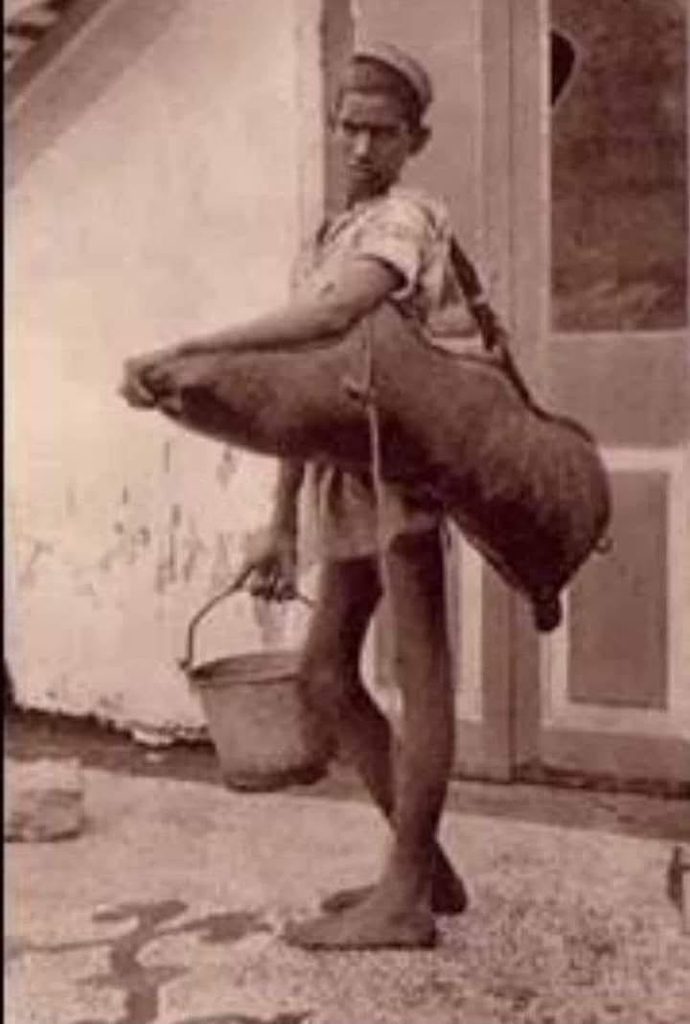
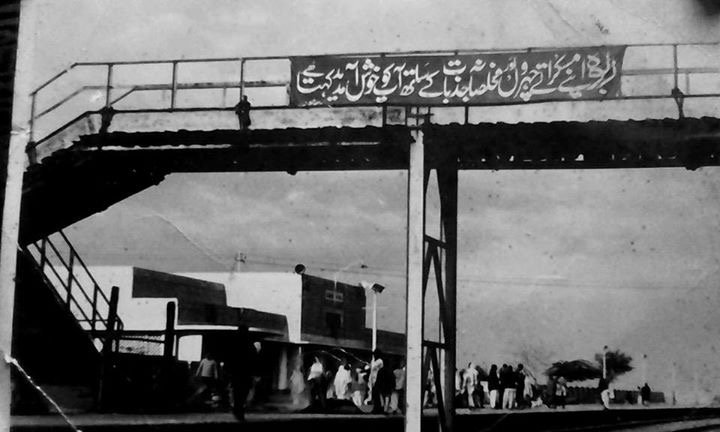
Then the railway station and the bus stand were picketed. Men who travelled daily to Sargodha, Lahore or Faisalabad for work were marked as they boarded and pulled off at the next station to be beaten, at Chiniot, at Faisalabad, at Sargodha, wherever the chance came. Men coming home were identified by their tickets before the train had stopped.
So the town improvised. Near the bridge at the northern edge of Rabwah, an unofficial stop grew where labourers from the surrounding area caught the bus. Abdul Samee Khan Sahib took his father there on a bicycle each morning and left him among the workmen, so that no one boarding would appear to be a man from Rabwah. Families dropped their relatives there, or drove them to the far side of town, and collected them in the same place at night.
It lasted roughly four months. Abdul Samee Khan called the town of Rabwah an island. Under the direction of Hazrat Khalifatul-Masih III (rh), the community organised its own supply. No Ahmadi, he says, was allowed to go hungry.
The police
Mirza Muhammad Afzal Sahib remembers what the Rabwah police station had been like before all this. The men posted there had so little to do that they sat about swatting flies, because everything in Rabwah was handled by the nizam of the Jama’at and there was nothing for them.
After May, the police surrounded the town, and then Rabwah had police everywhere. They patrolled the bus stand, the railway station, and the neighbourhoods. People who had never in their lives had dealings with the police were badly frightened, and the sadran of the muhallas and the Khuddam had to be given duties, and through them the fear in the town was gradually brought under control. The guidance from the Jama’at was to deal with the police as far as the law required and to avoid confrontation.
Then came the arrests, and the method was deceit. Police vehicles waited near the mosques before dawn. A man walking to Fajr would be called over, told there was something to discuss, and anyone who came near was put into the vehicle and taken away. Once the community understood what was happening, word went out to every house individually. Do not stop for the police. If they call you, move away, run, do anything, but do not go near them.
Jamia was closed, and its students were posted to duties at Qasr-e-Khilafat and at Aiwan-e-Mahmood. Students were arrested all the same. Mirza Muhammad Afzal names Munir Ahmad Chaudhry Sahib, later a missionary in Canada and afterwards in charge of MTA, and Mahfoor Ahmad Munib Sahib, later of Japan. They came for him too. He says he was quick on his feet.
Prisoners from Rabwah were taken to Sargodha, and small parties went to visit them and take food. Coming out of the jail one day, six or seven of them realised they were being followed and split up, some heading for the bus stand and some for the railway station. Mirza Muhammad Afzal took the bus. The men who went to the station were fired upon. One of them was martyred. Another survived, lost an eye, and lived afterwards in a great deal of pain.
The Thana
Not everyone was quick enough to run, and the fullest account of what happened to those who were taken comes from a young man of the neighbourhood behind the station.
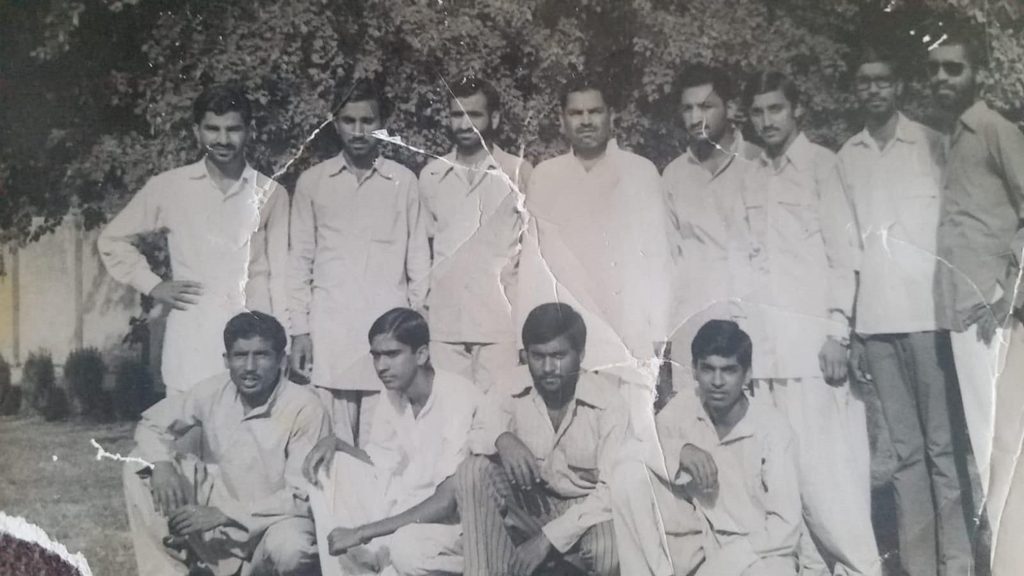
On one of those nights after the Railway incident, after Isha, word came round from the Sadr of Majlis Khuddamul Ahmadiyya that the Khuddam of Rabwah were to gather at Qasr-e-Khilafat, entering by the small rear gate of Masjid Mubarak. Abdul Wahab Butt set out with the others. Nobody yet knew what was happening to them or why.
They had turned off the Anjuman road towards the Lajna office and the girls school when a jeep came up behind them. Somebody called out that a jeep was coming, and they assumed it belonged to Nazir Islah-o-Ishaat, Ahmad Khan Naseem Sahib, since there were very few in Rabwah.
It was the police. An officer got out and asked where they were going. They said they were going to the far side of the wall, where they had duty. He offered to take them to the muhalla office to have it confirmed, and then they could carry on. Young men, a new vehicle. They got in.
The jeep went past the turning for Masjid Mubarak, and then past the turning for the Sargodha road, and did not stop until it reached the police station.
There they were stood against the wall of a building Abdul Wahab Butt remembers as very small. They stood for a long time, and after some hours the inspector allowed them to sit on the ground. Later, stiff from sitting, Abdul Wahab Butt stood up to straighten his legs, and the inspector struck him across the knee with his stick. Ashraf Ali Sahib, elder brother of Chaudhry Hadi Ali Sahib, took him by the arm and told him to sit down, because once they begin hitting they do not look where the blows land.
What he witnessed next, from where he sat, is the reason this account matters.
Bhambri Sahib, who was responsible for the security of Rabwah, came to the station, and the superintendent of police put his position to him plainly. Give me five hundred arrests, and I will go quietly from here. Bhambri answered that he could take the ones sitting outside and the ones he already had inside, and go, and that he would get no five hundred arrests here. He should give up any hope of it.
Abdul Wahab Butt says the superintendent was beside himself. His shirt was open, he was barefoot, and he kept saying that the order had come from above. Abdul Wahab Butt compares him to a bird with a knife at its throat.
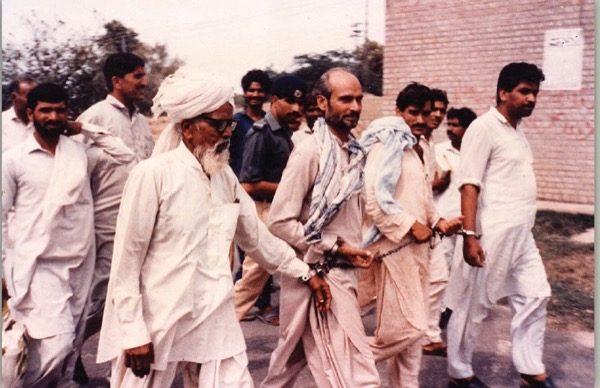
Then the raids began, because the police had by now learned, from the men they had picked up, that the Khuddam were assembling at Qasr-e-Khilafat. They took whoever they found. By morning the station held seventy-one or seventy-two of them. At first light the superintendent ordered the FIR to be written, and they were charged individually, name by name, under a list of sections nobody could keep count of.
Khawaja Mujeeb Sahib, who owned the Kashmir Restaurant in Gol Bazar, arrived with breakfast for the detained. The superintendent, standing in the veranda thinking breakfast was for the police, was pleased and told him to take it inside. Khwaja Mujeeb said that the breakfast was not for him. It was for his children. There was nothing there for him. The superintendent, angered by this response, said that in that case Khawaja Mujeeb could be handcuffed along with them, and he was, and he went with them. He was the only older man among a group of youngsters, and they made him their Amir for as long as they were detained.
Sargodha
All arrested were handcuffed in pairs and put into a truck. Abdul Wahab Butt was cuffed to Ashraf Ali. At Sargodha they stood outside the lock-up for two or three hours while it was worked out that there was nowhere to hold seventy-two men together. In the end a wing of the Central Jail was cleared for them.
The cells were very small. A tall man lying down reached the far wall with his feet, and thirteen were put in each one. To turn over, a man had to sit up, turn, and lie down again. It was the end of May, and it was hot, and there was no fan, only a small skylight set high in the wall. Abdul Wahab Butt says they all went in expecting to be out again by the Fajr prayer, because the standing of the Jama’at was such that it did not occur to them that they would be held for long.
They were held for three months. While Jama’at made efforts every day, for the first twenty to twenty-five days they had no contact with anyone at all, no visitor and no message. They later learned that the order to cut them off entirely had come from a high level of the government.
What the men inside did not know was that outside, the Jama’at had known where each of them was from the first night. His mother told him afterwards that reports had reached the family as he was moved from place to place, and that they knew he had never arrived at Qasr-e-Khilafat. The nizam had taken it upon itself to know which young man from which household was in police custody, and to tell his family.
The living conditions at the jail were despicable. The food was filthy. Locusts were cooked into the bread and lay in the curry. They picked them out, set the curry aside, and ate the bread with water.
Some time later Dr Masud Sahib of Sargodha was brought in, whose house had been burned, and with him his son and his compounder, and Stationmaster Mirza Abdul Sami Sahib [not related to Abdul Samee Khan.] Their number rose to eighty-six. Abdul Wahab Butt took some comfort in the arrival of Stationmaster Mirza Abdul Sami, who was a relative of his, because it meant one of his own elders was in there with him.
Then the first visit was allowed. His mother was the first woman to reach the jail. The Jama’at and the police brought her under full security, in a party of her own, and she had made aloo parathas and sent them in. Other families sent food too. All of it was divided so that every one of the men had a share, which meant the shares were very small. Recounting this, more than fifty-two years later, Abdul Wahab Butt wept.
When he saw her mother that day in 1974, his eyes filled. She saw him from a distance and did not weep. Her instruction to those around him was to stop him from crying. Look, she said, I have come; I am here. There are others with you, and their wives and their mothers. God has, at least, given me this opportunity that I can meet you. Not once, he says, did she ask what was being done to him or how he was being treated. She spoke of all of them as one. His sisters had sent word not to worry, and that God would put everything right.
She had brought something with her. His father, Abdul Razzaq Butt, was in the United Kingdom, and when word had reached him there, he had written directly to the British High Commission in Islamabad to say that this was his son. The answer had come back that if he wished it, as a British subject, they would take up the case and pursue it themselves. His mother put it to him at the bars, with Mansoor Sahib beside her, a lawyer of some thirty-five years standing who knew the family. This is your father’s wish. If you want it, we can do it.
Abdul Wahab Butt, despite his youth, resolutely answered that his place was with the others, right there, in jail.
She reached between the bars, kissed his forehead, and said that this was exactly what she had expected of him. He was the only son of his parents, and he says he was never indulged for it. It was her steadiness that day, he says, that gave him the strength to stand on his feet.
They asked, through Khwaja Mujeeb as their Amir, to be let out of the cells for the Fajr prayer so that they could pray in congregation, and to be locked in after Maghrib rather than before it. Permission was given. Other prisoners watched them and said that these were the people who were supposed to be non-Muslims, and here they were praying in congregation and doing everything Islam asks of a Muslim.
Ten thousand
The instruction Hazrat Khalifatul-Masih III (rh) had given from the pulpit on 31 May reached the men in Sargodha jail. Everyone was to do istighfar at least ten thousand times.
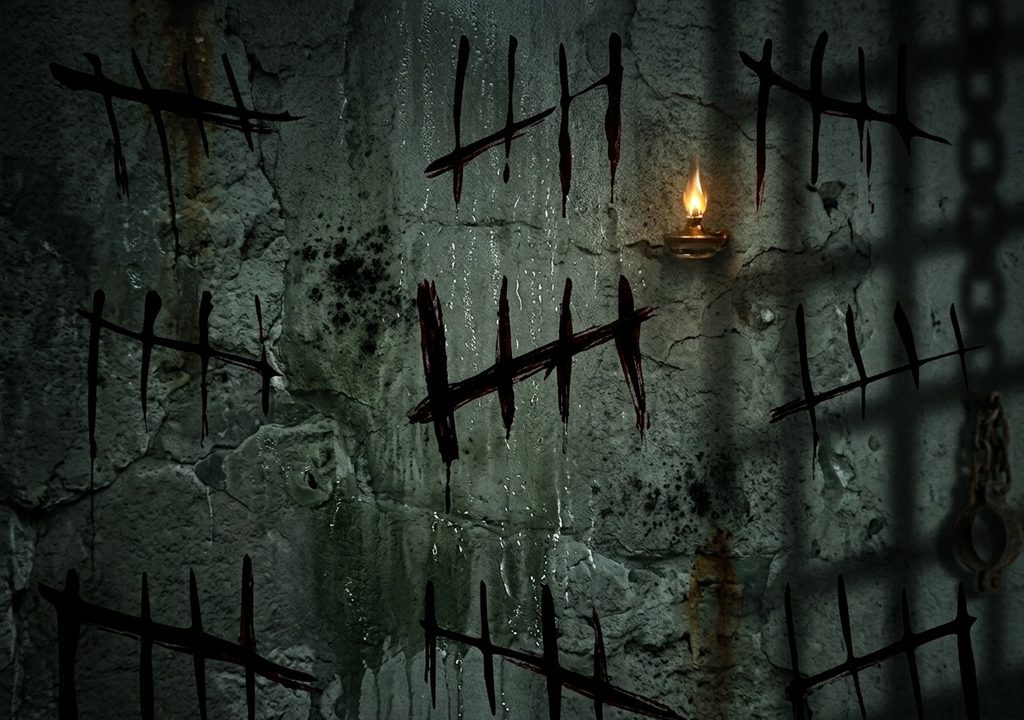
Abdul Wahab Butt set about it. He had no way of keeping count except the wall, so for every hundred he scratched a line on it with a stone or whatever came to hand, where he could see it. The other men in the cell worked out what he was doing.
On the day he scratched the last line, and the ten thousand were complete, he said to himself that today they ought to be released.
They were released that night, at fifteen minutes to midnight.
Part Three, on the house in Islamabad, the special committee of the National Assembly, the evening of 7 September, and the Jalsa of that December, follows.
Notes
Testimony from Abdul Sami Khan, Chaudhry Hadi Ali, Mirza Muhammad Afzal, Lal Khan Malik, Dr Aslam Daud and Abdul Wahab Butt is drawn from interviews recorded by the authors in August and September 2026 and is not separately cited.
Were you or your loved one affected by the events of September 7th ,1974? We would love to hear your story. Click here to contact us.