Widen Your Dwelling
Last of four parts, drawn from conversations recorded in August and September with six men who lived through 1974. Abdul Samee Khan Sahib, then fifteen in Rabwah, later editor of Al Fazl and today a teacher at Jamia Ahmadiyya Canada. Chaudhry Hadi Ali Sahib, then eighteen at Jamia, today Naib Amir of Jama’at Ahmadiyya Canada. Mirza Muhammad Afzal Sahib, then warden of the Jamia hostel, afterwards a missionary in the United States and in Canada. Lal Khan Malik Sahib, then in Haripur Hazara, today Amir of Jama’at Ahmadiyya Canada. Dr Aslam Daud, then a schoolboy in Karachi, today the head of Humanity First Canada. Abdul Wahab Butt Sahib, then a young man of Rabwah who spent three months in Sargodha jail, later National Sadr Majlis Khuddamul Ahmadiyya Denmark for nine years and National Auditor for sixteen, now living in England.
1984
Ten years after the vote, the law caught up with what the mobs had started.
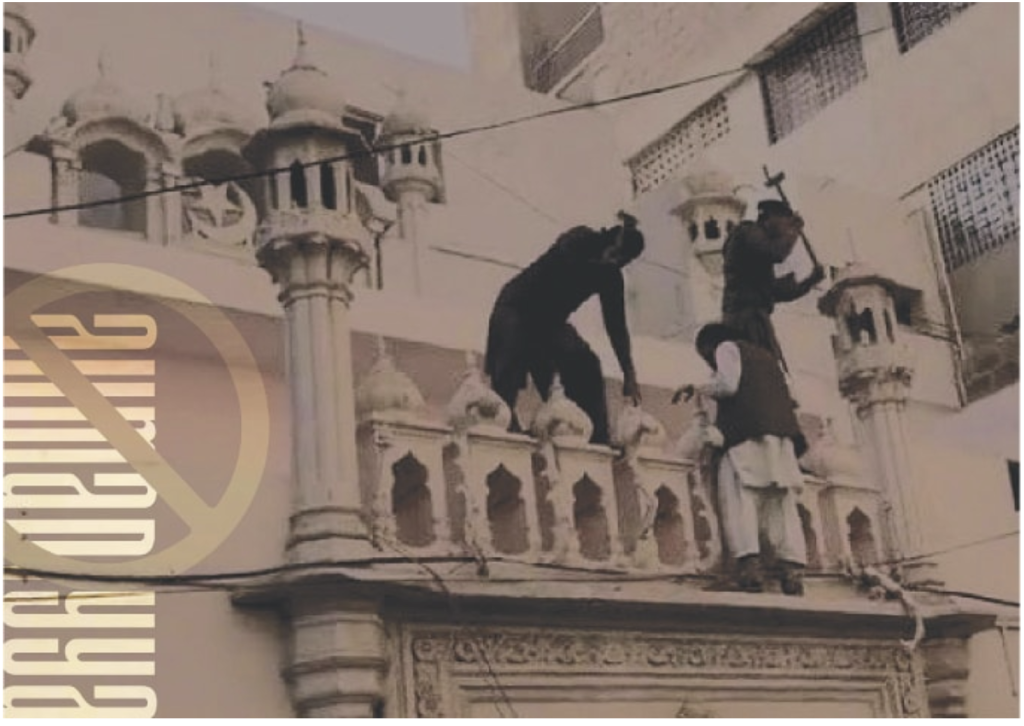
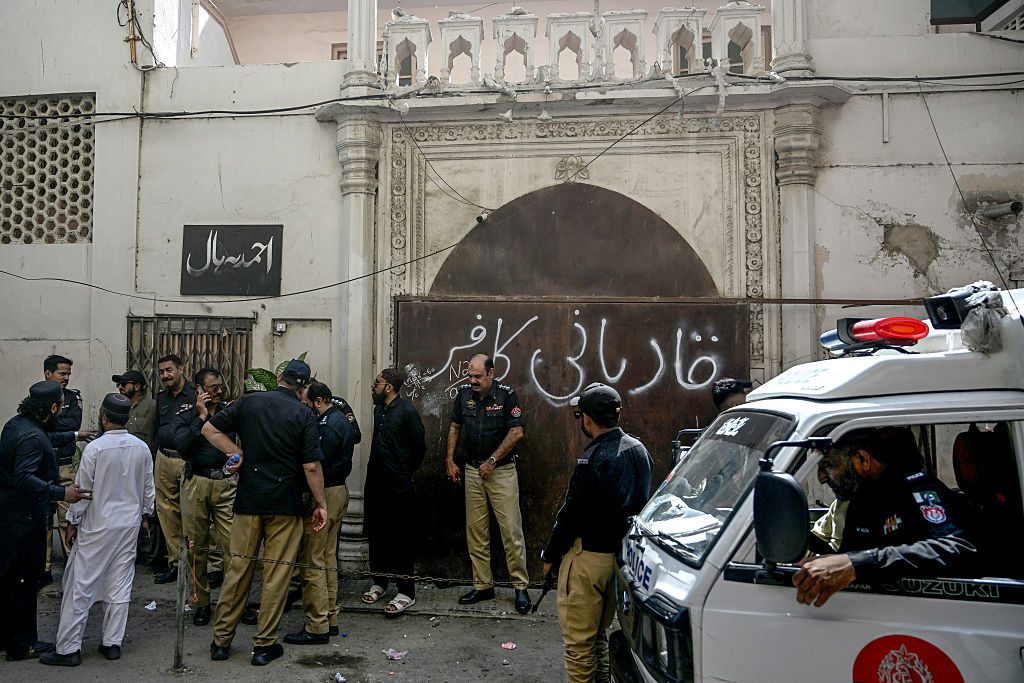
On 26 April 1984, the military government of General Zia-ul-Haq promulgated Ordinance XX, which made it a criminal offence for an Ahmadi to call his place of worship a mosque, to call the azan, to preach his faith, or in any other way to present himself as a Muslim.[1] What had been a constitutional label in 1974 became, in 1984, a matter for the police and the courts. A new layer of hatred, as Lal Khan Malik describes it, opened up inside the country.
By then he was in Faisalabad, working as a divisional engineer. An Ahmadi doctor lived in his own neighbourhood, Dr Abdul Qadir Sahib, a man of great kindness, and he was martyred. After that, Lal Khan Malik understood that the number of Ahmadis in Faisalabad who were locally known and locally visible was small, and that he was one of them. People came to his house. A knife of the kind used for slaughter was found lying in his courtyard. For the first time, he began to think that living in the country had become impossible.
He was not alone in reaching that conclusion, and the same year the Khalifa himself was forced to reach it. Abdul Samee Khan recalls that Hazrat Khalifatul-Masih IV (rh) was advised to leave Pakistan, and that he answered that he could not leave this country, that he would make whatever sacrifice was required, that they might hang him if they wished, and that he would leave an example for the Jama’at. Within days the situation was such that he had to go, and God moved him to London.
Ten years earlier, Hazrat Khalifatul-Masih III (rh) had refused to move the centre and had been able to stay. This time his successor refused and could not. Mirza Muhammad Afzal puts the turning point exactly there. It was 1984, he says, that first made people think seriously about leaving.
A community that had never left
Until then, Ahmadis did not emigrate.
Those who went abroad had been sent. Missionaries were dispatched to open new fields, beginning with Hazrat Chaudhry Fateh Muhammad Sial (ra), who went to England in 1915, and Hazrat Khalifatul-Masih II (ra) later sent men to a dozen countries with instructions to earn their own living, run the mission on their own resources, and preach in their own time. A small number of traders followed them. Ordinary families stayed where they were, and Mirza Muhammad Afzal remembers that even those who went for work went in the hope of improving their circumstances rather than to escape. Whatever the difficulties, people were reasonably settled in their own country.
That changed. A community that had never in its history migrated in numbers began to leave, slowly after 1974 and in earnest after 1984, and it did not stop.
How it worked
The process was slow, easier at first, becoming expensive and often humiliating.
In the early years it was easier than it later became. Germany was the first destination, and the reason had nothing to do with belief. Entry was granted at the airport without a visa arranged in advance, and Ahmadis who had gone ahead and started businesses invited their relatives to follow them. Chaudhry Hadi Ali remembers, as a young man in Rabwah, watching men come home in seven-seater and nine-seater vans that seemed impossibly grand. Scandinavia followed, and the Netherlands, and Belgium. Britain received Ahmadis expelled from Uganda by Idi Amin, and others who came from Kenya and Tanzania. The United States drew the professionals.
Visa requirements arrived in 1987, and after that the road became much harder. Visas were not granted freely, so families travelled through third countries, or on whatever documents they could obtain, and claimed protection on arrival. Large sums were paid for papers. The ordinary corruption of the Pakistani state, freely available to anyone with money, was what many families used to get themselves out. Chaudhry Hadi Ali remembers people selling land and houses worth a great deal for very little, and thinking only that their lives had been saved. Once the movement was under way, the Jama’at organised it, dealt with the governments concerned, and gave it an orderly and decent form. In Canada, Mirza Muhammad Afzal says, a great deal of that work was done under Naseem Mahdi Sahib as Amir, the son of Ahmad Khan Naseem Sahib, who in 1974 had been Nazir Islah-o-Ishaat in Rabwah. In time, Canada overtook Germany.
Two countries
Why those two, out of all the countries that could have taken them? Two of our witnesses give the same answer from different angles.
Lal Khan Malik points to the law. Germany had written into its constitution that a person who was politically persecuted had a right of asylum, and its practice was that anyone arriving at the border and claiming persecution on grounds of belief, race, gender or religion could not be sent back until the claim had been determined.[2] If the claim was true, the state was bound to shelter the person and to extend to him the rights of its own citizens. Mirza Muhammad Afzal says the same of both Germany and Canada. Their governments accepted that real persecution had occurred, and granted status on the basis that life and property were at risk.
Lal Khan Malik does not regard any of that as a coincidence. On one side, he says, God pressed the community out of Pakistan. On the other, God had already moved the peoples of the democracies to decide that they should stand against oppression and help the oppressed, and had moved their parliaments to write that decision into law. It was one plan, and it was being operated from both ends at once.
One of thousands
Every family that migrated has a story of its own, and most of them have never been written down. Lal Khan Malik is one of thousands, and the only reason his is told here is that he agreed to tell it.
He moved in stages. A training opportunity took him to the United States in 1986, and while he was there he visited Canada. He had already seen parts of Western Europe and the United States. Canada, he says, won his heart because he felt it was more welcoming to immigrants than the other countries were.
The following year he went to the Jalsa Salana in the United Kingdom. He had already made up his mind. He informed Hazrat Khalifatul-Masih IV (rh) of his intention and asked for prayers, and Huzoor (rh) approved it.
What he found here was small. The Jama’at in Canada was like an extended family, and the welcome was very warm. He attended Jalsa Salana Canada in 1987, and every male participant at that Jalsa could be fitted into one photograph.
Anyone who has stood in the crowd at a Jalsa Salana Canada in recent years can do the rest of the arithmetic for themselves.
Looking back over the whole of it, from the mob at Haripur to the office he now holds, he says that arriving in Canada made him feel that the earth of Allah is wide and welcoming, and that he had no idea the small trouble faced in Pakistan would result in such favours in Canada.
He calls it the small trouble. It included his house broken into, his possessions burned in the courtyard, months in hiding, his own director general suggesting he had set the fire himself, a martyred neighbour and a slaughtering knife in his yard. The phrase is his, and it says something about the people who came here that no description of ours could say as well.
Not everyone who migrated was given the chance to choose. Years later, Abdul Samee Khan was editor of Al Fazl in Rabwah when the government moved to bring capital charges against the editors of the Jama’at newspapers and magazines under the blasphemy provisions. Hazrat Khalifatul-Masih V (aba) decided that all of them were to leave Pakistan. A visa was arranged for Ghana, and Abdul Samee Khan went there alone, without his wife and children, into a wholly different culture, with incomplete belongings, and under instruction to carry no paper of any kind that would show he was an Ahmadi, in case he was stopped at an airport on the way. Behind him he left his children, his home, his mother, his friends, and the streets of Rabwah where he had spent forty-five years.
When he speaks of it, he tells of the words of the Holy Prophet Muhammad (sa) on leaving Mecca, that it was the dearest of lands to him, and that its people would not let him remain in it.[3] He also reaches for the men he met afterwards in Britain and in Scandinavia who had come with no language and no way of earning, who told him that in those first months they would sit together at night and weep, and say nothing, and that the missionaries and the elders of the Jama’at in those countries were what held them up.
What it was for
Lal Khan Malik does not treat any of this as an accident of politics, and he is the witness who presses hardest on the question of purpose.
His argument begins where the Jama’at began. The Promised Messiah (as) wrote in Tadhkiratush-Shahadatain that the third century from that day would not be completed before those awaiting the return of Jesus (as), Muslims and Christians alike, abandoned that belief, that there would then be one religion in the world and one leader, and that he had come only to sow a seed, which having been sown by his hand would now grow and flourish and could not be stopped.[4]
The community knew this. The Khulafa prepared for it, sent out missionaries, and established the waqf-e-zindagi. But the general body of the Jama’at, in his judgement, never developed the consciousness that this was its own work to do, and never offered itself in the numbers the promise required. So God arranged the conditions. In his words, the decree of God pushed the community out of Pakistan by the ear, and pushed it into exactly those countries where God wished the message to arrive quickly.
Then he reaches for the parallel that every one of our witnesses reached for independently. While the Holy Prophet Muhammad (sa) remained in Mecca, no punishment came upon its people. It began when he left. The migration itself, he points out, has the outward appearance of a helpless man going somewhere to seek shelter, and it was the opening of the door of victory.
Dr Aslam Daud, when asked what the young should understand, arrives at the same conclusion. Looking back over fifty-two years, he says it was bound to happen, and that it was a requirement for the Jama’at to spread and flourish. It happened to the Holy Prophet (sa), who was persecuted and driven out of his own city. If it happened to him, there was no reason it should not happen to his community. He calls the whole of 1974 a repetition of what he had read about the life of the Holy Prophet (sa).
Still waiting
At this point in a story like this, there is a temptation to close it and be thankful. The six men we interviewed would not allow it!
People are still waiting. Mirza Afzal describes what a family goes through in order to claim protection, and it has not become easier. Those who cannot obtain visas go to the countries where visas are least difficult, Thailand and Indonesia among them, and they sit there. There are people, he says, who have been sitting for ten years and whose turn has not come, and who cannot move on to any country where they would have rights and freedom.
The day before we spoke to him, he had met a family who had spent nine years in Thailand. He says you could hear it in the way they talked and see it in their faces.
Fifty-two years after the vote, the road that brought most Canadian Ahmadi families to this country is still full of people who have not reached the end of it.
What the elders ask of us
Every one of our witnesses was asked what the children born in this country should be told, and not one of them reached for sentiment, but rather for practical advice.
Abdul Samee Khan said that our generation here is fortunate in a way his was not, because it was given freedom, and that this is exactly the difficulty. A man who has been hungry and is then given bread gives thanks for it. A man who has always had bread eats it without a thought. What he asks for is reading. He asks that young Ahmadis read the histories of the Jama’at, and in particular the history of the Jama’at in Canada, which records that the first Ahmadi reached this country around 1919, that Hazrat Khalifatul-Masih III (rh) visited in 1976, and that the first missionary followed in 1977. Canada, he notes, is the only country in the world where the Khalifa came before the missionary.
Chaudhry Hadi Ali puts the duty on the parents. Do not forget your own identity, he said, and do not hand your children a different one, because if you forget it yourself, they will certainly take another. He asked, in the middle of the interview, that 1974 be made the subject of proper gatherings rather than a family anecdote, so that people understand not only that things became hard in Pakistan and we came here, but what stood behind it and what came out of it. He also pointed to the other side of the account. The number of children born in Canada and in Europe who are devoting their lives to the service of the faith is rising.
Abdul Wahab Butt, who spent three months in Sargodha jail, reaches for the same word Lal Khan Malik uses. He calls it a small sacrifice, and says he cannot put into words what God has given him in return for it. From 1974 to this year, he says, he cannot imagine where the help comes from, only that it comes. And the courage his mother gave him at the bars of that jail came, in his account, from nowhere but the blessing of the Jama’at, of Khilafat, and of the Promised Messiah (as).
Dr Aslam Daud was born an Ahmadi. After the months of 1974, after the bullying from boys on the school staircase and the slogans on the walls and the uncle who was martyred, he went looking for the answers himself, read the books of the Promised Messiah (as), and argued his way through school and medical college. He says he may have been a born Ahmadi, but he became truly an Ahmadi afterwards. He later took his classmates to Rabwah so they could see for themselves whether it was full of paradise and houris as they had been told, and took one friend to Qadian.
The choice
At Jalsa Salana Canada on 12 July 2026, Lal Khan Malik, Amir Canada, recited a verse that the Jama’at in this country has been living inside without always noticing it. To those who left their homes for the sake of Allah after they had been wronged, God promises a goodly abode in this world, and a greater reward in the hereafter, if they but knew [Al-Nahl, ch.16:v.42].[5]
Then he recited a second one, which is harder to hear. When trouble touches man, he calls upon God, and when God bestows a favour on him he says that it has been given to him on account of his own knowledge [Az-Zumar, ch.39:v.50].
He argued that the story most of our young people have been told about their own families is quietly false. They have grown up hearing that their parents came here for a better economic future, and that account steals something essential from them. We were not scattered, he said. We were planted. We were neither refugees nor economic migrants. We were a seed.
He put the question that this whole history exists to put to us. When our children look back at the generation that came to Canada, will they remember people who escaped persecution and built comfortable lives, or will they remember people who understood why God had brought them here?
And he answered it in words he later set down for us in writing.
I wish to remind my brothers and sisters, particularly the youth of Canada Jama’at, that Allah has assigned us a noble role as Ambassadors of Islam. We must remember this distinction: we are not like anyone else. We are the carriers of the message of Islam, whose glorious dominance in the near future is a Divine Decree. We must exert our utmost efforts to convey the beautiful message of Islam to all around. If we accept this role willingly and passionately, we would be the most fortunate. But if we don’t, we would be the most unfortunate. The choice is ours.[6]
In 1974, a small town in Punjab was cut off from the essentials of life. Yet, its Khalifa was told to make his houses bigger, because the guests would keep increasing in number.
Fifty-two years later, in a country most of those people had barely heard of, the guests are here.
What remains is the part that God left to us.
Notes
- Anti-Islamic Activities of the Quadiani Group, Lahori Group and Ahmadis (Prohibition and Punishment) Ordinance, 1984, Ordinance XX of 1984, Gazette of Pakistan, Extraordinary, 26 April 1984. For a summary of its effect see United States Department of State, Bureau of Democracy, Human Rights and Labor, International Religious Freedom Report 2001: Pakistan, https://2009-2017.state.gov/j/drl/rls/hrrpt/2001/sa/8237.htm.
- Basic Law for the Federal Republic of Germany, art. 16(2), as in force before the amendment of 1993, which provided that persons persecuted on political grounds enjoy the right of asylum.
- The saying is recorded in Jami’ al-Tirmidhi, Kitab al-Manaqib, and is cited here as recalled by Abdul Samee Khan in an interview.
- Mirza Ghulam Ahmad, Tadhkiratush-Shahadatain, in Ruhani Khazain, vol. 20 (Rabwah: Nazarat Isha’at), 67, as quoted in Lal Khan Malik, “Building Our Legacy,” address at Jalsa Salana Canada, 12 July 2026, published on AhmadiyyaJournal.ca, 22 July 2026, https://ahmadiyyajournal.ca/history-canada-jamaat/building-our-legacy/.
- Lal Khan Malik, “Building Our Legacy,” address at Jalsa Salana Canada, 12 July 2026, published on AhmadiyyaJournal.ca, 22 July 2026, https://ahmadiyyajournal.ca/history-canada-jamaat/building-our-legacy/. The verses [Al-Nahl, ch.16:v.42] and [Az-Zumar, ch.39:v.50]
- Lal Khan Malik, written communication to the authors, August 2026, in continuation of the address cited above.
Testimony from Abdul Samee Khan, Chaudhry Hadi Ali, Mirza Muhammad Afzal, Lal Khan Malik, Dr Aslam Daud and Abdul Wahab Butt is drawn from interviews recorded by the authors in August and November 2026 and is not separately cited.