

There is a narration of the Holy Prophet (sa) that captures the heart of Tabligh in a nutshell. Hazrat Ibn Abbas (ra) relates: “We were commanded to speak to people according to their level of understanding and intellect.”
At first glance this may seem a small matter of manners. However, if one ponders upon it, one realises that it is a guiding rule for anyone who wishes to convey the message of Islam and Ahmadiyyat with success. The truth a person carries may be perfectly sound, yet whether it reaches another heart depends a great deal on how it is delivered. Hazrat Khalifatul Masih V (aba) has explained that the very same words, expressed in one manner, can turn a person into an enemy, while expressed in another, can turn him into a friend [Friday Sermon – 12 December 2025].
This principle is rooted in the Quranic command that opens the whole subject of tabligh: “Call unto the way of thy Lord with wisdom and goodly exhortation, and argue with them in a way that is best.” (The Holy Quran, 16:126) Explaining the word “wisdom” (hikmah) in Tafsir-e-Kabir, Hazrat Musleh-e-Maud (ra) noted that one of its meanings is speech that suits the time and the occasion. According to this meaning, while preaching, one should speak in a manner suited to the moment, first assessing the temperament of the listener. If a particular argument is likely to provoke anger so that the person will no longer listen, then there is no benefit in needlessly inciting him; other arguments should be placed before him which he can hear calmly. (Tafsir-e-Kabir, Vol. 4, pp. 271-274)
The aim is not to flatter or to dilute the truth, but to ensure it is actually received. Hazrat Musleh-e-Maud (ra) observed that some speakers use complex words and terminology to impress their audience. Such speeches may overawe the ignorant, but no one truly benefits from them. When the same matter is explained in simple language, an ordinary listener can grasp the point and is far more likely to pay attention.
The lives of the Prophets show this principle in practice. The Holy Quran draws our attention to the wisdom of the Prophet Joseph (as) during his imprisonment. Two fellow prisoners came to him asking for the interpretation of their dreams. The Prophet Joseph (as) saw in this a precious and rare opportunity to convey his message. Yet he understood his audience. Fearing that they might grow restless if he simply began to preach, he first reassured them that he would not take much of their time and would finish before their meal arrived. Because they were waiting, and because he had set their minds at ease, they were ready to listen attentively. (Tafsir-e-Kabir, Vol. 3, pp. 312-313)
The lesson is that even a true and welcome message must be offered in a way that does not become a burden on the listener. The point should be conveyed, but gently and at the right moment.
The same wisdom appears in the life of the Holy Prophet (sa). In the early days of his claim, when he wished to convey the message of Islam to the people of Mecca, they would avoid him and refuse to listen. On one occasion he arranged a meal and invited them, intending to preach during the gathering; but they rose and left before hearing him. The next time, the Holy Prophet (sa) adjusted his approach. He invited them again, but before the food was served, he announced his claim and conveyed his message. Since they were waiting for the meal, they remained seated, and he was able to deliver what he had to say. (Tafsir-e-Kabir, Vol. 3, pp. 312-313)
Here we see not stubbornness but adaptability. The message never changed; only the method changed, shaped around the disposition of the listeners.
The Promised Messiah (as) gave this principle a memorable image. He said that every lock has a key, and there is a key for speech as well, which is to speak appropriately. Just as one medicine benefits one patient and a different medicine benefits another, so too every statement can benefit a particular person when said in a particular way. It should not be the case, he said, that one speaks in the very same way to everyone.
He illustrated this from his own life with the account of a government revenue officer who used to argue with him and even mock him. The Promised Messiah (as) said in his heart that he too would not give up on the man. He persisted, addressing him with care, and at last, after ongoing conversation, the very person who had been laughing began to weep. (Malfuzat [English], Vol. 10, pp. 152-153) A righteous person, he observed, may at first appear callous, yet may be inwardly blessed; if one persists with him according to his understanding and with wisdom, he will eventually comprehend.
This principle is not only about choosing the right words. The Promised Messiah (as) reminded us that speech can never truly influence others if it does not spring from a sincere heart and is bereft of the power of action. This is why the Holy Quran asks, “Why do you say what you do not do?” (The Holy Quran, 61:3). The unmatched influence of the Holy Prophet (sa) over the hearts of people, he explained, flowed from the perfect harmony between his words and his deeds. (Malfuzat [English], Vol. 1, pp. 65-66)
To speak to people according to their understanding, then, is to combine three things: knowledge of the truth, awareness of the listener, and sincerity of one’s own heart. Our duty is to keep conveying the message in the best manner we can. As Hazrat Khalifatul Masih V (aba) reminded us in his sermon, drawing results and creating acceptance in hearts is the work of Allah the Almighty alone.





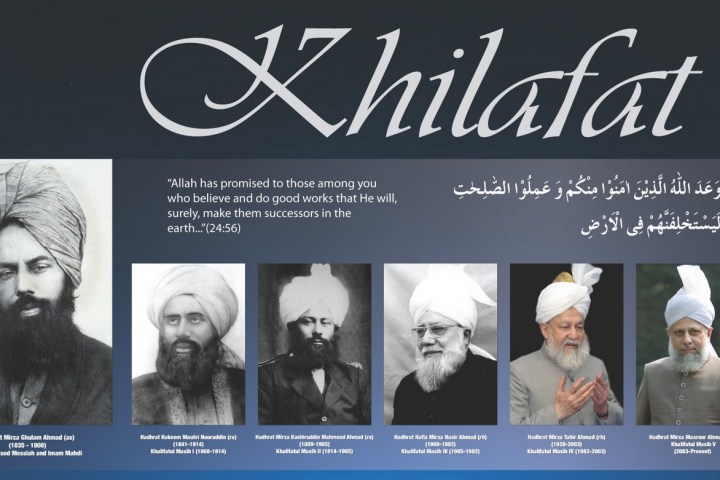

This article beautifully highlights a foundational principle of Tabligh in Islam Ahmadiyyat: that the success of conveying the message does not rest only in the truth itself, but in presenting that truth with wisdom, empathy, and appropriateness. Drawing upon the Holy Qur’an, the sayings of the Holy Prophet (sa), the examples of earlier Prophets, and the guidance of Khulafa, the article reminds us that effective preaching requires a deep understanding of the listener, a sincere heart, and a manner of expression that opens the door to acceptance. Such guidance serves as a beacon for every da‘i ilallah striving to convey the message of Islam in the most beautiful and impactful way.