After Four Decades of Growth, Moncton’s Muslim Community Celebrates its First Mosque in New Brunswick
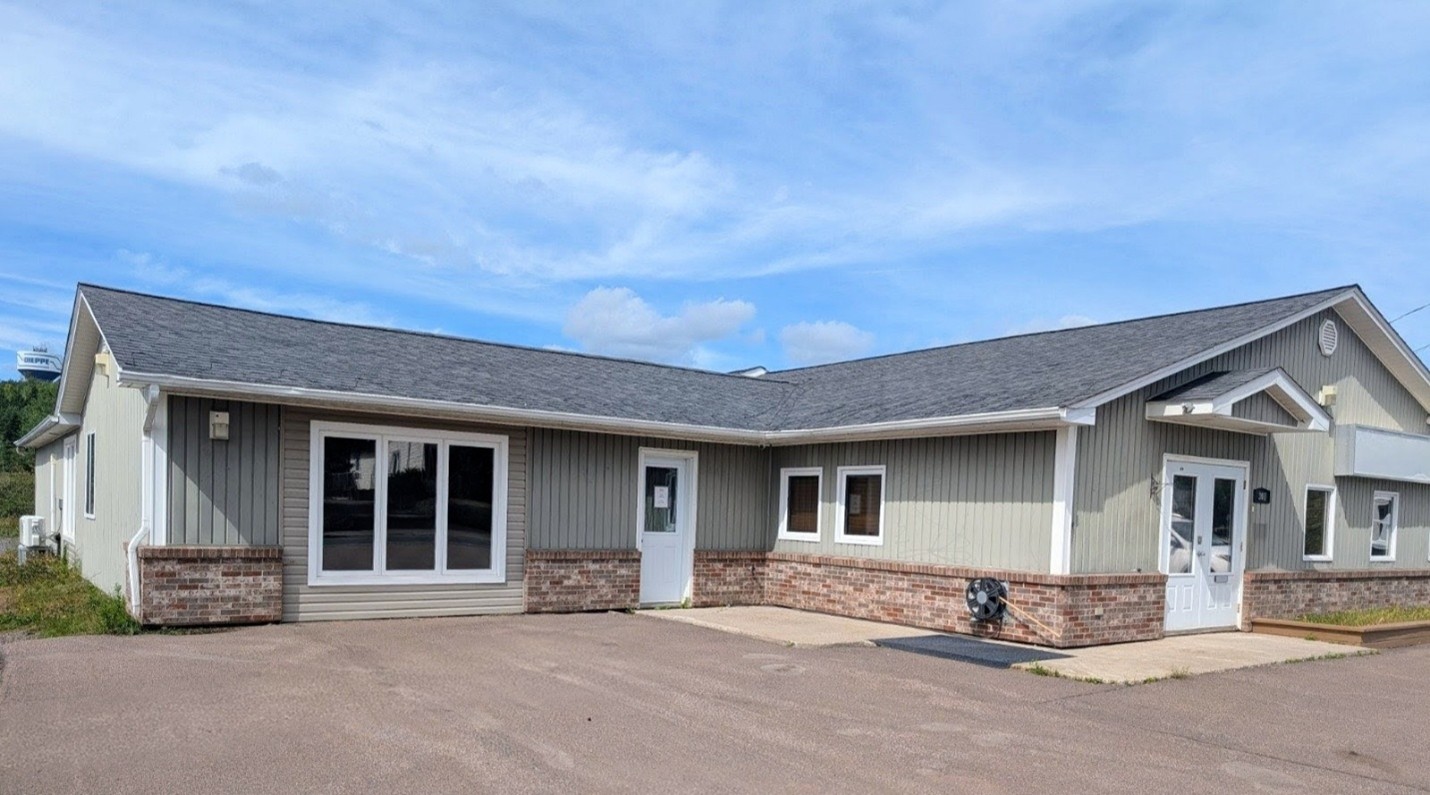
- Moncton’s Ahmadiyya Muslim Community inaugurated Baitul Hayee Mosque, its first mosque in New Brunswick, on 1st August 2025, following decades of patient growth from a single member to a formal Jama’at.
- The acquisition was made possible through deep financial sacrifice and a persistent, multi-year search for a property suitable to serve as the regional religious hub.
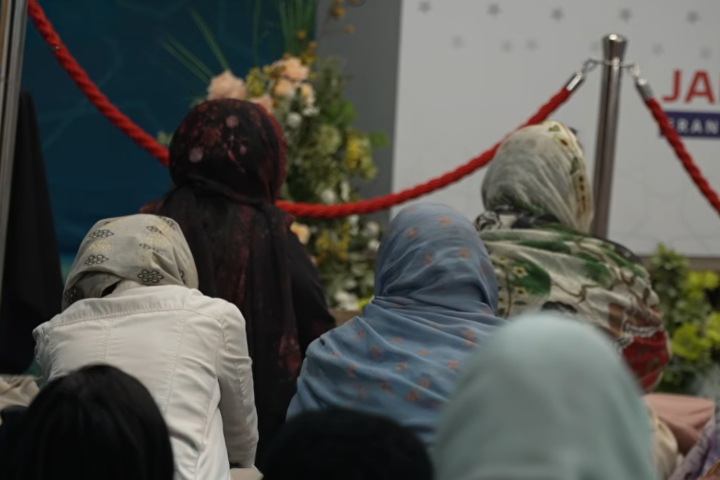
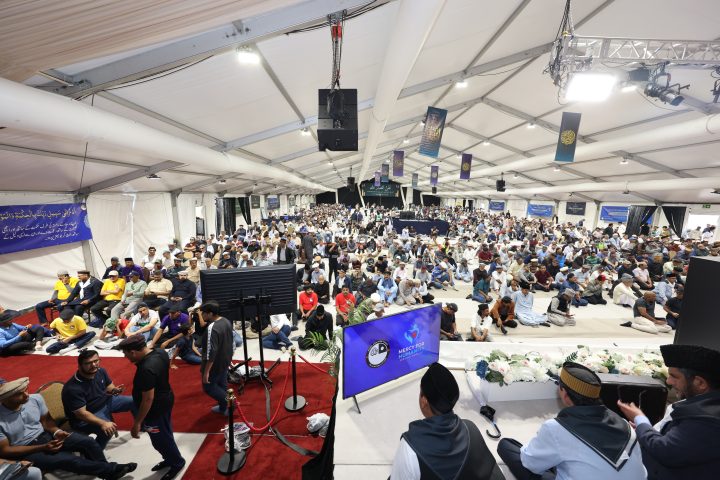
On 1st August 2025, in a modest building in Moncton, New Brunswick, worshippers gathered for Friday prayers. The rooms were dark, as there was no electricity, but the light of faith could be seen from afar. For the members of the Ahmadiyya Muslim Community celebrating their first congregational prayers in their newly acquired mosque, Baitul Hayee, the moment represented something far greater than temporal comfort. It was the culmination of nearly half a century of patient community building in Canada’s Maritime provinces.
From One Member to a Jama’at
The Ahmadiyya Muslim Community’s journey in New Brunswick has been one of steady growth from the humblest of beginnings. In the late 1970s, the late Chaudhary Latif Ahmad Sahib became the first Ahmadi Muslim to establish residence in Saint John. By 2010, just fifteen years ago, the situation remained difficult. Dr. Laeeq Tahir Sahib found himself as the sole representative of the faith in Moncton, unable even to hold the Friday congregational prayers.
“In 2010, just fifteen years ago, there was no Jummah held in Moncton because one single person was living here,” noted a member from Prince Edward Island, underscoring the remarkable transformation that followed. The intervening years saw families gradually establish roots in the region, among them Hammad Ahmad Sahib, Dr. Lutful Hannan Sahib, Shamsuddin Ahmad Sahib, and Dr. Wissam Alburaki Sahib. This gradual increase enabled regular Friday prayers and, in 2018, the formal establishment of a Jama’at.
The broader pattern is one familiar across Atlantic Canada, where smaller cities have increasingly attracted professional immigrants drawn by employment opportunities and more affordable living. Yet the Ahmadi experience suggests that even modest population growth can yield significant institutional results when matched by sincere community commitment.
Sacrifice in the Path of Allah
No aspect of the acquisition of Baitul Hayee Mosque better illustrates the community’s dedication than the financial sacrifices members willingly offered. Regional Amir Shamsuddin Ahmad Sahib recounted moving accounts of devotion: sisters donating their jewellery, families willing to take on debt, and members seeking to contribute beyond what their means would allow.
Dr. Wissam Alburaki Sahib, Sadr Jama’at Moncton, framed these contributions in spiritual rather than material terms, referencing a hadith of the Holy Prophet Muhammad (sa): “One dirham surpassed one hundred thousand dirhams…” (Sunan an-Nasa’i 2480). The teaching reminds us that it is the sincerity in the heart, not the size of the amount, that earns reward in the sight of Allah the Exalted.
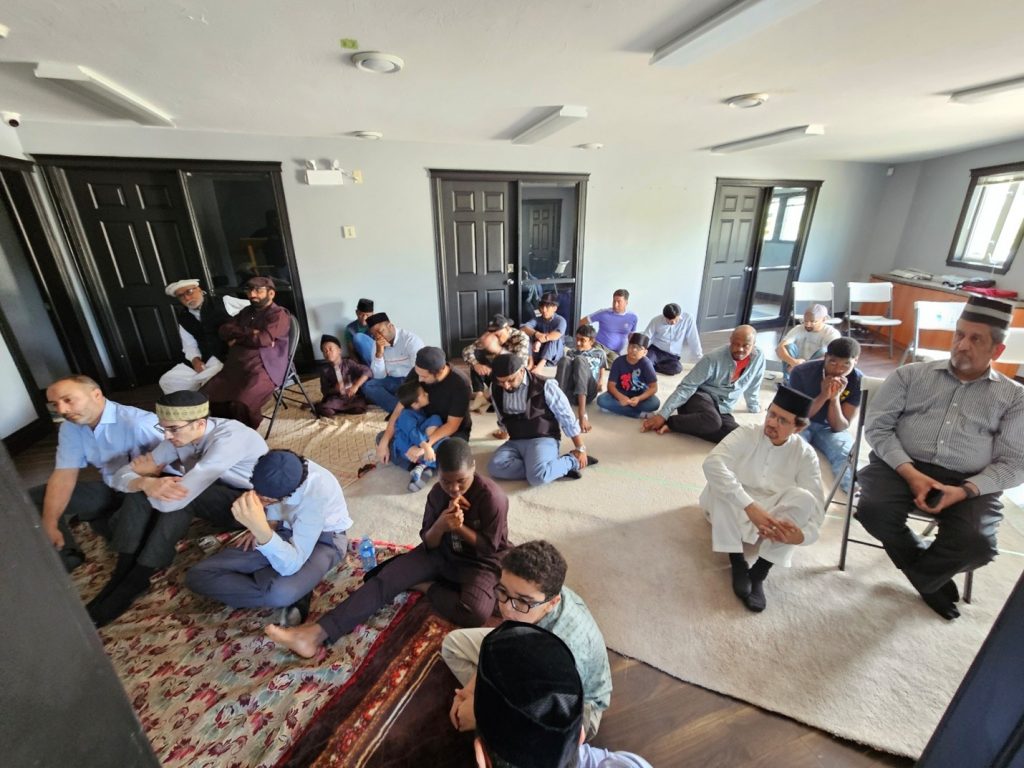
The ceremony itself embodied this spirit of prioritising the spiritual over material convenience. Faced with the challenge of no electricity, organisers pressed ahead rather than postpone. Dr. Alburaki Sahib drew inspiration from the moment, recalling how “the Companions of the Holy Prophet (sa) constructed the first mosque without modern amenities, but with abundant spiritual fervour.” He shared the Arabic invocation from that historic construction:
اللّٰهُمَّ إِنَّ الْأَجْرَ أَجْرُ الْآخِرَة فَارْحَمْ الْأَنْصَارَ وَالْمُهَاجِرَة
“O Allah, the true reward is the reward of the Hereafter, so have mercy on the Ansar and the Muhajirun.” (Sahih al-Bukhari, Kitab al-Manaqib)
This was the prayer of the Holy Prophet Muhammad Mustafa (sa) alongside his Companions (ra), as they carried bricks to build the first mosque of Islam.
The Long Search for a Home
The spiritual devotion that motivated the acquisition was matched by a methodical, multi-year search that reveals much about the practical challenges facing minority religious communities in smaller Canadian cities. The initiative was first led by Mubasher Badr Sahib (former Murabbi for Atlantic Canada) and Abdul Razzaq Qureshi Sahib (former Regional Amir), with support from community members including Dr. Laeeq Tahir Sahib and Shamsuddin Ahmad Sahib. Work began in late 2018, before COVID-19 would complicate an already complex process.
Moncton’s selection was a matter of strategy rather than mere convenience. Its central location in the Maritimes (excluding Newfoundland), along with its growing local and immigrant population, made it the logical hub for regional activities. Translating this logic into property ownership, however, would prove far more challenging than community leaders initially anticipated.
Early attempts to acquire church properties were halted by the pandemic, and the community gradually realised that support from the national Canadian Markaz would be essential, as the local communities across Nova Scotia, New Brunswick, and Prince Edward Island simply lacked the financial capacity for independent action.
Over the years that followed, many properties were considered and pursued, but for one reason or another, none of them could be finalised. Some fell through due to zoning and municipal considerations, others due to the condition of the building, the cost of necessary repairs, or limitations that made the site unsuitable for use as a house of worship. Each step, though it did not lead to acquisition, brought the community closer to understanding what was truly needed.
The careful search, spearheaded by Talat Nasreen Sahiba and Zahid Abid Sahib (Murabbi for the Maritime provinces), ultimately considered approximately fifty properties between them. Among the most serious contenders was a 4.525-acre lot in Riverview, near central Moncton, priced at $425,000. Zoned as Suburban Commercial on Hillsborough with R1 designation on the lower portion, it offered good highway access and reasonable proximity to existing community members. The land size seemed well suited to local Jama’at needs for the near future, and the price appeared reasonable. Yet like several other prospects, this too proved unsuccessful.
Properties in Saint John were also considered, but Moncton remained the preferred location, both for its strategic value and for the effectiveness it would offer in serving community needs and tabligh activities. Before the successful acquisition, three other properties were seriously pursued, with bids placed and proposals sent, but all proved unsuccessful.
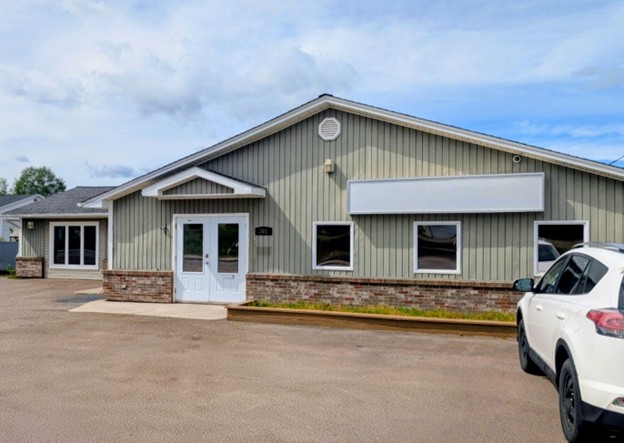
By the Grace of Allah, the successful acquisition, located at 301 Fox Creek Road in Dieppe, was completed at the end of June 2025. The property’s asking price of $525,000 prompted local advice to begin negotiations between $470,000 and $490,000. Through subsequent negotiations, the community’s final offer brought the purchase price to $515,000. The process, beginning with initial discussions in mid-May, included a 45-day closing period divided between due diligence (15 days) and completion (30 days), with closing taking place on 31st July.
Of central importance, official approvals from Huzoor (aba), channelled through Markaz and managed through the Properties Department, were secured in mid-June following the firm offer. Personal prayer letters to Huzoor (aba) from various members accompanied the formal administrative process, reflecting the spiritual dimensions underlying every practical step.
The Moncton Jama’at contributed $100,000 toward the acquisition, a sum that was fully collected despite the community’s modest size. Members are encouraged to make regular contributions to support the ongoing needs of Baitul Hayee Mosque, even in small amounts (such as $10 each time they pay their chanda). Doing so will, Insha’Allah, help establish sustainable funding for the long-term maintenance and operation of the mosque.
Looking ahead, renovation presents the next significant task. With a planned budget of $100,000, community leaders are exploring cost-effective approaches, including drawing upon personal connections within the broader Ahmadiyya network for construction expertise, and organising renovation teams with the help of regional volunteers. The preference for internal coordination over external contractors reflects both fiscal prudence and the community-building ethos that has characterised the entire acquisition process.
Throughout this journey, the community had at times considered a purpose-built mosque, but as construction costs continued to rise, that no longer seemed feasible. Instead, they sought a place that was within reach financially, one that the Moncton Jama’at could realistically help fund. They simply wanted a place that would serve as the source of all their Jama’at activities, from tabligh to tarbiyat to social gatherings.
By the Grace of Allah, this vision was fulfilled on 1st August 2025.
A Hub for the Region
The significance of Baitul Hayee Mosque extends well beyond local community life. As the second Ahmadiyya Mosque in the Maritime provinces (following Sydney, Nova Scotia), it will serve as headquarters for missionary work throughout the region. Currently, Zahid Abid Sahib serves in this capacity, travelling extensively to communities in Sydney, Halifax, Lunenburg, Saint John, and Prince Edward Island.
Dr. Alburaki Sahib emphasised the foundational role of mosque construction, citing the Promised Messiah (as):
“If you want Islam to progress, build a mosque. Wherever our Jama’at is established, a mosque should be built. Our Jama’at’s progress is founded on the construction of mosques.” (Malfuzat, Vol. 2, p. 42)
Community leaders stressed that acquisition is a beginning rather than an endpoint. Drawing upon the Qur’anic guidance that “Only those shall maintain the mosques of Allah who believe in Allah and the Last Day” (Surah At-Tawbah 9:18), they emphasised that the Arabic term ‘Amara’ refers not merely to construction, but to the active populating and maintenance of sacred space. The full verse provides five conditions for proper mosque maintenance: “He alone can maintain the Mosques of Allah who believes in Allah, and the Last Day, and observes Prayer and pays the Zakat, and fears none but Allah; so these it is who may be rightly guided.” (9:18)
The Work Ahead
Renovations remain to be carried out to adapt the facility to properly serve as a house of worship.
Zahid Abid Sahib reminded those present that “it is up to us to ensure our new house of worship serves its intended spiritual function,” while emphasising that “whenever we are around the mosque, and it is time for prayers, we should come to the mosque and populate it with our supplications.”
For Atlantic Canada, Baitul Hayee Mosque shows how sustained commitment by small communities can yield a lasting presence, even in regions where the numbers might suggest otherwise. As one speaker noted, quoting the Promised Messiah (as):
“Prayer reforms one’s faith, purifies one’s morals, and rectifies worldly affairs. The pleasure of prayer surpasses every worldly pleasure.” (Malfuzat, Vol. 3, p. 592, Urdu edition)
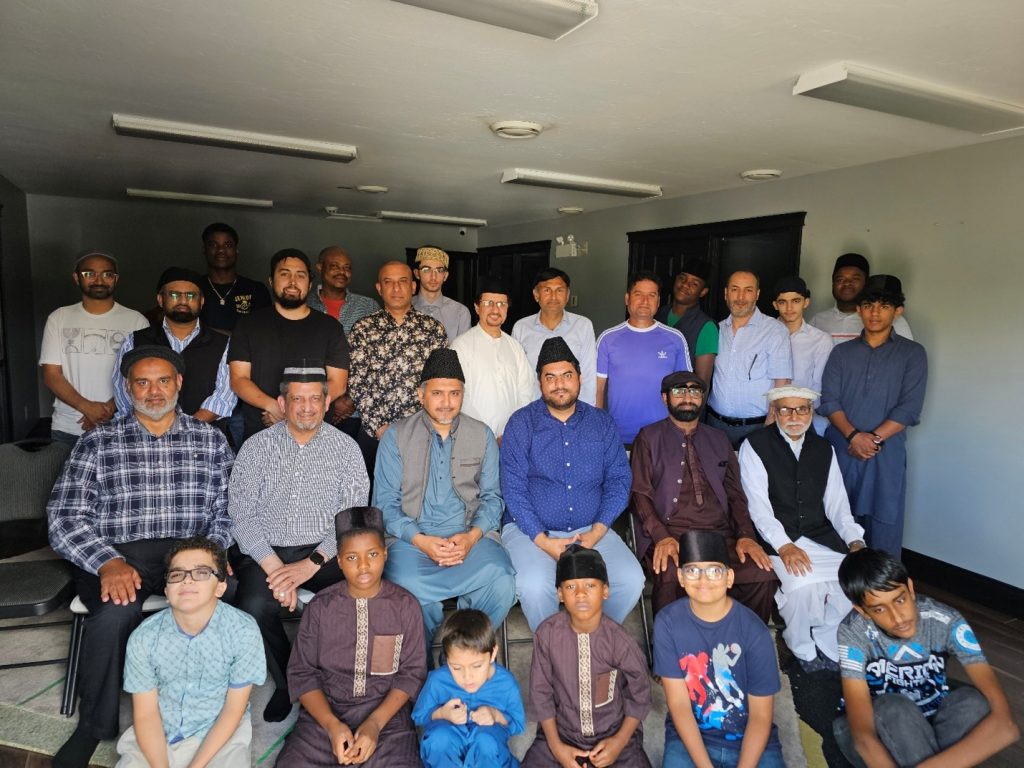
From Dr. Laeeq Tahir Sahib’s solitary presence in 2010 to the heartfelt celebration of 2025, the journey reflects how persistence in matters of faith, by the Grace of Allah, can yield fruit that demographic patterns alone would never predict. For future generations of Ahmadi Muslims in Atlantic Canada, 1st August 2025 will be remembered, Insha’Allah, as the day when decades of patient effort produced their own sacred space, Baitul Hayee Mosque.
Contributors:
Zahid Abid Sahib – Murabi Silsila, Maritimes
Dr. Alburaki Sahib – Sadr Jam’at Moncton
Shamsuddin Ahmad Sahib – Regional Amir
Abdul Razzaq Qureshi Sahib – Former Regional Amir and longest resident of the Maritimes.