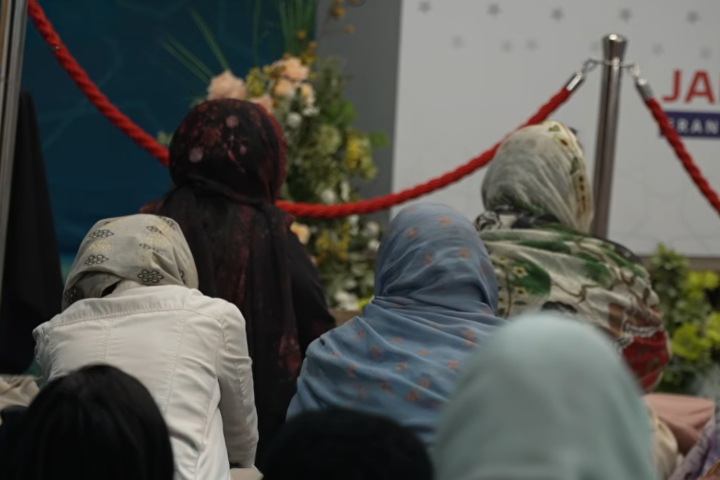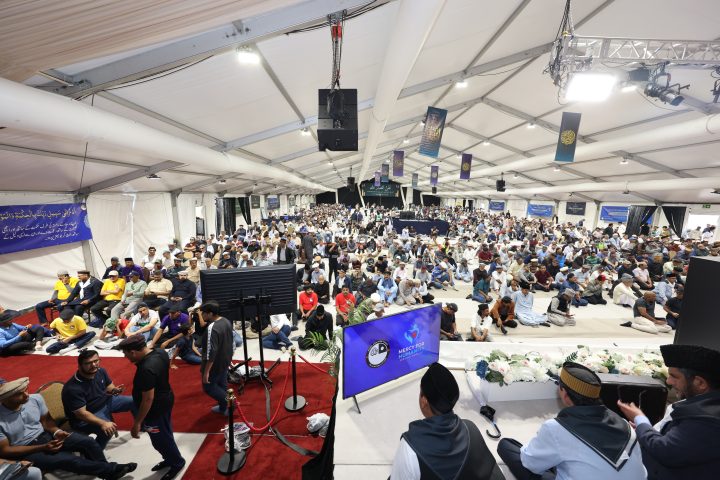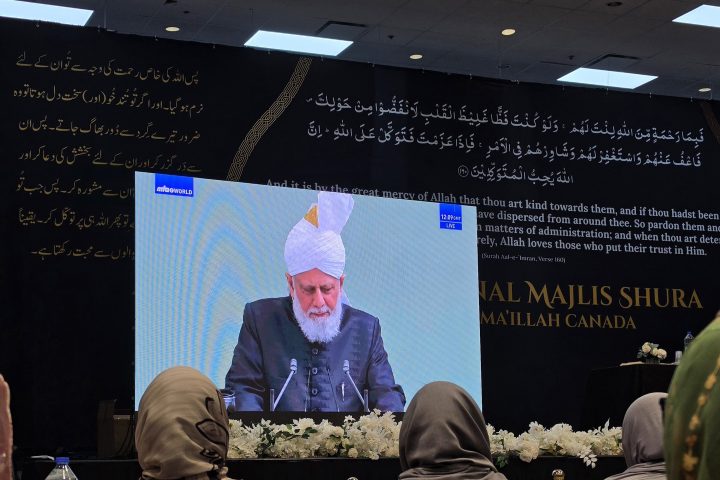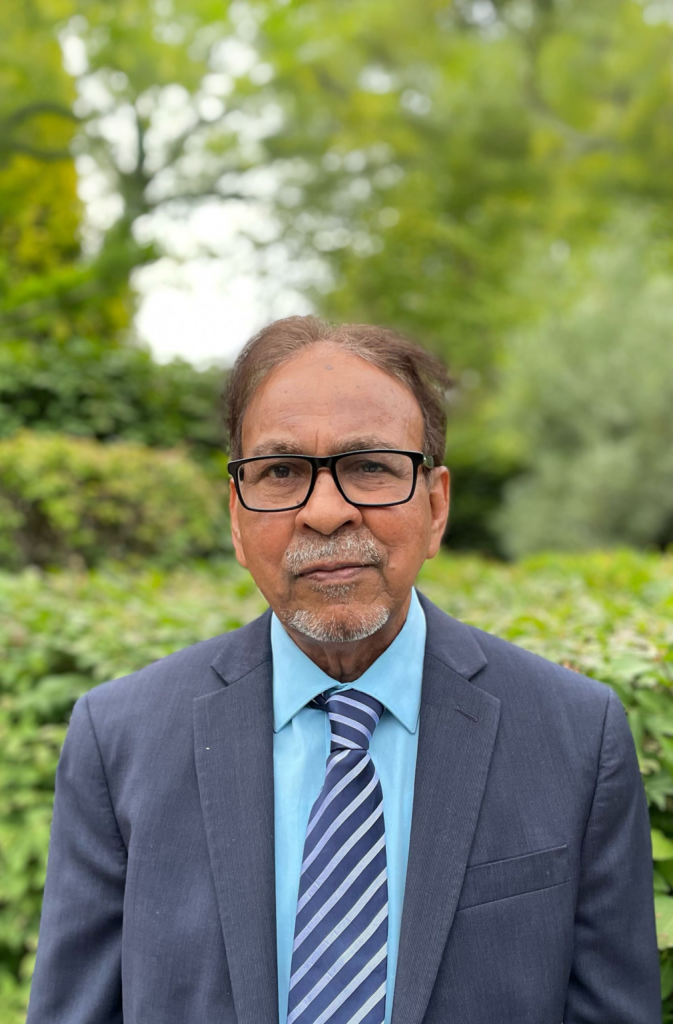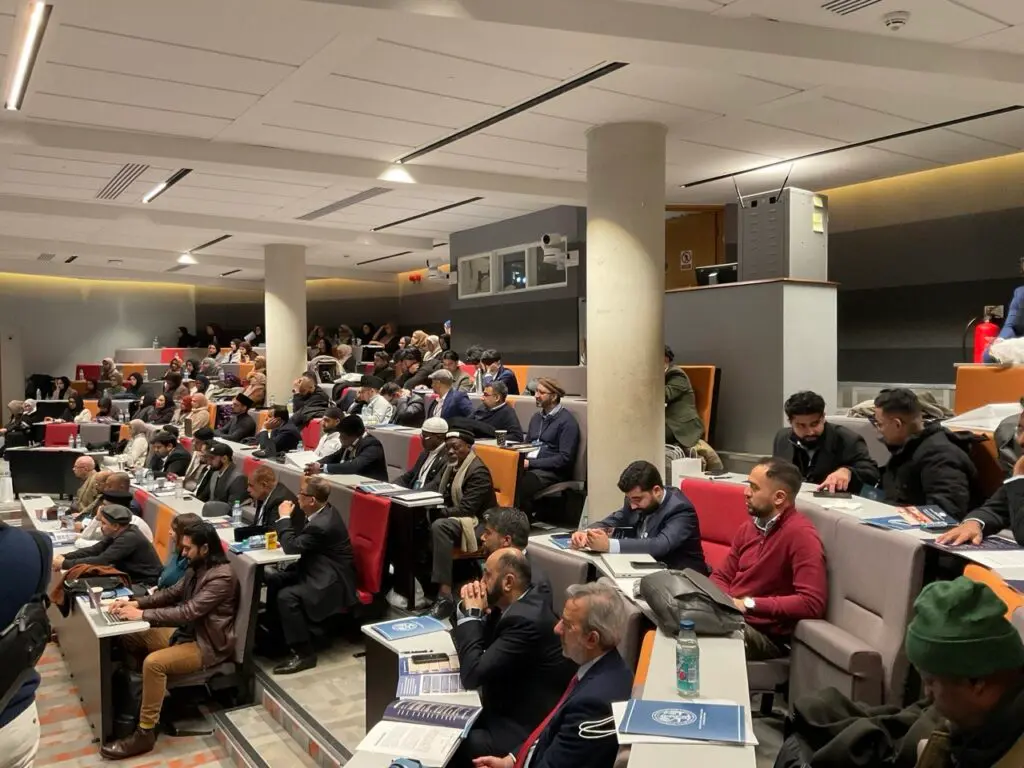
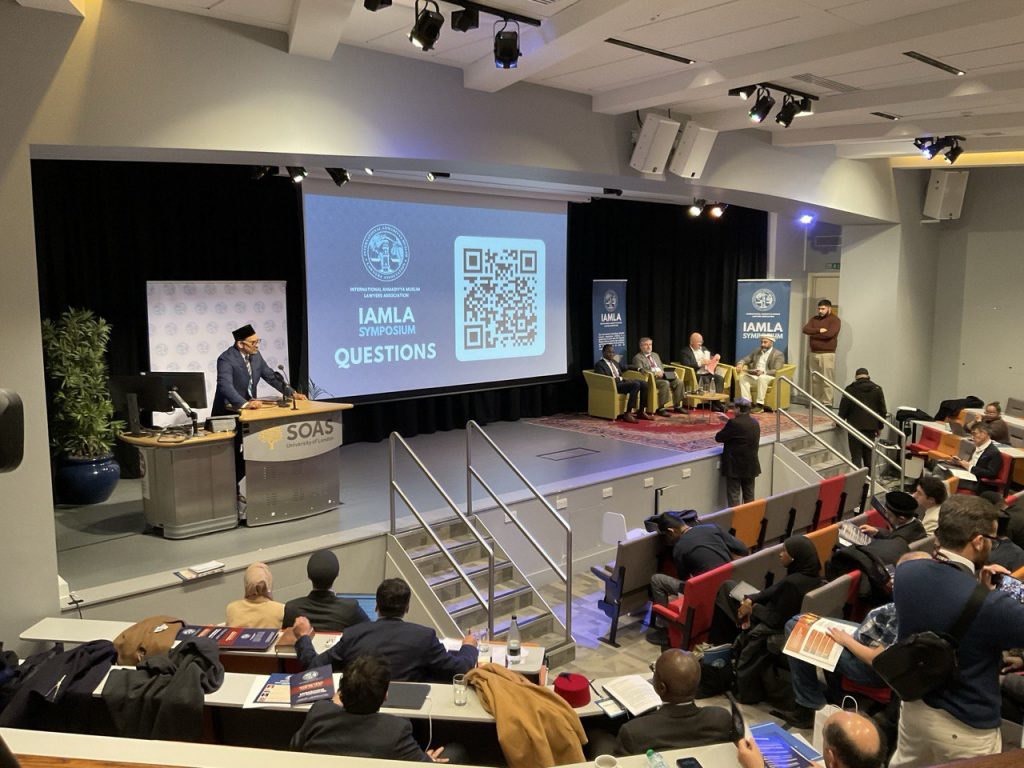
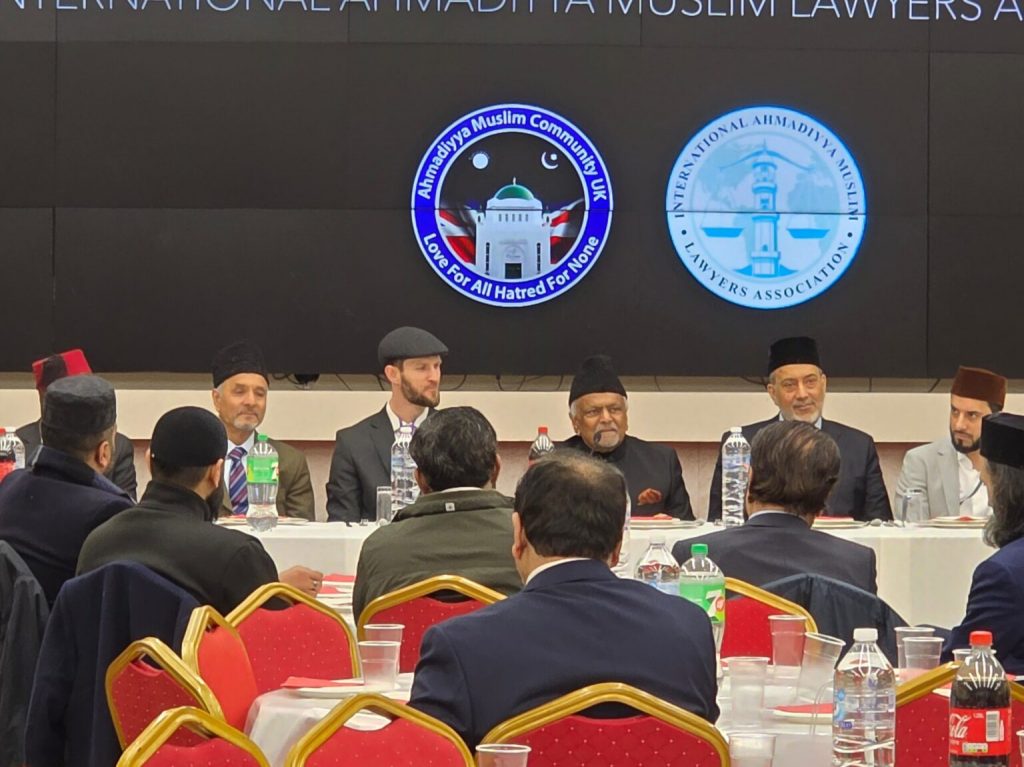
Editor’s note: On 7 February 2026, the International Ahmadiyya Muslim Lawyers Association (IAMLA) held its inaugural international symposium at SOAS, University of London, under the theme “International Law on Trial: Justice in a Divided World.” Close to 250 attendees, including over 100 Ahmadi lawyers from nine countries, gathered for five panel discussions covering armed conflict, religious minorities, free speech, climate justice, and the role of international law itself. A special message from Hazrat Khalifatul Masih V (aa) anchored the proceedings, calling on Ahmadi lawyers to pledge themselves to the defence of justice in an increasingly fractured world.
All distinguished guests and members of the International Ahmadiyya Muslim Lawyers Association,
السلام علیکم ورحمتہ اللہ وبرکاتہ
(May peace and blessings of Allah be upon you)
I am very pleased that the International Ahmadiyya Muslim Lawyers Association is hosting its inaugural Symposium today. Certainly, it is a good thing that so many lawyers, most of whom are Ahmadis but also some guests, from around the world, are gathering together for the purpose of reflecting upon the standard of justice that exists in the world today and, moreover, to deliberate upon how true justice can be established.
It is evident that we are living in an era in which the principles of justice and law are increasingly viewed with contempt. Indeed, recently, the President of the United States brazenly stated that he “does not need international law” and that the only limits upon him are his personal views and opinions. This statement accurately illustrates how the major powers have little interest in upholding international laws or those agreements they consider contrary to the narrow scope of their interests.
In a similar vein, we observe that when nations ratify treaties or sign peace deals, whether short-term or permanent, the respective parties – especially those in a dominant position – are increasingly willing to violate the terms or to abandon them entirely, rather than to abide by the principles of justice and equity.
As lawyers, I am sure you will all have been taught to uphold and defend the rights of the innocent and those who have been oppressed or denied justice. However, regrettably, in today’s world, the legal profession often fails to meet the demands of justice. Irrespective of whether a lawyer is advocating before national courts or standing before international tribunals, all too often their first priority is to earn as much money as possible or to gain prestige or fame and to climb the professional ladder, rather than to serve the cause of justice.
Likewise, legislation that ought to serve as the bedrock of a just society, whether at a local, national, or international level, often itself contains elements of injustice or bias. Even where the laws are just, they are violated by the rich and powerful with seeming impunity. As noted, the U.S. President has made his contempt for international law quite clear, and similarly, other leaders, including Israel’s Prime Minister, have proved themselves unwilling to be bound by laws or covenants. While they may verbally claim to uphold justice, in reality, they are governed solely by self-interest.
It is a matter of great regret that, in both Islamic countries and the non-Islamic world, justice is being trampled upon. Both within nations and in their dealings with one another, truth and justice are readily forsaken in the relentless pursuit of wealth and power. Sadly, many lawyers are also often motivated by personal interests or wealth. They proudly pledge to defend their clients’ interests even when it is clear that their clients have committed great cruelties or injustices. Thankfully, not all lawyers are like this. For example, once, whilst I was travelling, a non-Ahmadi guest told me about an Ahmadi lawyer he knew. He said the Ahmadi lawyer was always honest, truthful, and fair in his dealings. Thus, every Ahmadi Muslim lawyer should aspire to emulate such excellent examples and ensure that all Ahmadi Muslim lawyers are known for their truth, integrity and unwavering commitment to justice.
Without doubt, it is necessary for lawyers to strive to right every wrong, to tirelessly advocate against injustice, and to work towards ending the conflicts that afflict the world. Indeed this is a foremost duty for all Ahmadi Muslims and is the reason that I, for over twenty years, have been urging all nations and all peoples to adopt true justice and to strive for peace and security in the world.
The history of the Ahmadiyya Muslim Community attests to the fact that, both as a community and individually, we have always striven for the establishment of peace and justice. In terms of the legal profession, one of the most eminent and distinguished lawyers of the 20th Century was an Ahmadi – Sir Chaudhry Zafrullah Khan Sahib. Throughout his life, he played an outstanding role in advancing the cause of peace and justice. Uniquely elected both as the President of the United Nations General Assembly and of the International Court of Justice, he faithfully upheld the demands of truth and justice at all times and forever sought to defend the rights of the weak and innocent with fearless conviction. He was never swayed by any vested interests, nor was he ever motivated by personal desires. Certainly, his example ought to serve as a model for all lawyers, especially those who are members of the Ahmadiyya Muslim Community.
In terms of Islam, the Holy Quran has presented a golden principle for establishing justice. It states that the enmity of another should never incite a person to act unjustly. Furthermore, it proclaims that one should be prepared to testify even against themselves and their loved ones for the sake of upholding truth and justice. However, instead of aspiring to such a magnificent standard of justice, it is observed that some lawyers are inclined to give poor advice to their clients in order to needlessly prolong cases and ensure that their legal fees continue to accumulate.
At the international level, and with regard to relations between nations, the Holy Quran states that if two nations enter into a dispute or conflict, it is up to other nations and relevant parties to strive to reconcile them. Thereafter, if after reconciliation is achieved, either party violates the terms of the agreement or the ceasefire – as is often the case in today’s world – other nations should unite and use whatever pressure or force is necessary to end the injustice.
After the conclusion of the Second World War, the United Nations was established for this very purpose – to maintain international order, peace, and security. Yet, it is starkly apparent that it has failed to fulfil this fundamental objective. I am sure some people are genuinely striving for the United Nations to fulfil its mandate and maintain international order, however, their efforts are being suppressed and frustrated by those seeking to advance their vested interests. Thus, selfishness continues to prevail over justice. It was for this reason that the League of Nations collapsed, and it is for this reason that the United Nations is now crumbling before our eyes. Previously, there were only signs of the organisation’s decline, but today its failure and impotence are unmistakably clear.
Thus, at the World Economic Forum recently, the Canadian Prime Minister declared that a new world order is emerging, in which multilateral organisations such as the United Nations are being ignored and relegated to irrelevance. Instead, he noted, countries are forming their own blocs and alliances based on their particular interests.
In light of all this, the question before all of you is how can justice prevail and how can you, as lawyers, fulfil your obligations to defending the rule of law and the principles of justice?
Words alone, no matter how grand or lofty, are meaningless. Hence, no matter how much one claims to desire peace or strive for justice, until genuine action is taken, nothing shall be achieved. In terms of practical efforts, Islam teaches that one should not seek only their rights; rather, one must equally harbour the resolve to uphold and secure the rights of others. Only then can true justice be established.
Yet, what justice can be expected in a world where major powers have a trump card in the shape of a veto power? This inherent injustice is something that I have, for over two decades, highlighted as a fundamental barrier to peace and security.
Moreover, whilst those who work within the United Nations or other multilateral institutions – whether lawyers, experts, think-tank representatives, or policymakers – are expected to deliver justice, they are constrained by those who fund their institutions or pay their salaries. Rather than standing up for what is right, all too often they take positions or reach decisions that align with the interests of their paymasters. In such a situation, how can peace and justice prevail in the world?
Whether you will admit it or not, the truth is that, those advocating before a Court, whether at a local Magistrates level, the High Court, the Supreme Court, or international tribunals, are often at the mercy of vested interests. In all too many cases, victory lies not with the truthful but to the party with deeper pockets. Moreover, many within the legal profession fear retribution from the rich and powerful and so are too often guided by self-interest, self-preservation, and the pursuit of wealth at the expense of justice. Regrettably, in certain instances, such fears are well-founded. In recent times, cases have come to light in which very senior lawyers or judges, who sought to pursue justice, have faced threats, sanctions and career destruction. Their reputations are left shattered, they are threatened and intimidated simply because they were unwilling to follow the dictates of the powerful. In such circumstances, how can international courts or the United Nations be expected to discharge their duties? As lawyers, you must stand strong in the face of the pressures or forces that you may encounter. At all times, the only fear that should govern your conduct is the fear of God Almighty.
Moving forward, those nations and individuals who genuinely wish to see justice should unite and have the courage to stand before the major powers in defence of truth and justice. Yet, all signs point towards increased warfare and destruction. As I have repeatedly warned, I believe we are heading rapidly towards a cataclysmic world war in which conventional weapons shall be sidelined in favour of utterly inhumane and destructive weapons capable of annihilating cities and entire nations. Indeed, it appears that the first embers of such a world war have already been kindled, and if urgent action is not taken, the catastrophic consequences will surpass all human comprehension.
Today, you have chosen ‘International Law on Trial: Justice in a Divided World’ as your theme and while this topic is commendable, the reality is that law and order at all levels of society, not just internationally, are on trial today. This, as I have already made clear, is because the fundamental principle of justice is under a sustained attack. Thus, let it be clear that, until true and absolute justice is established there can be no lasting peace in the world.
Therefore, it is my sincere request to all of you that, in your deliberations today you reach a consensus amongst yourselves pledging to make whatever sacrifices are required in order to defend justice and to focus seriously and wholeheartedly on this mission. If you are collectively resolved to do this, it is possible – at least to some extent – that you may be able to make a real and positive difference globally. Otherwise, as I have repeatedly stated, all signs point only towards unimaginable destruction.
In conclusion, it is my prayer that the world recognises the dangers that lie before us and set aside self-interests for the sake of truth and justice so that we are able to safeguard ourselves and future generations.
May Allah, the Almighty, grant you success in all your noble endeavours and enable you to always uphold the pledge you have made to pursue truth and justice. Ameen.
With best wishes and prayers,