

In memory of Sahibzadi Amtul Jamil Sahiba
Sahibzadi Amtul Jamil Sahiba, the youngest child of Hazrat Musleh Maud (ra), passed away on 1 Ramadan 1447 AH, February 19, 2026. Inna lillahi wa inna ilaihi rajioon. Her funeral was held the following day, 20 February, which, incidentally, is also celebrated as Musleh Maud (ra) Day. [1]
Some time afterwards, while the family was clearing her room, they came across a parcel she had already wrapped and put aside. It was an Eid gift, ready to go out. The fasting had barely begun. Eid was still a whole month away, and she had already begun her preparations and planning for it.
There is a temptation, when somebody good passes, to call this sort of planning a lovely coincidence and move on. It was nothing of the kind. She had been doing this planning her entire life, and she had been doing it for a reason. She was an obedient person; obedience in a way that is a model for us all. Obedience to Khilafat took particular importance in her life. It is getting ready early. It looked like never leaving any burden on anyone. She was a moosia, and her share of the estate was worked out and settled during her life, so that when she passed away there was nothing left for her family to settle on her behalf. [6] Nothing outstanding. Nothing for anybody else to carry.
She learnt it from a man who taught her a lesson for life, over a pair of shoes.
The shoes, and the use of Jamaat resources
The shoes belonging to Hazrat Musleh Maud (ra) were left outside the door, and a Jamaat worker would come by to polish them. His youngest daughter, who was a child, noticed how convenient the arrangement was and quietly put her own shoes out beside them.
Upon his return home, Huzoor (ra) noticed the tiny shoes and carried them indoors. He did not know whose they were, since there were other children in the house, and he asked for the culprit to be made known.
Nobody said a word. There was anger in his voice, and the small culprit was, as it happened, the most beloved child in the house. Eventually he softened his voice and said that whoever it was should just tell him, and he would not be upset with them. So Bibi Jamil owned up. And Huzoor (ra) told her that in the future, if she could not polish her own shoes, she should bring them to him and he would do it himself, but she was not to have a worker of the Jamaat polish them for her. [6]
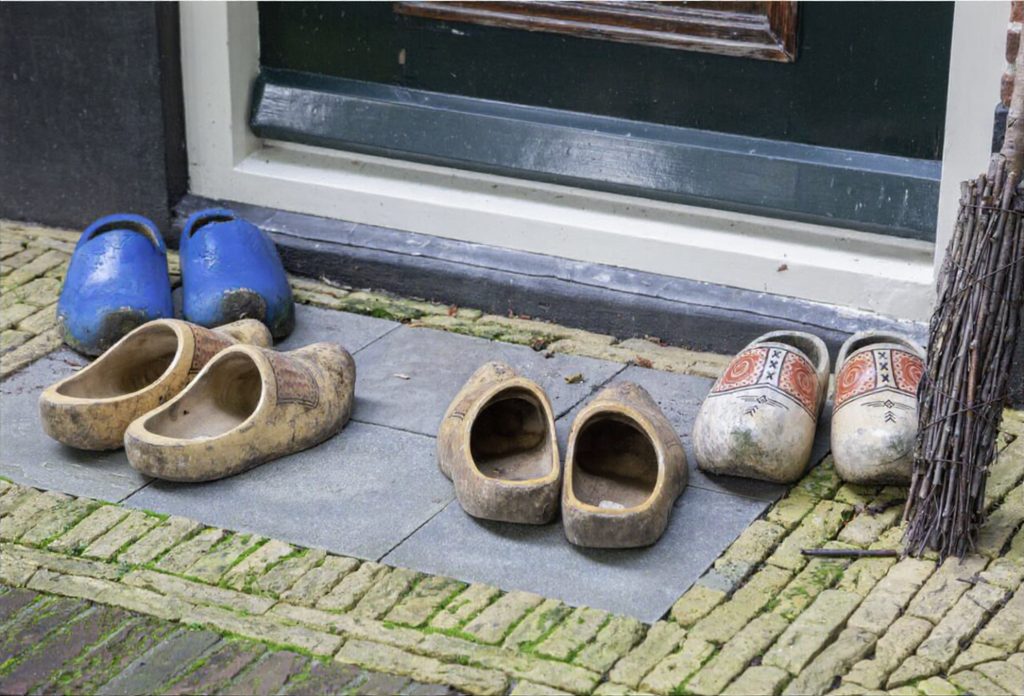
She held on to that lesson her entire life and would tell people about it. That is the part worth pondering. Not that a father corrected a child, which fathers do, but that the child carried the teaching around for the rest of her life like a valuable inheritance, and handed it on to her own daughters, and to a good many women who were not related to her at all.
Since that time in her young age, everything in that house had one answer. “Because Abba Jan preferred it this way.” One of the daughters of Bibi Jamil suggested to her, for convenience, that she should now wear half-sleeve shirts, since pushing a full sleeve back for ablution is difficult, especially as you advance in age. Bibi Jamil refused, saying that Abba Jan did not like half sleeves.
She was seven years old when life taught her the hardest lesson of all.
Seven years old
Her mother, Hazrat Sayyida Maryam Begum Sahiba (ra) or Hazrat Umm-e-Tahir (ra), passed away in 1944.
Hazrat Musleh Maud (ra) wrote down the events, and it is difficult to read even now. They had brought the remains to the house of Sheikh Bashir Ahmad Sahib. Huzoor (ra) saw the youngest girl there, seven years old, the one he called dear to her mother and dear to himself, screaming for her mother. “Hai Ammi. Hai Ammi.”
He sat down with her. He told her that her mother had gone to the house of God, and that she would be more comfortable there. And then he asked his seven-year-old daughter a question of immense wisdom. The Holy Prophet (sa) passed away. Her grandfather passed away. Was her mother greater than they were? [2]

She stopped crying. That is the whole of it. A seven-year-old girl stopped crying because her father had shared the grief with her in a manner so eloquent, yet simple, and she had accepted it. This incident speaks volumes of her intelligence, of her respect and her obedience. Not only towards Khilafat, but towards Islam.
The next day at the funeral, her elder sister collapsed in grief, and this seven-year-old child went over to Hazrat Maryam Siddiqa Sahiba, whom all the children called Chhoti Apa, and said that her sister was being silly. Abba Jan says it was the will of God that Ammi was taken, and she is still crying. And that same day the father who had asked her the question bowed down in front of Allah the Exalted, prayed, and asked his Lord whether He would not protect from every sorrow in the next world a little girl who had refused to grieve for her own mother, because He had willed it. [2]
You can decide for yourself what that cost her. Her daughters say she seldom spoke about her mother afterwards, hardly ever mentioned her, and that the wound of growing up without her stayed shut inside her for the rest of her life. Of her father she spoke constantly, every day, about everything.
But grief that is not spoken of has to go somewhere, and hers went into the work. The mother she would not discuss had helped build something worth building, and her youngest daughter picked it up and carried it for the next eighty years. She carried it in kitchens and sitting rooms and gatherings of women across two continents, without thinking twice.
What she carried to other women in obedience to Khilafat
Hazrat Umm-e-Tahir Sahiba had been, in her time, one of the early secretaries of Lajna Imaillah. Hazrat Musleh Maud (ra) founded the organisation on 25 December 1922, at the proposal of Amatul Haiy Sahiba (ra), who became its first secretary. After her, the office passed to Sara Begum Sahiba (ra), followed by Hazrat Syeda Umm-e-Tahir (ra). [3]
Ten days before the founding of Lajna Imaillah, Hazrat Musleh Maud (ra) had written to the women of Qadian to set out what he wanted from them. The letter is worth reading even now.
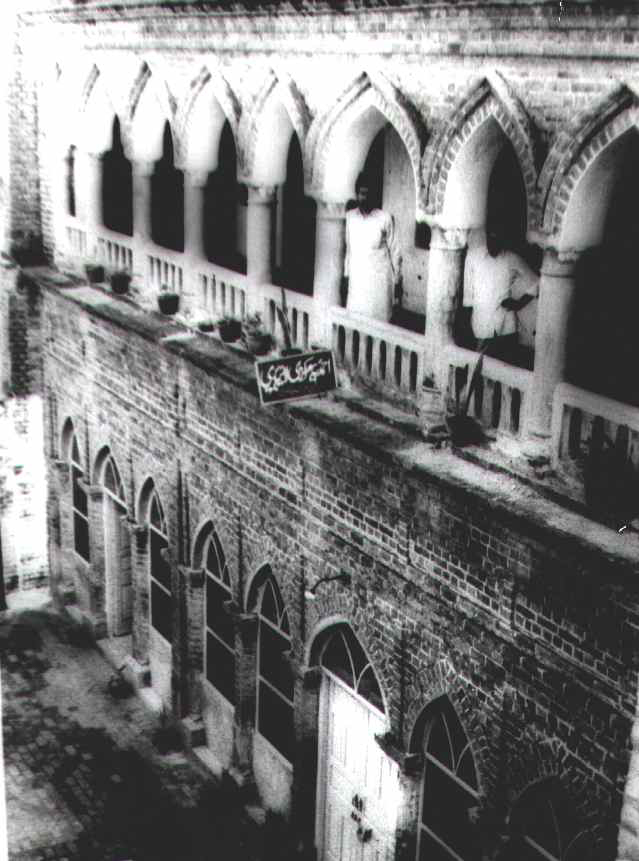
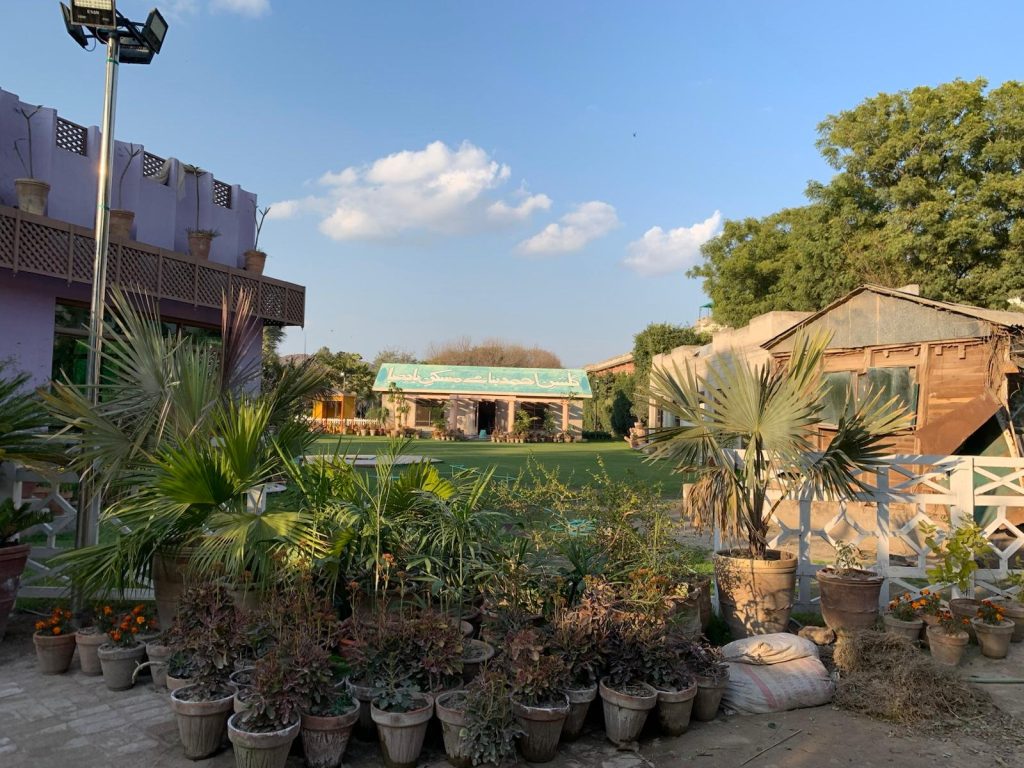

He told them that the purpose of creation could not be met by the efforts of men alone. He wanted them to increase their knowledge, and then to pass what they had learnt to other women, since the reform of women would come through women and nobody else. He wanted them properly organised, with rules that bound every member. He gave them the moral training of children as their particular charge, and asked that those children be raised alert and hardy rather than idle and ignorant of their faith. He asked the women to find practical ways of serving Islam and of helping the poor among their brothers and sisters. And he required that whatever they did should be done in accordance with the scheme of whoever was Khalifa at the time. [3]
Read that list again, and you have the whole shape of the life that follows.
Underlying it is a saying of the Holy Prophet (sa). “All of you are guardians and are responsible for your subjects. The ruler is a guardian, the man is a guardian of his family, and the woman is a guardian and is responsible for her husband’s house and his offspring; and so all of you are guardians and are responsible for your subjects.” [4]
Hazrat Musleh Maud (ra) took that hadith and made it practical. The husband earns the money, and the wife is the trustee of it. Not the spender, but the guardian. Her business is to run the house without israf (extravagance and waste), to see that what comes in is spent on what is clean and lawful, and to put something by, because a woman who manages badly can undo a man who earns well, and a woman who manages carefully secures children she may not live to see grown. [5]
That is the doctrine. Now consider the woman who shaped her whole life around it.
Zahida Zafar Sahiba of Calgary, who is originally from the Hazara District, remembers Bibi Jamil, as the community knew her, arriving there in the winters. She would gather the local women together and teach them how to make jam and squash. It sounds domestic, and it was, and it was also nothing of the sort. The orchards of Hazara are heavy with apples and apricots and plums and peaches, and in Punjab the kinnow mandarin comes in from late November and is finished by March, cheap and sweet at the end of the season. What she was teaching those women was how to turn a glut into a year of supply, and the recipes she was teaching came down from the household of her father.
That is instruction number one, carried out to the letter. Increase your knowledge, then pass it along to other women.
And it was not a lesson she taught without practising. In her own house, long before the advent of computers, the money lived in paper envelopes, each labelled with what it was for, and when anything came in, the envelope for chanda was filled before the household took a rupee of it. Bibi Jamil Sahiba never sat her children down to teach them. They watched her example her entire life and learned it.

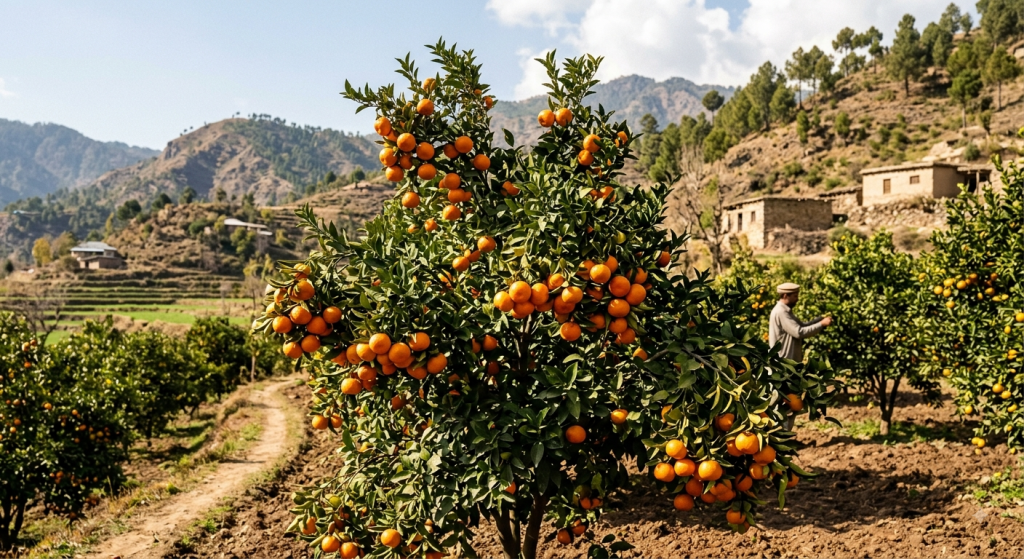
She was carrying the instructions of her father to women who had never met Huzoor (ra). Then he passed away. And still the instructions remained, and still she followed them, because the source of them had not gone anywhere. It had only changed its name.
The permission
She was in her twenties when she lost her father.
Her father had asked one further thing of the women of Qadian, and it is the seventh item on his list. Whatever they did was to be done in accordance with the scheme of whoever was Khalifa at the time. [3] For most people, a line like that stays on the page. For her it became the arrangement of a life. She wrote to Khilafat for permission and then waited for the answer rather than assuming it. She left standing instructions so that her accounts would be cleared, whatever else happened, including her own death. And when people came to sit with her, and when she was before Huzoor (aba) himself, she never asked him to pray for her health or for anything worldly. She asked that he pray for her end to be good. [6] Obedience of that kind is rare.
Late in life, she had an operation on her arm, after which she had to continue walking in the corridor of her apartment building as therapy. Because of the nature of the operation, it was difficult for her to wear a burqa. The corridor has ten or twelve flats along it, and, as her son-in-law puts it, nobody ever came out anyway. Some ladies suggested that she should just use a chador (a large sheet worn as a covering) there, since it was only a corridor.
She refused to do that until permission came from Huzoor (aa). So she wrote to him and asked whether she might wear a chador for her walk instead. Permission was granted.
Then her arm healed.
The local Lajna members suggested she keep the chador, since it was easier and nobody on earth would think twice about it. She said no. Huzoor (aa) had granted that permission for the time of the difficulty, and the difficulty was over. Back to the burqa.
Consider who she was writing to. Hazrat Mirza Masroor Ahmad (aa) is her nephew, the son of her own sister. [1] She had known him his whole life. She was the aunt, he was the boy, and there is no household on earth where an aunt cannot get a small concession out of a nephew if she wants one. She did not write to her nephew. She wrote to Khalifatul Masih, and what she was given she received as a trust rather than as a possession, to be used for the purpose it was granted and returned when that purpose had passed.

This is the thing about her that is easy to misread as fussiness. It was not. A woman who wanted an easier life had one available and kept declining it. What she was doing in that corridor was the same thing she had done with the shoes, and the same thing her father had asked of the first Lajna in 1922. Her father was gone. Khilafat was not. She had obeyed her father because he was Khalifatul Masih, and not merely because he was her father, and so it did not end with him.
Nothing left to settle
She kept a register. Every day, to the very end, what came into the house and what it cost, the grocery, the date, all of it written down. Her daughters had seen her doing this their entire lives and thought nothing of it.
Then she passed away, and, perhaps out of attachment, perhaps out of longing for their mother, they opened the old registers, the ones that belonged to both parents. On the page for every single month, they found the household expenses of families they had never heard of. Whole households being carried, quietly, for years. The children had not been told.
Huzoor (aa) at the Friday Sermon mentioned the same discovery: that the old accounts were full of entries for the support of the poor. [6] It is worth mentioning why that matters. In Islam, providing for the poor is not a favour handed down to them. It is a debt owed to them, and the paying of it does not wait on the mood of the giver. The Holy Quran sets out what righteousness actually consists of, and it does not stop at belief and prayer. Truly righteous is the one who, among much else, “spends his money for love of Him, on the kindred and the orphans and the needy and the wayfarer and those who ask for charity, and for ransoming the captives” [Al-Baqarah, ch.2:v.178]. A household ledger with the monthly expenses of strangers entered in it, month after month for year after year, is that verse written out in ink.
Some of that money went to Sahiwal. In 1953 the campaign against the community turned violent, the government responded with martial law in Lahore, and several leading Ahmadi Muslims were imprisoned. [7] They are known as asiran-e-rah-e-Maula, prisoners in the way of Allah, and the community does not use the phrase lightly. She sent them money as a gift, she wrote to them, and she asked after them, so that men in a cell would know they had not been forgotten by the family of the Khalifa, or by the Jamaat they were suffering for. Find practical ways of serving Islam, her father had written in 1922, and of helping the poor among your brothers and sisters. It was the sixteenth thing he asked of the women of Qadian, and she was still doing it half a century later, from another province, for men she had never met.


She felt the same about a dollar. If she sent somebody out for something, no matter how small, she insisted on paying, and when people protested, as people do, saying please, it is just a dollar, she would remind them that Abba Jan taught us that if you ask for a thing to be brought, you pay for it. A man once brought her a bottle of water and flatly refused to take the money. One of her daughters told her that he was getting upset. And she said, look, if I am gone tomorrow, people will say we used to buy her things. Accounts are accounts. They need to be settled.
That instinct had no expiry date on it either. Years earlier, in Rabwah, a teacher had been giving lessons to the children of the household when his posting came through, and the family left for Sangla Hill at short notice, one month of fees still owing. She had no address for them. It took her a year to find one. Then, one day around midnight, a man who had travelled from Rabwah knocked at a door in Sangla Hill and handed over the money, saying Bibi Jamil had sent it. The wife of that teacher told the story to her daughter at her house long afterwards, and that is the only reason her daughters ever heard it.
So when her own accounts came due, nothing was outstanding. She was a moosia, her share of the estate was settled during her life, and she had left instructions on both sides of the globe, to her youngest daughter about the property in Pakistan and to Malik Kaleem Sahib, Naib Amir in Canada, that her chanda was to be paid on time. [6] Her eldest daughter counts this among the greatest kindnesses her mother did for her family. When she passed away, there was nothing pending, and nothing for her family to reconcile on her behalf. She had spared them the whole of it, deliberately, in advance.
Settling things before anybody had to ask was not a habit she took up late. Forty years earlier, in Rabwah, she had been practising it on strangers who stayed in her house three nights a year.
Guests, and Jalsa Salana
Guests were a common occurrence in her household. During Jalsa, however, the place overflowed. Guests came from far away, every room went to them, and the children of the household slept out in the corridor. Breakfast was on time. And the shoes belonging to the guests were collected at night, polished, and put back, so that in the morning nobody would be held up or late for Jalsa.
The Jalsa preparation started months before. As the kinnow season drew to a close and the fruit went cheap and sweet, she pressed the juice and bottled it and sealed it away, in preparation for Jalsa and for the summer months.

Decades later, in Canada, the same rituals were carried out daily. She would look after the older ladies, the sick, and anyone who needed help. A woman left on her own in the building, a man whose wife had passed away, anybody ill. She cooked for them, and if somebody had dietary restrictions, she wrote that on the container so they would know. If their residence was too far, she would ask for a child to come and collect it.
She was, incidentally, a brave person. One night in Rabwah in the early seventies, when the family slept outdoors, a thief jumped the small uncemented wall. She caught him and tied him to a tree. As her daughter recalls it, she then sent word to Bhambri Sahib, who served in Umoor-e-Aama, to come and take him away. Her daughter sums up her mother in five words. She was afraid of nothing.
Obedient, and afraid of nothing. It is worth noticing that these are not opposites. And the appointment she prepared for most carefully was one that nobody else in the house could see her keep.
Ready for prayer
Her granddaughter remembers walking into a room and finding her grandmother already sitting there, fully dressed, hands in her lap, waiting. The time for prayer had not yet come. She was waiting for it the way you wait for somebody you love at an airport, watching the clock, impatient for the hour to arrive. [6] She did this not once, but every day, five times a day.
She had a theory about this, and she would share it freely. “Look at the trouble you go to when you are going out to meet somebody,” she would say. But when it comes time for prayer, you splash some water on your face and stand up in front of Allah the Almighty, just like that?
So she got herself ready properly, and then she prayed unhurriedly, with khushu (absorption and humility in worship). Her granddaughter, small at the time, found the length of it and the weeping in it frightening. [6]
What the child could not have known was who all that praying was for.
She kept a written list. [6] Names went on it and did not come off. If somebody confided a trouble to her, she never repeated it, not to anybody, not even to her own children, and the person concerned would simply become a name on the list and a phone call to her daughters saying that so and so was in difficulty and they should pray. If somebody fell ill, she would hand her children the number and tell them to call and ask after the person, and often enough they had no idea who they were ringing. When there was a bereavement she telephoned all four children separately, gave each of them the number, and told them to go and offer their condolences. And when a neighbour passed away, food went to that house before anybody had to ask for it.
For herself she asked one thing, over and over, from visitors and from Huzoor (aa) more than once. Pray that my end is good. [6]
The minaret
In June of 1948, her father had a dream at Nasirabad in Sindh, and wrote it down.
He saw a tall white minaret, like the one at Qadian. On the ledge above the lower storey, right beside the doorway, his daughter is sitting with her legs swinging over the edge, completely at ease, the way an eleven-year-old sits, carefree. And from the doorway above her, a snake emerges head first, green, several yards of it, a foot and a half thick, and starts coming down.
He is caught between two fears. That it will reach her. And that if she moves at all, she will fall.
So he prays. Allahumma a-idhha li wa lil Jamaat il Ahmadiyya wa li ghuraba-iha. O my Allah, save her from this, for my sake, and for the sake of the Ahmadiyya Jamaat, and for the sake of the ghuraba belonging to it. He noted afterwards that ghuraba means travellers in Arabic and the poor in Urdu, and that God knows which applied in the dream. And as he prays, the girl senses the danger entirely on her own and begins to edge away along the ledge, and keeps edging until she is clear of the door. The snake comes down through that doorway, turns towards her, sees the distance, and does not follow. He wrote that it was a most blessed dream for the child, that there was prayer in it, and that besides being a comfort to him she would be of use to the Jamaat and to its ghuraba. [8]
She would have been about eleven.


He performed her nikah himself in 1955, lying in bed, because he was too ill to sit up. A few members of the household were there. Whoever recorded it noted that from the beginning of that ceremony to the end, a particular state came over him. She was married in 1956, and he sent her out of the house with a prayer. [6]
Seventy-eight years after the dream, at three in the morning on 19 February 2026, she passed away at eighty-nine in the Greater Toronto Area, where she had spent her last twenty-six years and where she had sat as guest of honour at Lajna and Jamaat gatherings, educating women in what she had learned from her father, Hazrat Musleh Maud (ra). [1] On March 6, 2026 Hazrat Mirza Masroor Ahmad (aa) led her funeral prayer in absentia at Mubarak Mosque in Islamabad, Tilford. [6] Inna lillahi wa inna ilaihi rajioon.
She had made her preparations. She always did. In a room at the Abode of Peace there was a parcel wrapped for an Eid she knew she might not see. She had understood as much from dreams of her own, and she never said what was in them, though she once told one of her daughters the gist of what she took them to mean. She wrapped the present anyway, because that is what you do. You get things ready. You leave nothing for anybody else to pick up.
She had been taught that lesson, once, decades ago, about a pair of shoes.
Note on the interviews
The principal interview was recorded on July 23, 2026, at the home of Mamoon Malik Sahib in Ottawa, Canada, and was conducted by Fazal Masood Malik. Present and speaking were Sofia Ahmad Sahiba, the youngest daughter of the deceased, and her husband, Mirza Abdus Samad Ahmad Sahib; Yasmin Malik Sahiba, the second daughter, and her husband, Mamoon Malik Sahib. The interview was conducted informally, with the stated purpose of recording family recollections rather than producing a formal record.
A second interview was recorded on June 7, 2026 at the home of Zahida Zafar Sahiba in Calgary, originally of the Hazara District, and was conducted by Muzaffar Sultan Sahib.
References
[1] “Sahibzadi Amatul Jamil Begum Sahiba, Daughter of Hazrat Musleh-e-Maud (ra), Passes Away in Toronto”, Ahmadiyya Journal, 19 February 2026.
[2] Hazrat Mirza Bashir-ud-Din Mahmud Ahmad (ra), Meri Maryam, Anwar-ul-Uloom, volume 17, pages 365 to 366. Cited in the Friday Sermon of 6 March 2026.
[3] Tarikh-e-Ahmadiyyat, volume 4, on the establishment of Lajna Imaillah on 25 December 1922 and the succession of its early secretaries, and on the letter addressed by Hazrat Mirza Bashir-ud-Din Mahmud Ahmad (ra) to the women of Qadian, 15 December 1922. Translated in Al Hakam, 28 September 2018, www.alhakam.org/lajna-imaillah. Accessed 3 August 2026.
[4] Sahih al-Bukhari, Kitab an-Nikah, hadith 5200, narrated by Ibn Umar (ra). The English wording given here follows Riyad as-Salihin, 283.
[5] Hazrat Mirza Bashir-ud-Din Mahmud Ahmad (ra), Minhaj-ut-Talibin, Anwar-ul-Uloom, volume 9, Nazarat Nashr-o-Isha’at, 2013, pages 21 to 22, 57 and 74, www.alislam.org/book/way-of-seekers. See also Tafseer-e-Kabir, volume 3, commentary on [An-Nisa, ch.4:v.35] and [An-Nur, ch.24:v.61]. On the education of girls, see also Anwaar-e-Khilafat, Nazarat Nashr-o-Isha’at, 2018, www.alislam.org/library/books/anwaar-e-khilafat. Accessed 3 August 2026.
[6] Friday Sermon delivered by Hazrat Mirza Masroor Ahmad, Khalifatul Masih V (aba), 6 March 2026, Mubarak Mosque, Islamabad, Tilford, Surrey, United Kingdom.
[7] The Riots of 1953, The Ahmadi Perspective, Islam International Publications, new.alislam.org/library/books/riots-of-1953. Accessed 8 October 2026.
[8] Ruya-o-Kushoof Sayyidna Mahmud, pages 416 to 417, and Al Fazl, volume 2, number 287, 19 December 1948, page 3. Cited in the Friday Sermon of 6 March 2026.




اسلام علیکم
محترمہ امتہ الجمیل صاحبہ کی سیرت پڑھ کر بہت اچھا لگا ایمان افروز واقعات پڑھ کر روح خوش ہو گئی اللہ تعالٰی ان کو کروٹ کروٹ جنت الفردوس میں اعلی مقام عطا فرمائے آمین
اور ہمیں بھی ان کے نقش قدم چلنے کی توفیق عطا فرمائے آمین
Masha’Allah, a very moving and faith-inspiring account with many valuable lessons for all of us to learn from. May Allah Almighty elevate Sahibzadi Amtul Jamil Sahiba’s rank in His paradise, ameen.