Lajna Ima’illah Session Marks Jalsa Salana Western Canada 2026
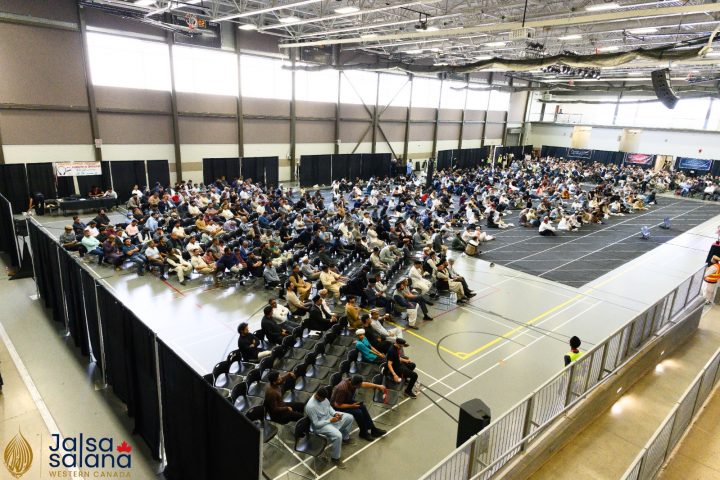
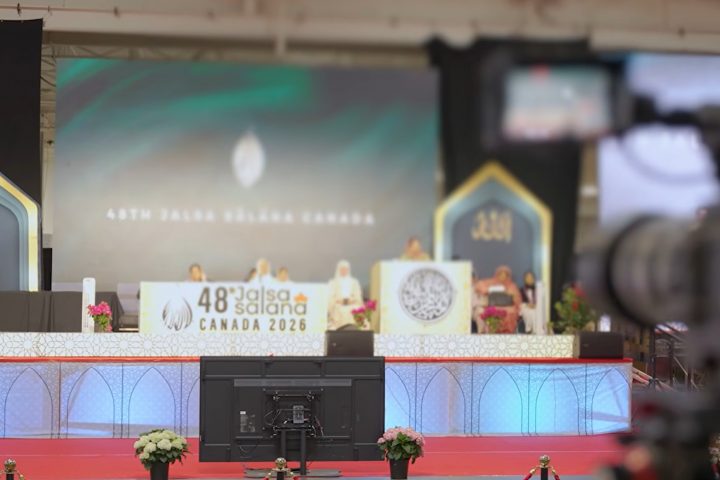
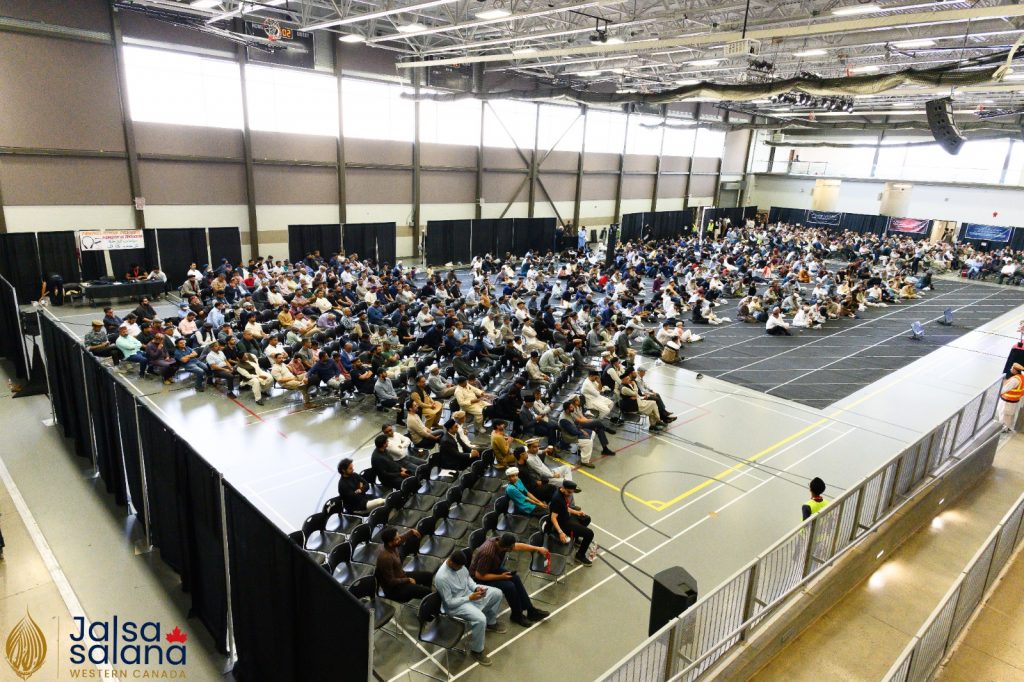
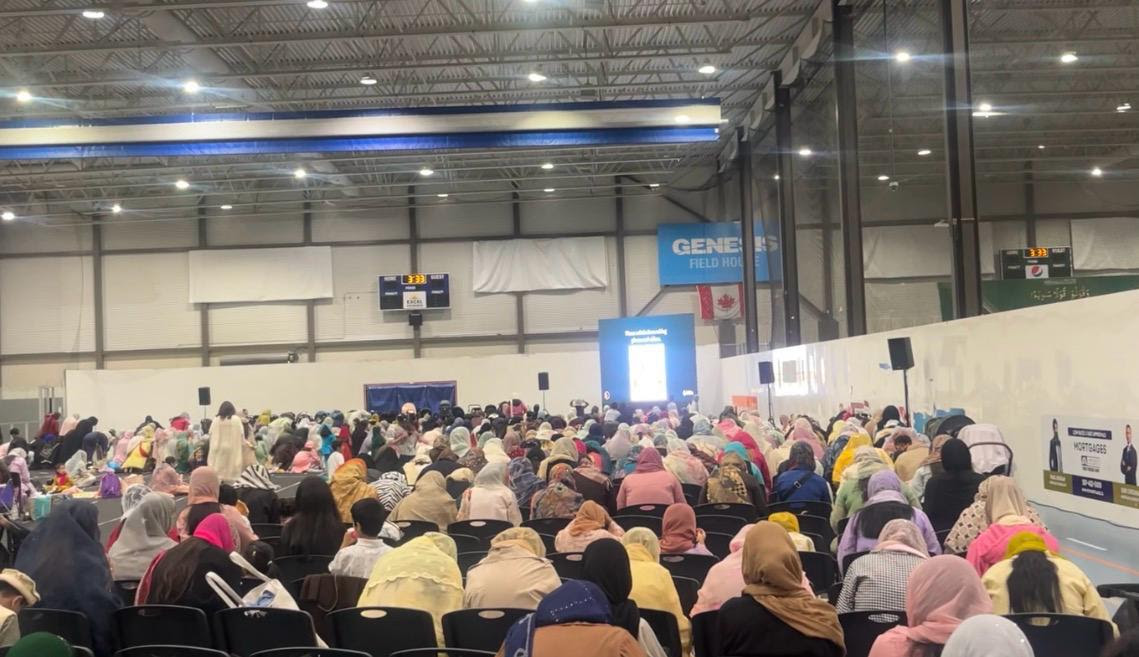
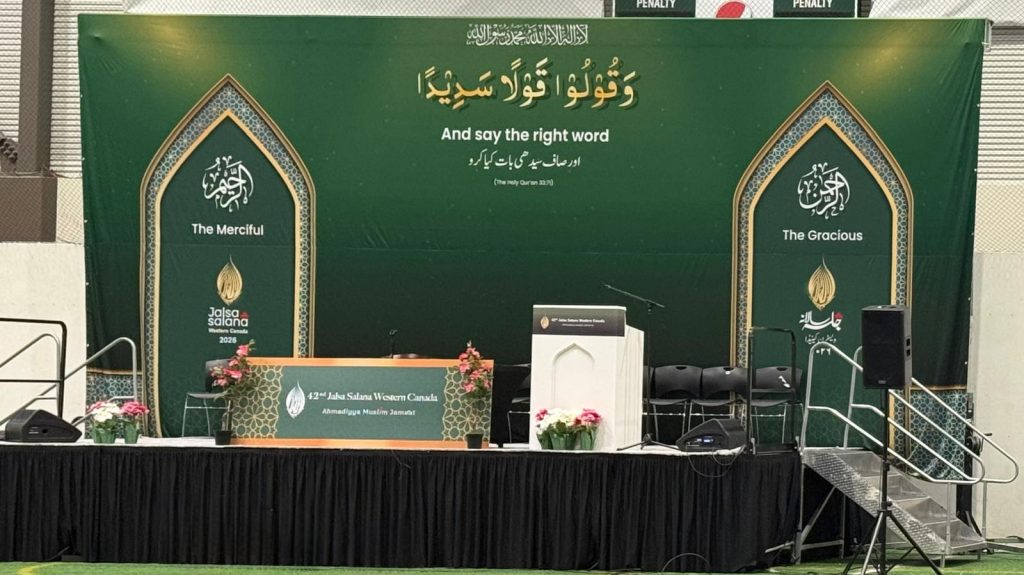
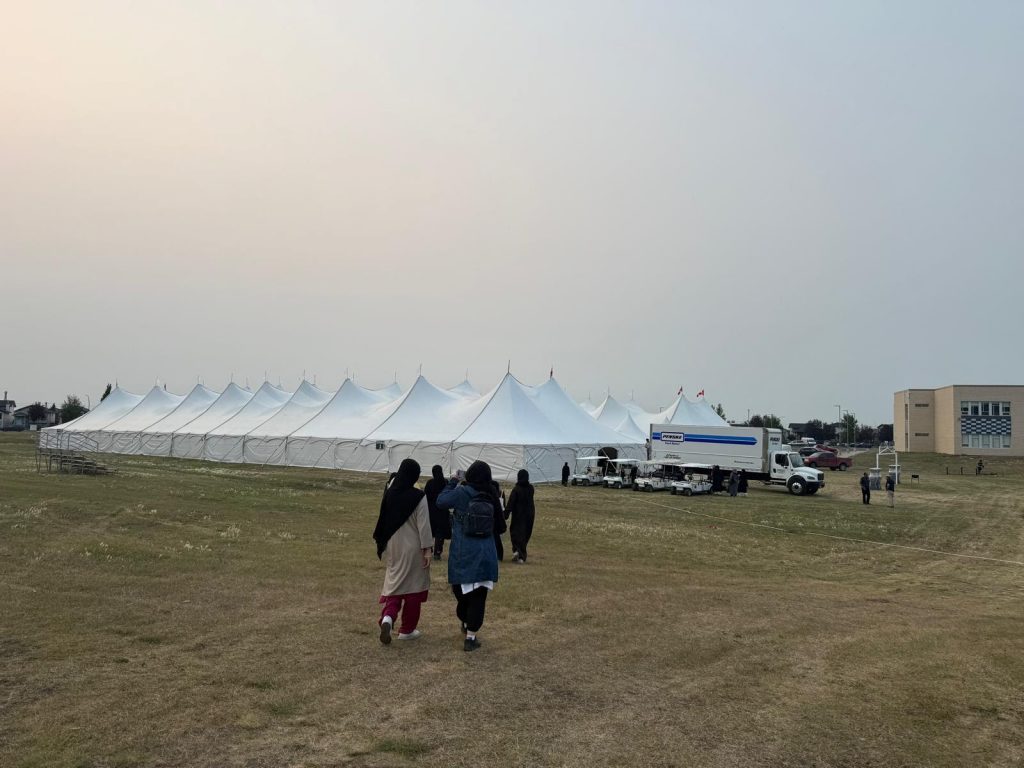
Alhamdulillah. On Saturday, 8 August 2026, the Genesis Centre in Calgary hosted the Lajna Ima’illah session of the 42nd Jalsa Salana Western Canada. The afternoon was given wholly to the women of the Community, their scholarship, their history and their charge. Four addresses anchored the programme. Each stood on its own subject, but together they returned again and again to a single conviction, that faith inherited is only the beginning of faith, and that what the Promised Messiah (as) came to revive must be examined, chosen and lived anew by every generation of Ahmadi women.
The session opened with Zuhr and Asr prayers offered in congregation, followed by recitation from the Holy Qur’an from [Luqman, ch.31:v.14-20, 23], [Al-Ahzab, ch.33:v.22] and [Al-Qalam, ch.68:v.5], rendered in both Urdu and English. A poem of the Promised Messiah, Hazrat Mirza Ghulam Ahmad (as), from Durr-e-Sameen, “Mahasan-e-Qur’an-e-Kareem” (Virtues of the Holy Qur’an), followed the recitation. The Awards of Academic Excellence closed the opening portion of the programme.
Why Islam-Ahmadiyyat?
Dr Ayesha Mian Akram Sahiba opened the addresses in English by asking not what Ahmadi women believe but why they believe it, a question rarely put so directly. She began from gratitude, for the freedom to gather at Jalsa, a freedom not every Ahmadi in the world enjoys, and moved from there into the signs that testify to the truth of the Promised Messiah (as), among them the sign of the lunar and solar eclipses. Persecution, she reminded the hall, remains a living reality for Ahmadis in Pakistan and elsewhere, and she asked members to carry those absent sisters and brothers in their prayers rather than at a comfortable remove.

At the centre of her remarks stood Khilafat, which is not only an office to be obeyed from a distance, but the mechanism by which a Community spread across more than two hundred countries has been held in spiritual unity for over a century. Inherited belief, she said, is a starting point and not a resting place. It must be studied, tested and made one’s own through prayer and a personal relationship with Allah Almighty. She closed with a challenge to every Ahmadi woman present, to treat the acquisition of spiritual knowledge as a personal obligation, and to let her actions, not her lineage, testify to her faith.
Sources of Spiritual Progress
Razia Choudhry Sahiba followed in Urdu with an address given over to practical instruction. She began from the Qur’anic promise that Allah guides those who strive sincerely in His path, then drew on the Promised Messiah’s (as) commentary on the opening verses of Surah Al-Mu’minun to set out six disciplines of spiritual advancement: humility and concentration in Salat, abstention from vain speech and idle pursuit, generosity in Allah’s way, restraint from every kind of carnal desire, fidelity to one’s trusts and covenants, and steadfastness in both obligatory and voluntary prayer.
She reserved her sharpest words for the tongue. Backbiting, false accusation and tale-bearing were named without euphemism, and she extended the same vigilance to the newer temptations of social media, arguing that modesty today must withstand pressures earlier generations never faced. Spiritual progress, she insisted, is not a feeling awaited but a discipline practised, and it asks for sacrifice as much as sincerity. She closed as she had begun, returning her audience to the Holy Qur’an, the Sunnah of the Holy Prophet (sa), and the guidance of the Promised Messiah (as) and his Khulafa as the only reliable path forward.
A Qaseedah of the Promised Messiah (as), “Qaseedah fi Madh Khatam-un-Nabiyyin”, in praise of the Holy Prophet (sa), the Seal of the Prophets, was recited after the address, with an accompanying English translation.
Follow in the Footsteps of the Female Companions
Amatul Salam Malik Sahiba delivered the session’s second Urdu address, holding up the female Companions as a lineage rather than a gallery of distant exemplars. She moved through the lives of Hazrat Khadijah (ra), Hazrat Aisha (ra), Hazrat Umm-e-Ammarah (ra), Hazrat Umm-e-Sulaim (ra) and Hazrat Asma bint Yazid (ra), drawing out their faith, courage, sacrifice, generosity and knowledge. Beside them she set the more recent examples of Hazrat Amma Jaan (ra) and Hazrat Nawab Mubaraka Begum (ra), so that the line ran unbroken from the age of the Holy Prophet (sa) through the age of the Promised Messiah (as) and into the present. Her appeal to the room was to inhabit these qualities rather than admire them from afar, and to let Taqwa and steadfastness govern daily conduct instead of remaining an ideal reserved for history.
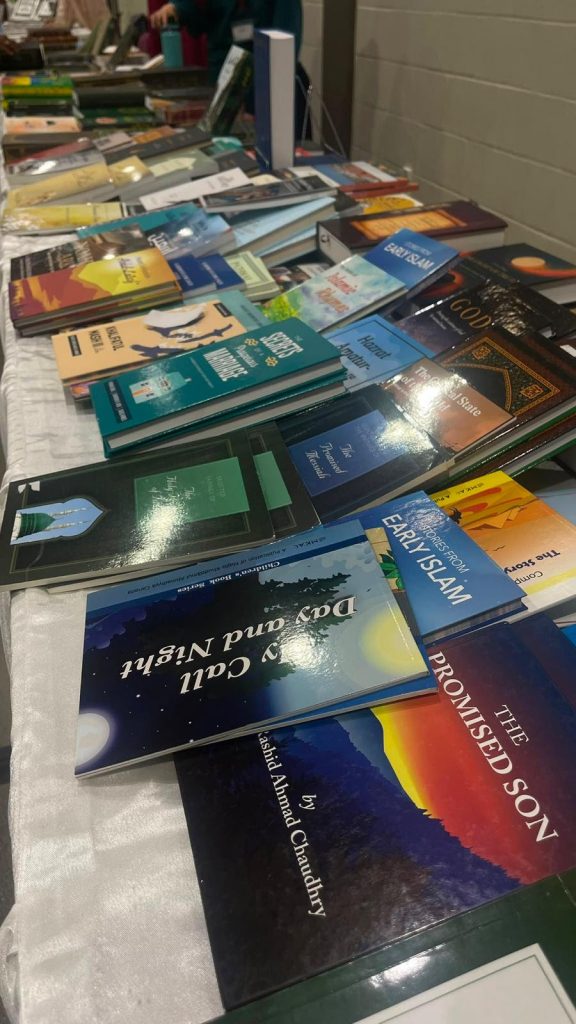
“Bashir Ahmad, Sharif Ahmad aur Mubarka ki Ameen”, a poem from the writings of the Promised Messiah (as), was recited following her address.
Lajna Ima’illah as Ambassadors of Khilafat
The final address of the session came in English from Amtul Raqeeb Sahiba, who spoke on the responsibility of Lajna Ima’illah as ambassadors of Khilafat. She described Khilafat-e-Ahmadiyya as a divine blessing granting the Community its unity, direction and continuity, and she was careful to distinguish true obedience from mere compliance. Obedience that stops at hearing instructions, she argued, falls short of what Khilafat asks. What is required is trust, loyalty and personal transformation carried into action. Every Ahmadi woman, in her telling, represents Khilafat through her character and conduct, whether or not she holds formal office, and she encouraged members to pursue excellence in education and career while keeping Allah, faith and Khilafat at the centre of that pursuit.
She turned, too, to the place of mothers in this work. Children come to love Khilafat first by watching their mothers pray, obey and remain devoted, long before they can articulate what the institution means. True strength, she said, is built through Salat, supplication and remembrance of Allah. She closed by urging members to hold their Ahmadi Muslim identity with confidence, undiminished by social pressure, and to act upon the guidance of Khilafat rather than admire it from a distance.
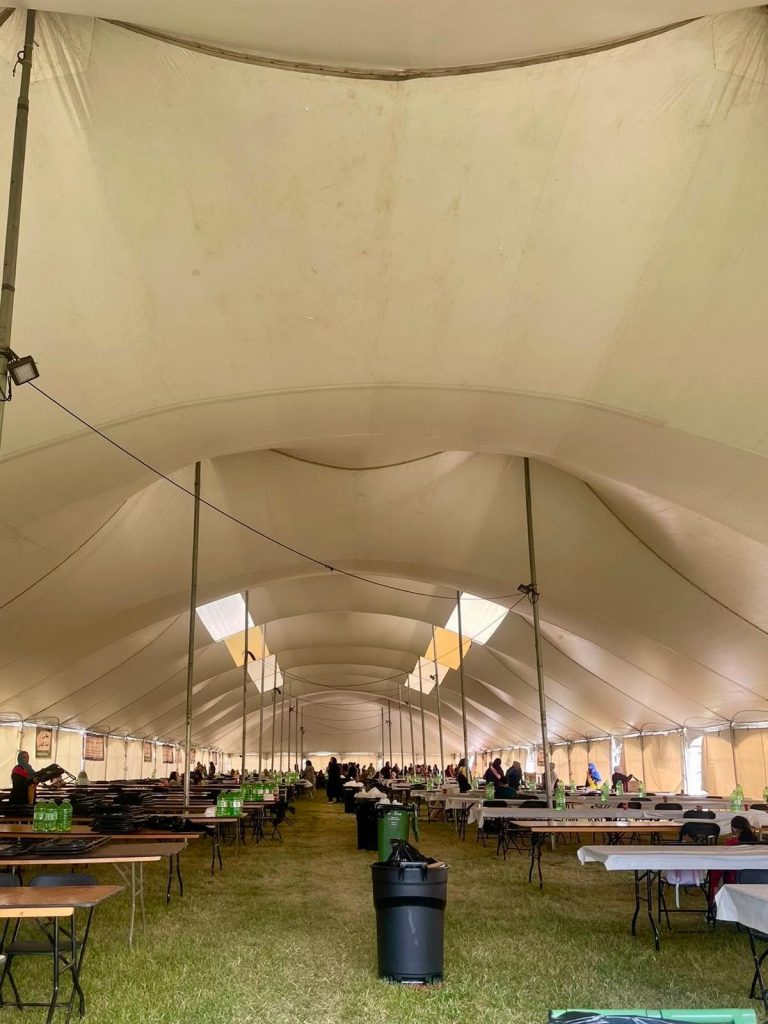
Announcements followed, and dinner brought the Lajna Ima’illah session to a close.
Four Addresses, One Argument
The four addresses took different subjects and arrived at the same conclusion. Dr Ayesha Mian Akram Sahiba’s call to choose one’s faith deliberately, Razia Choudhry Sahiba’s disciplines of spiritual striving, Amatul Salam Malik Sahiba’s unbroken line of exemplary women, and Amtul Raqeeb Sahiba’s charge to embody Khilafat rather than merely observe it, all four came back to the same point, that Islam-Ahmadiyyat is not a birthright. It must be understood; it must be practised and it must be lived, daily and by choice. It is a choice that every Ahmadi woman in the world must make and remain obedient in the service of the Khilafat, Insha’Allah, Ameen.