Sixteen Acres and a Hundred Families
A chapter in the Oral History of AMJ Canada
A mosque can be built in a few years. Filling it with worshippers takes much longer.
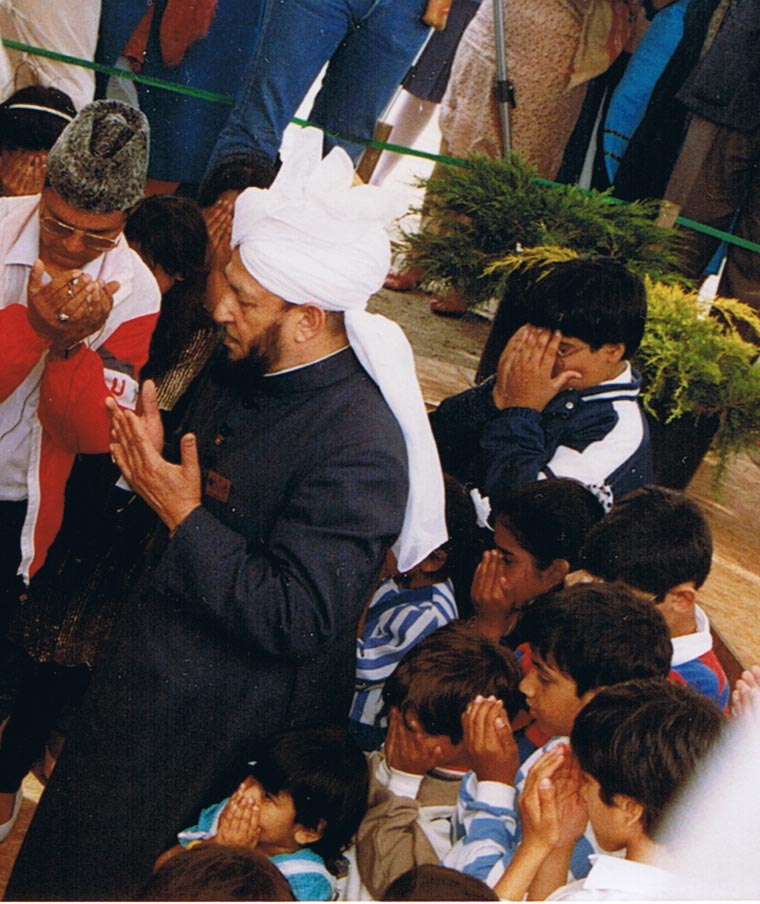
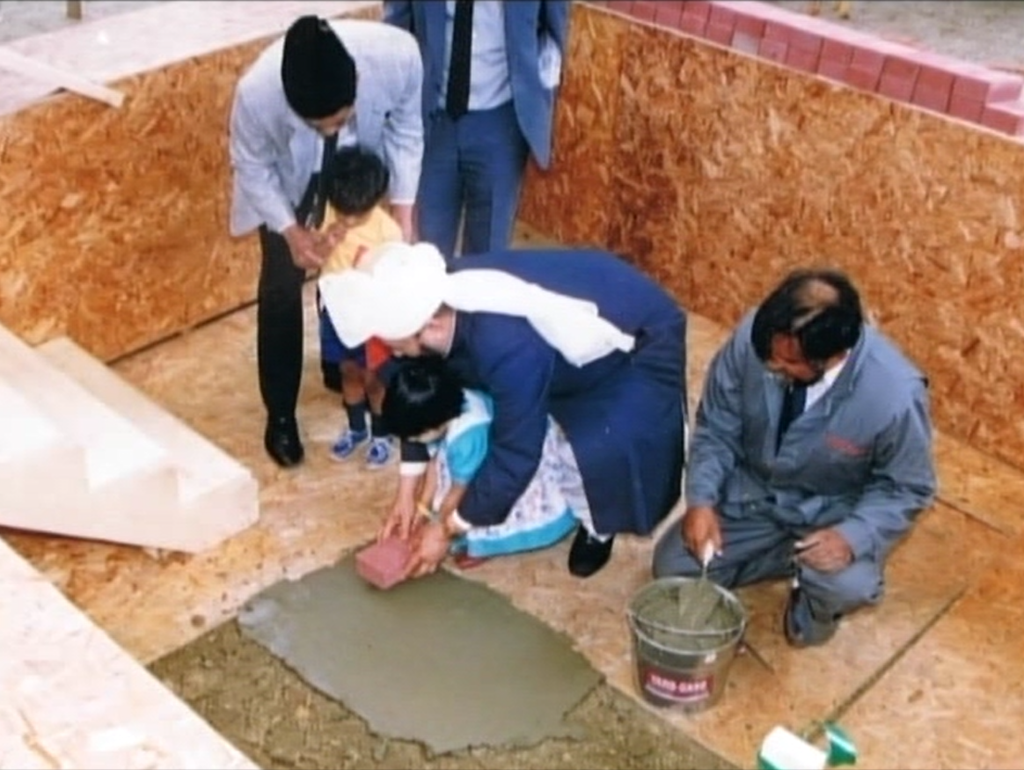
In 1989, the year the Ahmadiyya Muslim Jama’at celebrated its centenary, the members of the Saskatoon Jama’at purchased sixteen acres of land and presented them as a gift to the Jama’at for the establishment of a mosque. That same year Hazrat Khalifatul Masih IV (rh) visited Saskatoon and laid the foundation stone on the site. The land was secured. The stone was blessed. Then, for more than a decade, nothing further was built.
There were various reasons. In the years that followed, the Ahmadi population of Saskatoon declined substantially, and the foundation stone waited on its sixteen acres for worshippers who were no longer there.
Respected Maulana Naseem Mahdi Sahib, then Amir of the Jama’at in Canada, saw that the mosque would need people as much as it needed walls. To honour the wishes of Hazrat Khalifatul Masih IV (rh), he launched a tehrik inviting Ahmadis to settle in Saskatoon. Its purpose was simple. The city needed a sustainable population of devotees, so that when the mosque was finally built it would be full at the times of prayer. This is the story of that call, and of the seven years in which this humble one was privileged to help answer it.
The Reconnaissance
On 11 September 2002, Respected Naseem Mahdi Sahib asked me to move to Saskatoon. The intention was to begin a settlement process around the land the local Jama’at had purchased, on which Hazrat Khalifatul Masih IV (rh) had laid the foundation stone in 1989, and on which no further progress had since been made. This humble one was tasked with investigating the opportunities for settlement from an economic point of view.
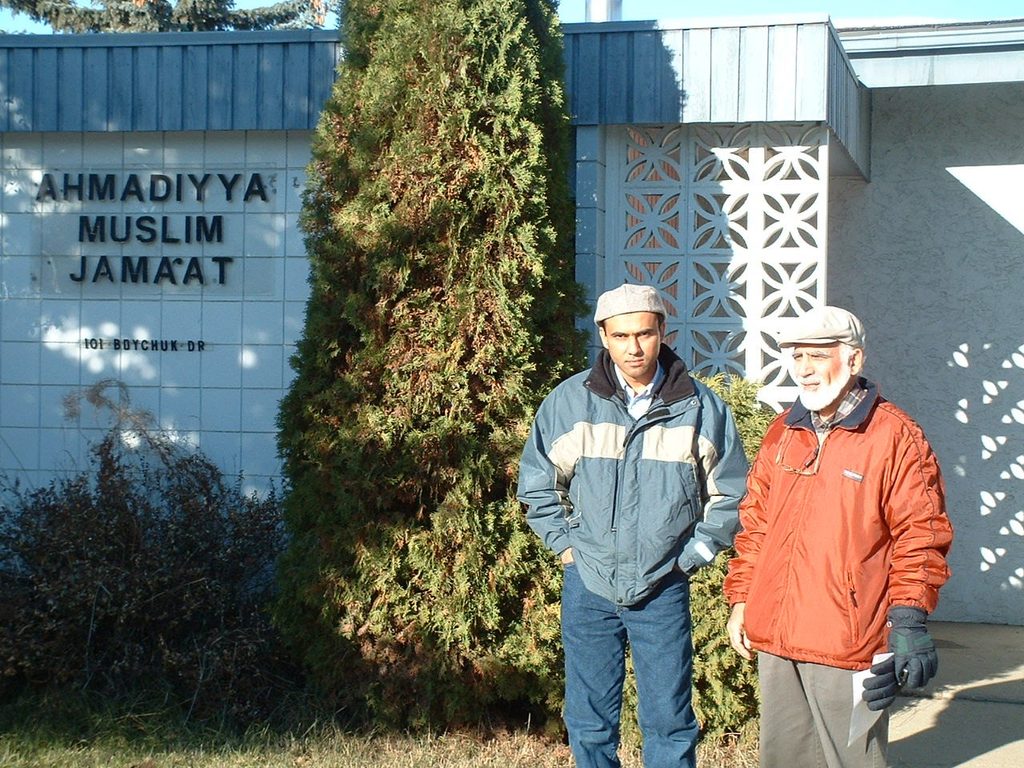
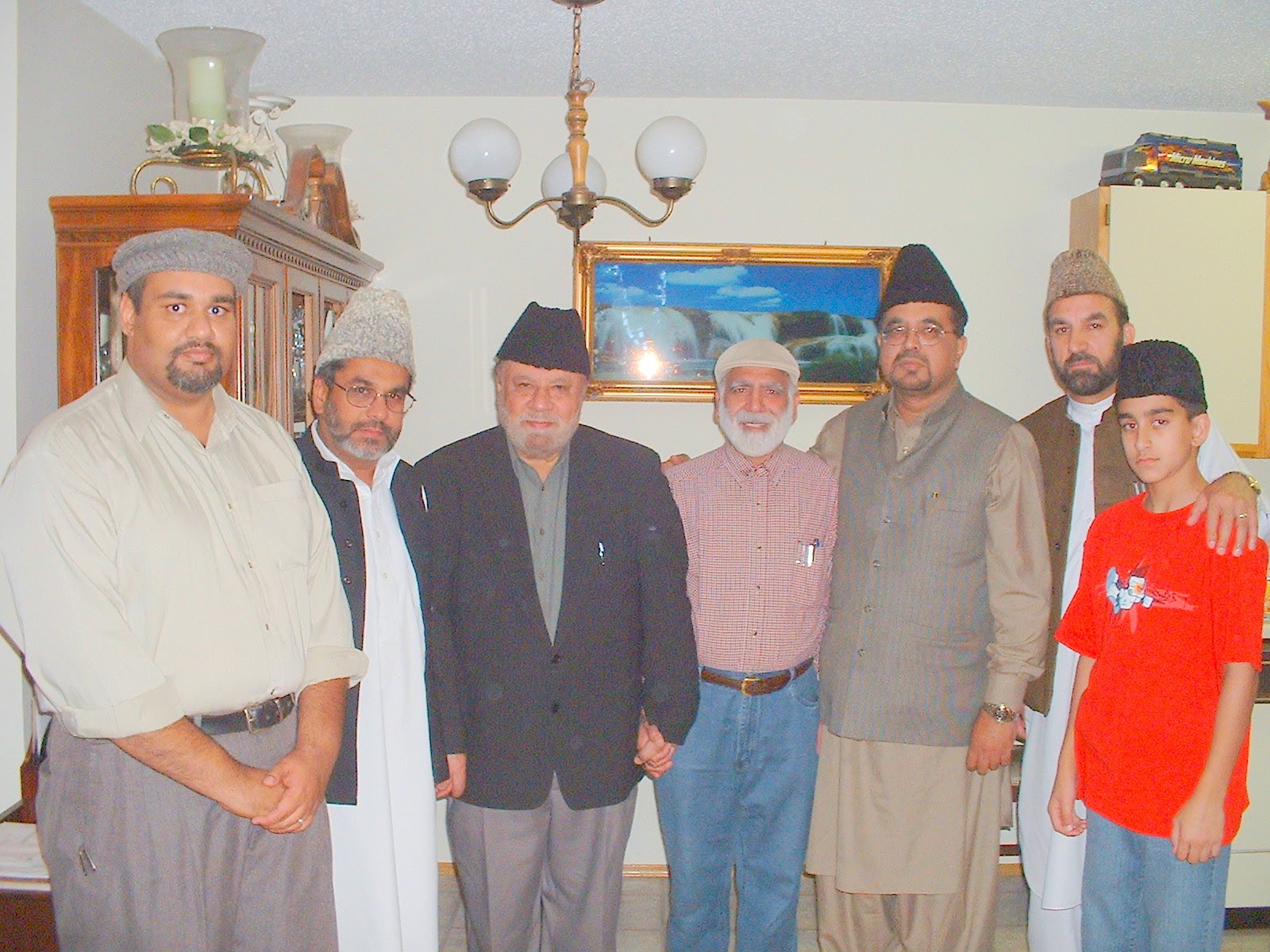
On 10 October 2002, Tahir Ahmad Sahib of Mississauga and I travelled to Saskatoon on Waqf-e-Arzi. We were warmly greeted. For three weeks we lived as guests of Chaudhary Ehsan Ellahi Sahib, who graciously gave us a room in his house and lent us his car. By the grace of Allah, those three weeks accomplished two things. We gained a basic understanding of the city, with particular attention to where the jobs were and what kinds of jobs were available. We also raised awareness of the Ahmadiyya Muslim Jama’at by distributing peace flyers in Saskatoon and Prince Albert.
In early November 2002 we returned to Toronto. I packed my belongings and waited for an interview from one of the jobs for which we had applied. A few days later the call came. I discussed it with Maulana Naseem Mahdi Sahib, who advised me to attend the interview in person. So I took my belongings and moved to Saskatoon with full faith that Allah would help me find the job. Two weeks after the interview I was offered a position at the University of Saskatchewan. Alhamdulillah.
On 13 December 2002, a full feasibility report was submitted to Respected Amir Sahib. He instructed Respected Malik Lal Khan Sahib, then Naib Amir of Canada, to write the words of the tehrik and publish them in the Ahmadiyya Gazette. The call first appeared in its pages in January 2003.
The Call
The tehrik was published under the name of Maulana Naseem Mahdi, Amir of the Jama’at in Canada. It reminded readers that the Jama’at held a sixteen acre plot, excellently situated in Saskatoon, where the foundation stone had been laid in 1989, and it noted that only a few families then lived in the city. Then it asked for a seemingly impossible goal.
“It is my wish that at least 100 Ahmadi families are settled in this town so that when this mosque is completed, it is full of worshippers.”
It urged every local Jama’at in Canada to encourage members who had no special reason to remain where they were, particularly newcomers to Canada, to plan a move to Saskatoon with the intention of establishing and maintaining the mosque. It offered two assurances. Saskatoon had a comparatively lower cost of living, and the local Jama’at would be eager to help newcomers find jobs and settle.
The call was published widely and repeatedly in the Ahmadiyya Gazette. The members of the Saskatoon Jama’at made it their personal duty to telephone Ahmadis across the country and invite them to join the scheme, and those calls reached hundreds of people. Information booths were set up at the Jalsa Salana of Western Canada, held in Saskatoon in 2004, and at the national Jalsa Salana in 2004 and 2005. At these booths visitors found general information about Saskatoon, flyers carrying the testimonies of those who had already moved under the tehrik, and posters, banners and videos.
Flyers advertising the tehrik, with basic information about the city, were distributed at the Majlis-e-Shura in 2003 and 2006, and at the Jalsa Salana of Western Canada in 2005 at Abbotsford, British Columbia, and in 2006 at Calgary. A guide was published for those moving to Saskatoon, and in 2005 a documentary on the scheme was produced for MTA. For those who arrived, the first guidance on finding work came from Ehsan Ellahi Chaudhary Sahib, from Munib Sahib, from Nasir Chaudhary Sahib, and from this humble one.
Each of these efforts was part of a larger team effort, complementing the work of the Markaz, and above all the efforts of Respected Naseem Mahdi Sahib himself. Slowly, people began to arrive.
The First to Come
In 2002, I was the first one to migrate.
In 2003 fifteen followed. They were, in order of arrival,
- Irfan Sheikh
- Mohammad Anwar
- Munib Ahmad
- Faheem Chaudhary
- Waseem Chaudhary
- Shahzad Ahmad
- Faheem Channa
- Qudsiyya Balooch
- Mubarak Ahmad
- Mohammad Qayyum
- Matloob Ahmad
- Mohammad Goraya
- Mansoor Ahmad
- Tariq Khan
- Mohammad Ahmad
- Humayun Nasir
Sixteen families in two years. It was a beginning, and the small community had a large task ahead of it. It had to decide how to proceed.
Speaking to a Province
Between 2002 and 2009 the Saskatoon Jama’at held event after event, with a single purpose. It sought to raise awareness of Islam and Ahmadiyyat among the people of Saskatchewan and northern Manitoba. By the grace and blessings of Allah, most of these events were very successful, and through them we reached more than 2,000 people. That figure does not include the literature distributed during the same years.
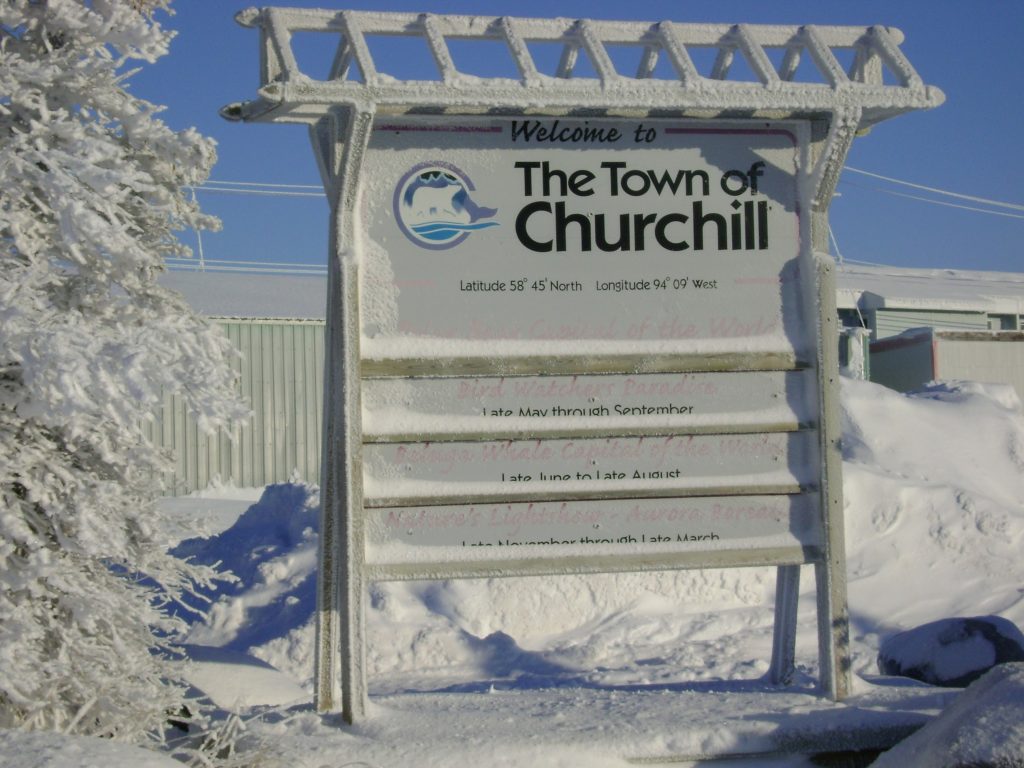
The events took several forms, within Saskatoon and beyond it, and included presentations, conferences and discussions. Among them were Multifaith events, World Religions Conferences, Focus on Islam sessions, Jalsa Seeratun Nabi gatherings on the life of the Holy Prophet (sa), Religious Founders Day events, and presentations in schools. In all, 101 events were held. They were held in Saskatoon, Regina, Prince Albert, Yorkton, Muenster, Wynyard, Craik, Lloydminster, Hepburn, Warman, Flin Flon and Churchill, Manitoba. Full details of every event are preserved with the Office of the Amir and the History Committee headed by Chaudhary Hadi Ali Sahib.

A few moments from these events deserve to be recorded.
After a presentation to a religious studies class at St. Peter’s Abbey in 2007, a student came up to me. He thanked me for the talk, and for the chance to look through the copy of the Holy Quran I had brought with me. Then he said, “You know, before today if I had ever run into a Muslim, I would have changed my path, but after today, I will hold out my hand in friendship.” Alhamdulillah.
At a social gathering in Prince Albert in 2006, the Mayor thanked our speaker, Mirza Mohyuddin Sahib, with the words, “Thank you for helping us understand that we are all one.”
During a meeting with Dr Danny Musqua, a Treaty 4 elder and the resident Elder for the Master of Aboriginal Social Work programme at the First Nations University of Canada, he said, “I believe that your prophet, Muhammad (sa), is a true prophet and his message was a true message. We are all brothers in arms, children of Ishnawy.” The Plains Cree believe Ishnawy to have been the first person, or the first messenger of God.
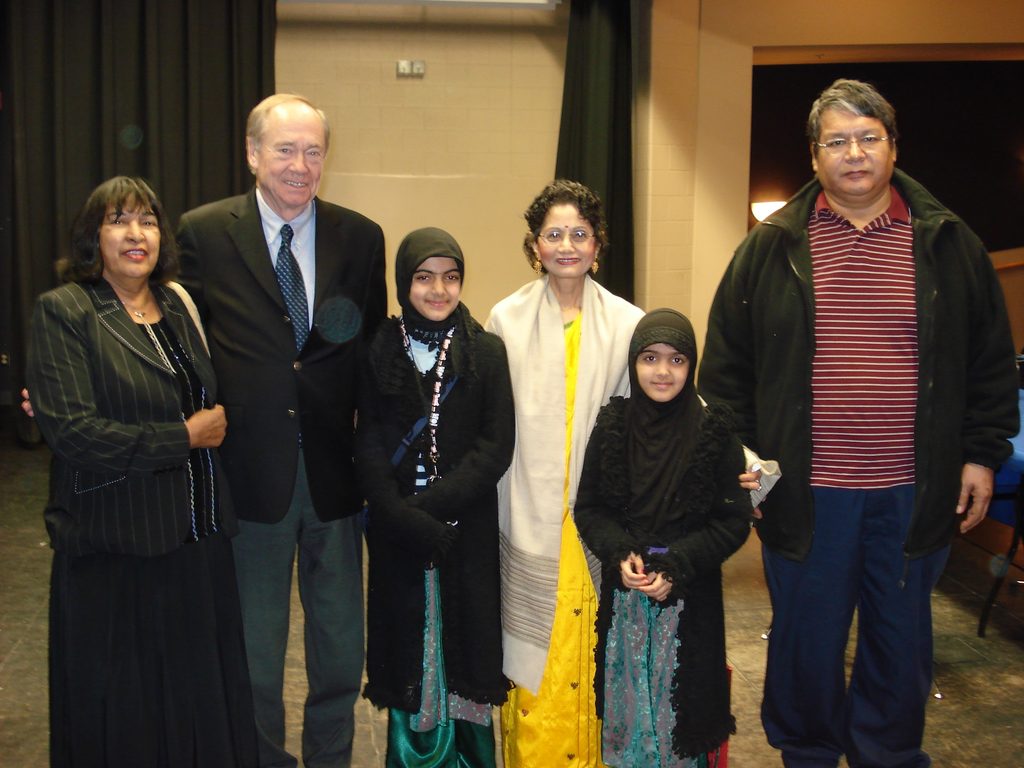
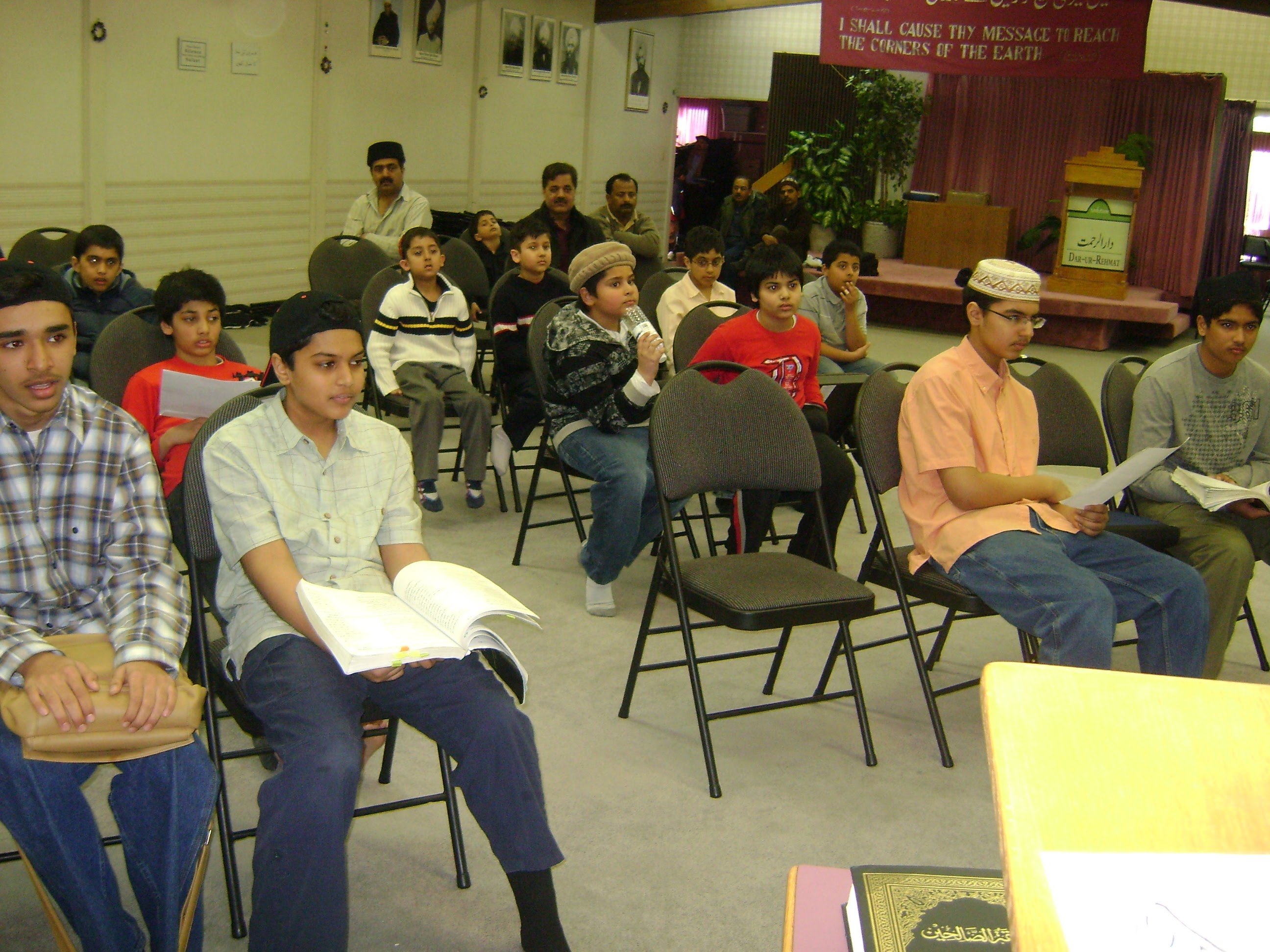
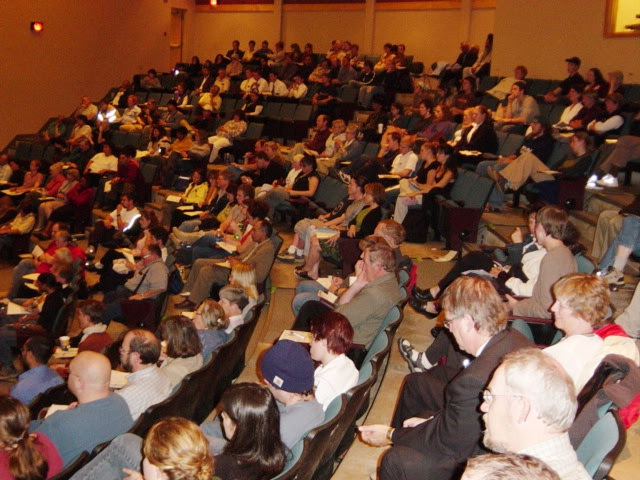
Beyond the formal programme, presentations were given in numerous schools, to audiences ranging from Grade 1 to Grade 12.
After a presentation to a Grade 1 class, given together with Saad Ahmad, then six years old, a girl asked Saad whether he really believed in God and enjoyed going to the mosque. He replied that all his friends were at the mosque, Allah included, and that whenever he was in trouble he prayed, and his friend Allah got him out of trouble. So why, he asked, would he not believe in God?
At a presentation to a Grade 11 and 12 religious studies class at a Catholic high school, this humble one asked the students what the famous words of Hazrat Jesus (as) had been. No one replied. The teacher did not know either. When I later related the incident to the school priest, he voiced his displeasure, saying that the level of education had degraded beyond belief.
At a Jalsa Seeratun Nabi organised at the University of Saskatchewan, a guest named Greg S. offered a comparison. “I have been to two events organised by the Muslim Students Association on Campus and they just didn’t feel right. Your event had a different air about it, it felt as if everything was perfect.”
These events opened many doors, and lasting friendships followed.
Friends in Every Quarter
To advance understanding between religions, building and maintaining friendships with people of every background is of paramount importance. By the grace of Allah, such friendships became the means by which hundreds of people were introduced to Islam and Ahmadiyyat.
The most fruitful of these ran through Multifaith Saskatoon, a body representing all the religions and beliefs of Saskatoon and the surrounding area. Through this group more than 2,000 people received the true message of Islam, at annual general meetings and at specialised conferences on matters of shared concern, such as the environment.
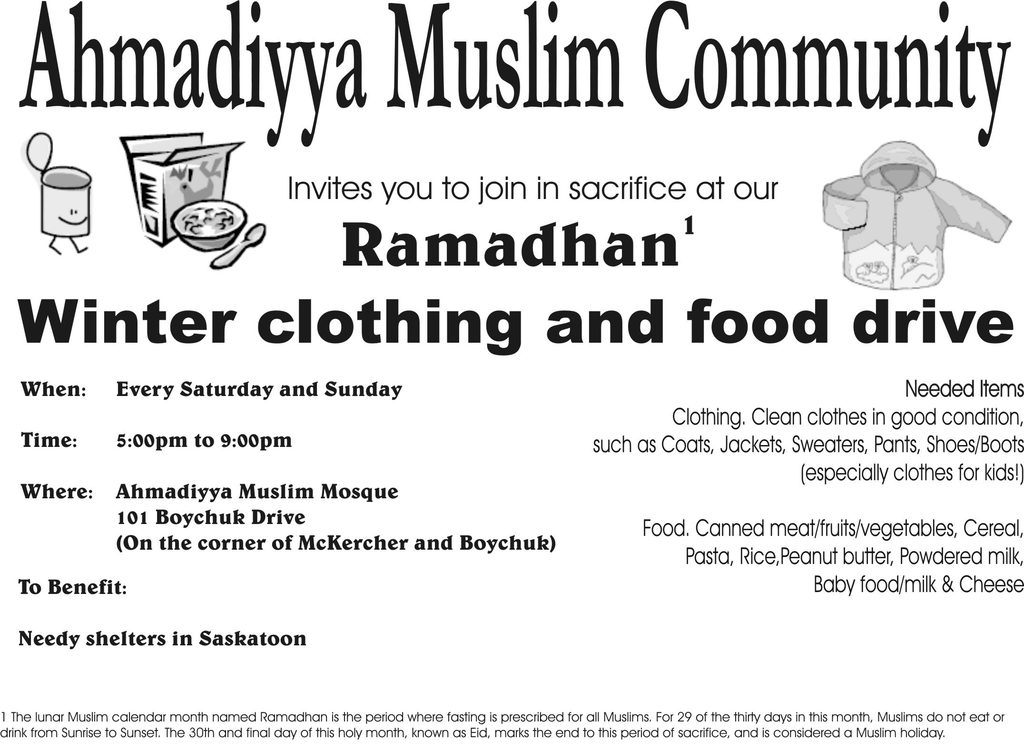
In 2007, when the City of Saskatoon decided to mark International Refugees Day on 20 June, Multifaith Saskatoon asked this humble servant of the Promised Messiah (as) to explain to a crowd of more than 200 people why Ahmadi Muslims are refugees in Canada. The City organised the event. The host was the non-Ahmadi mosque in Saskatoon.
As part of the centennial celebrations of the City of Saskatoon, Multifaith Saskatoon produced a book for children representing every major faith in the city, published in 2007. A group was chosen to lead the project, and this humble one was elected to work with its writers and artists to represent Islam. Together with Respected Farhan Khokhar Sahib, we wrote the story that appeared in the book.
Under guidance from the Markaz, this humble one then worked with Multifaith Saskatoon and Multifaith Regina to establish a single body that would look after the religious interests of the various faith groups across the province. After six months of planning, Multi-faith Saskatchewan was established in 2007, with senior members of both founding groups forming its first board of directors. Krishan Kapila was elected President, and my name was put forward for Vice President.
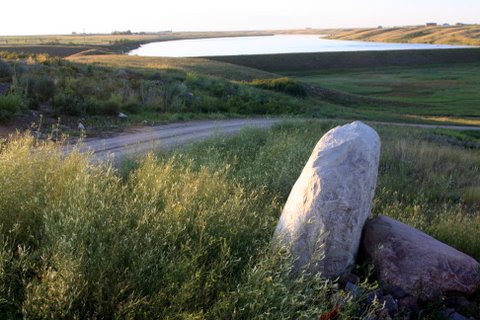
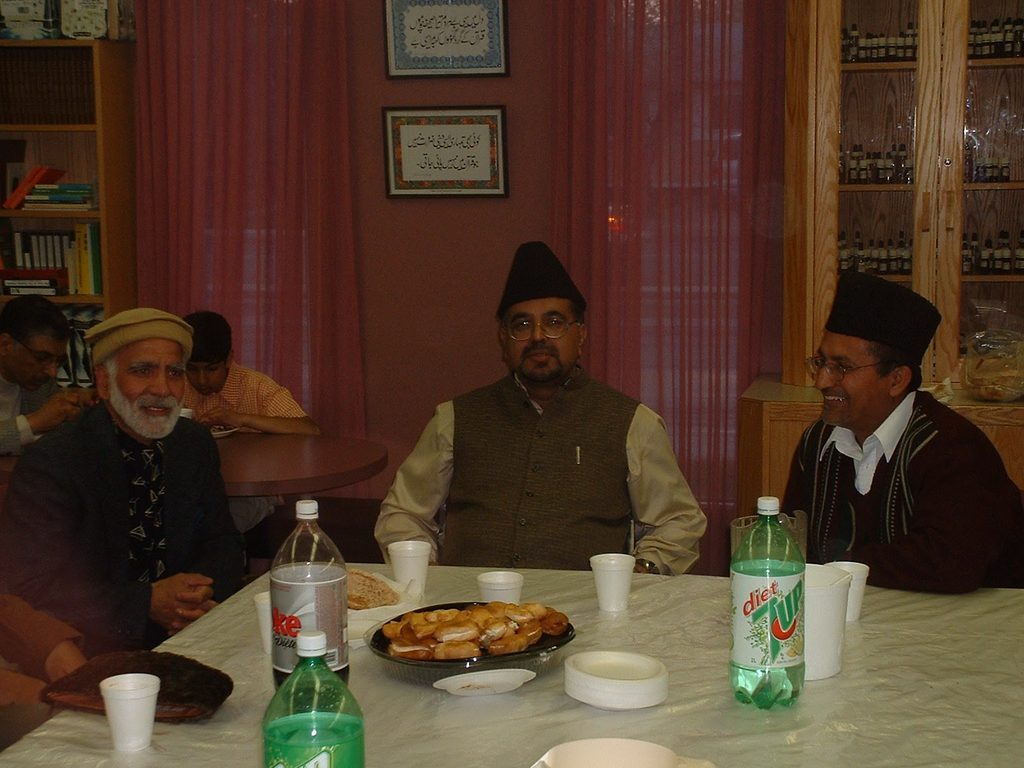
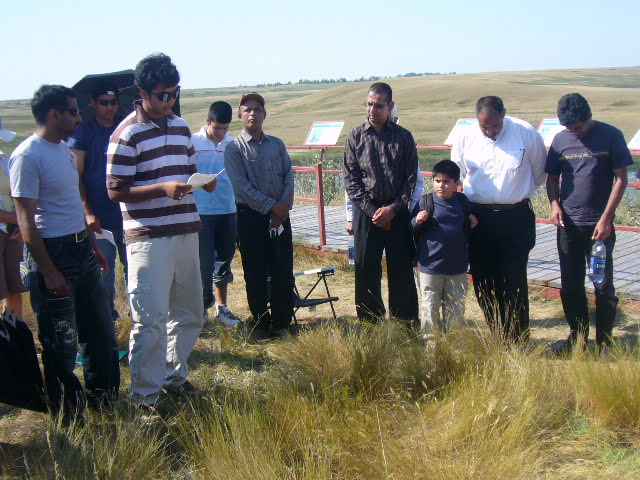
The new body undertook several large projects. The most notable was the Sacred Spaces project, whose aim was to build a multifaith prayer centre open to all religions and all people. After some research, it was decided that the centre should stand in Craik, Saskatchewan, beside the Eco Centre. When this account was first compiled, the centre had opened and stood open to every visitor wishing to spend time in the remembrance of God.
Over seven years, relationships were also formed with many public figures. Among the most prominent were Brad Wall, then Premier of Saskatchewan, the Reverend Lorne Calvert, former Premier of Saskatchewan, the Honourable Don Morgan, Minister of Justice and Attorney General, the Honourable Rob Norris, Minister of Advanced Education, Employment and Immigration, His Worship Donald J. Atchison, Mayor of Saskatoon, His Worship Jim Scarrow, Mayor of Prince Albert, and Sharon Armstrong, Mayor of Wynyard.
Among religious leaders, friendships were formed with the late Rabbi Pavey of the Agudas Israel Congregation, the President of St. Thomas More College, Thomas Silover, head of Religious Studies at St. Thomas More College, leaders of the Christian, Hindu, Sikh and Baha’i communities, and the Indigenous elders Danny Musqua and Stuart Amoyte.
As part of our Tabligh, extensive relationships were also built with journalists, editors, reporters and anchors. In print these included the Star Phoenix, The Prairie Messenger, a Yorkton newspaper and a Flin Flon newspaper. In television and radio they included CBC, Global News, and radio stations in Saskatoon, Yorkton and Flin Flon.
Some friendships were also formed in a less expected setting, the federal prisons.
Inside the Walls
Service to humanity has always been a central teaching of Islam, and one the Promised Messiah (as) emphasised anew. The Department of Tabligh in Saskatoon resolved to carry that teaching to those least fortunate.
In September 2006, in collaboration with the Prince Albert Multicultural Council, we met with inmates at the federal penitentiary in Prince Albert. Thirty-five inmates attended the first meeting, all of them Muslims from various countries. It was held in the chapel of the medium security prison.
From then on, regular contact was maintained. The inmates received continuing guidance on Salat, on fasting, and on the matters of daily life, and that guidance was extended to the staff of the penitentiary as well. Eid prayers were held regularly, along with gatherings on special occasions such as Eid, including Eid Milan dinners, and gifts were given.
Two moments from those years are worth recording. At one Eid gathering the warden was present. After lunch, in general conversation, he told me that among this group of inmates the number of incidents had fallen significantly over the previous two years. Alhamdulillah.
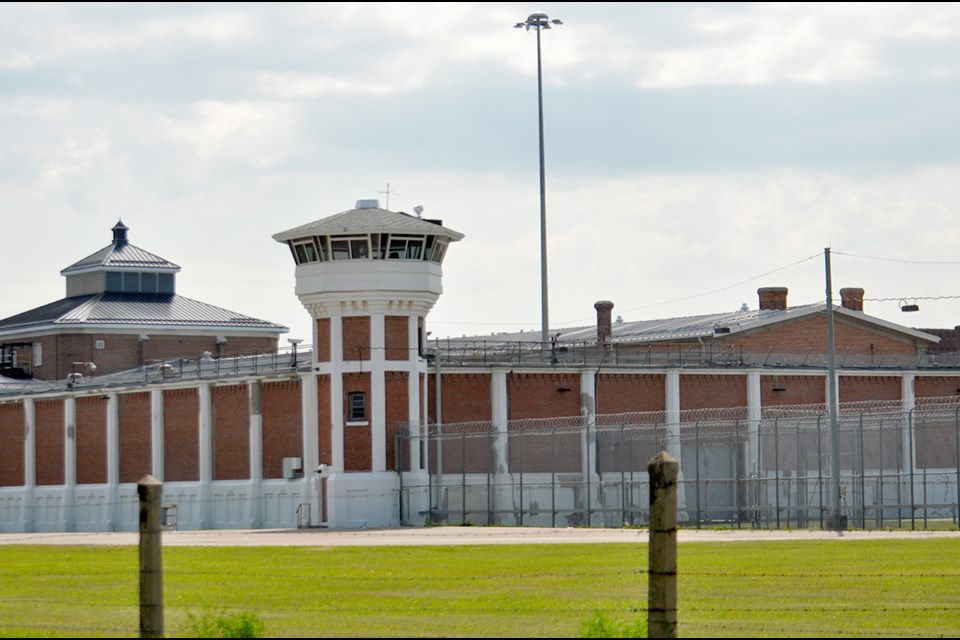
The second was related by the chaplain. One of the inmates, about seven feet tall and a bodybuilder, was set upon in the lunch room by two men who slapped and punched him, hoping to start a fight. He simply stood there, took the blows, and returned a smile. He later told me that when he returned to his cell, he offered prayers thanking Allah for giving him the strength to hold back and not fight.
By the grace of Allah, the model was replicated in the federal penitentiaries of Saskatoon and Drumheller. In 2008 the service was extended to the three Muslim inmates of the maximum security prison. That advocacy was led by Imran Babar Sahib.
The Centenary of Khilafat
In 2008 the Ahmadiyya Muslim Jama’at marked one hundred years of Khilafat. For the small community in Saskatchewan, it was a year of intense activity.
A Proclamation Across the Province
The Markaz instructed each region to approach the cities of its province and request that 27 May 2008 be declared Khilafat Ahmadiyya Day. We resolved to use the occasion to educate every municipal government in Saskatchewan about Islam and Ahmadiyyat. More than 400 letters went out, introducing the Jama’at and asking each municipality to honour us with the declaration.
By the grace of Allah, Saskatoon, Prince Albert, Swift Current and Regina made the proclamation. Many smaller municipalities wrote back to say that our motto, Love for All, Hatred for None, was crucial in this day and age, and that they applauded our efforts to spread this teaching across the world. Alhamdulillah.
The 101 Communities Project
While Jama’at Saskatoon was considering how best to celebrate the centenary, this humble one proposed that we, as a Jama’at, should do our utmost to convey the peaceful message of Islam and Ahmadiyyat to at least 101 communities across Saskatchewan, one city, town or village for every year of Khilafat. Respected Malik Lal Khan Sahib, then Amir of Canada, assigned the Khuddam to work hand in hand with me. Because the target seemed so difficult, he urged that it be carried out not as an individual effort but on behalf of the Saskatoon Majlis.
The first event was held on 1 February 2007. The last took place on 9 May 2008. Through the labour of 46 people, the message reached 12,112 of the 13,621 households in the areas covered in northern Saskatchewan, roughly 89 per cent.
There were 101 events in all, 45 in 2007 and 56 in 2008. Of these, 80 were literature distributions and 21 were presentations. Eighty-two places were visited once, and three towns were returned to a combined 19 times. The presentations alone reached 529 people. The workers came from every part of the Jama’at, including 12 members of Ansarullah, 15 of Khuddam-ul-Ahmadiyya and 8 of Atfal-ul-Ahmadiyya. Among them were 7 children of the Waqf-e-Nau. The full roster and the month by month record are preserved with the Office of the Amir and the History Committee headed by Chaudhary Hadi Ali Sahib.
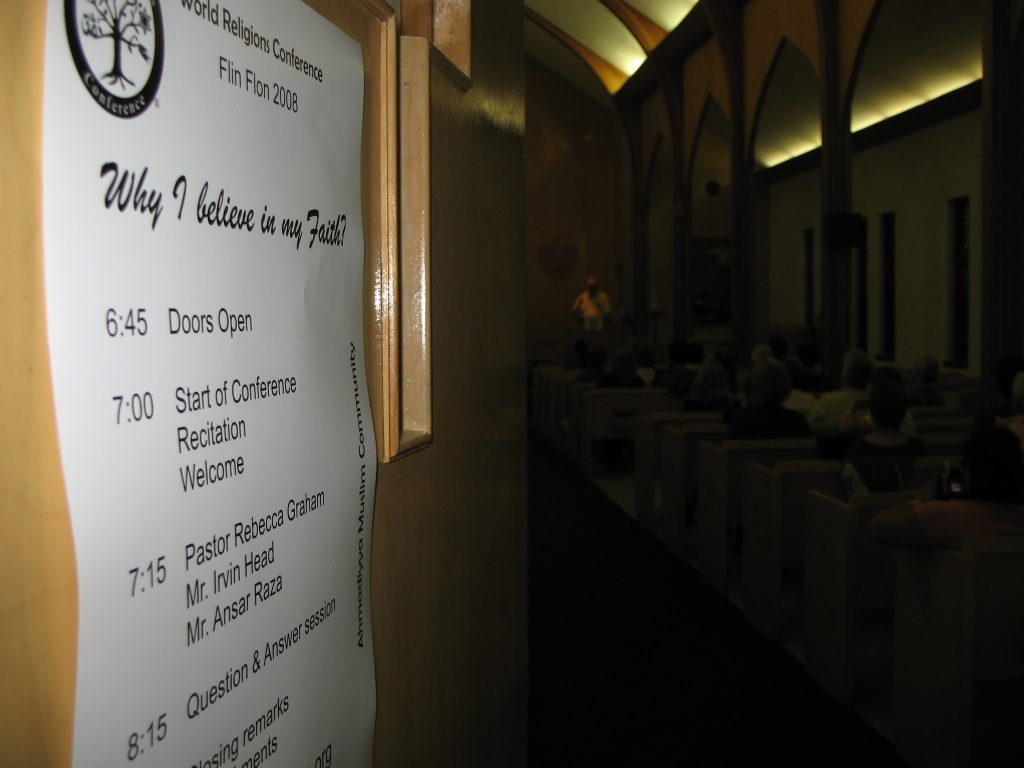
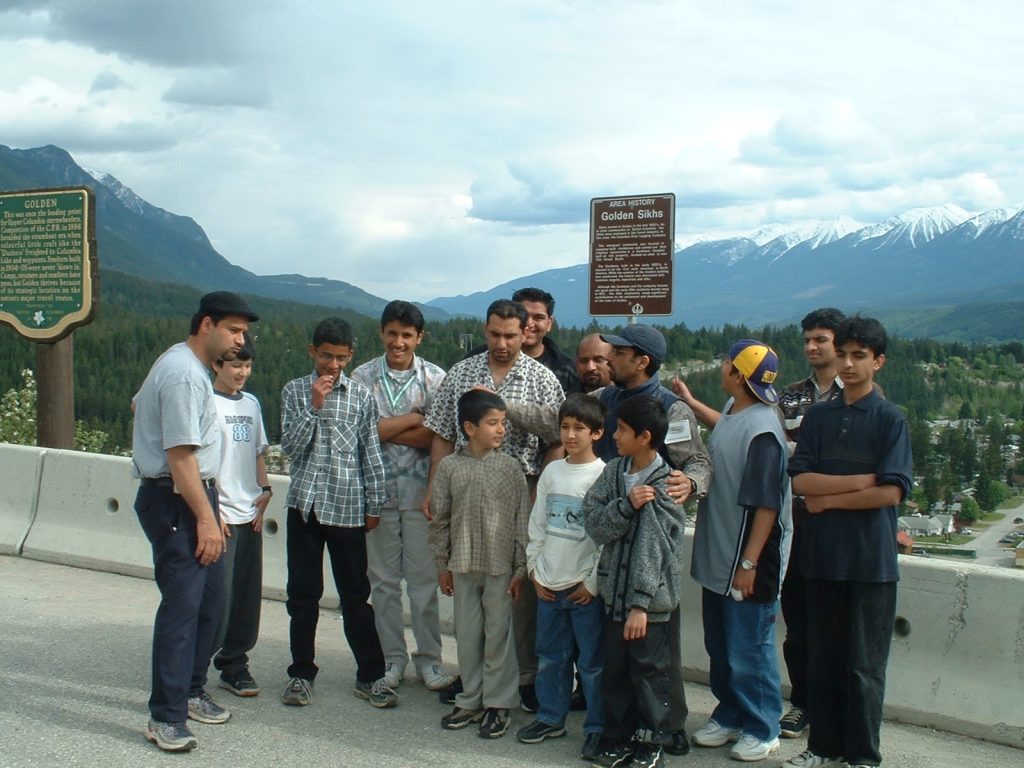
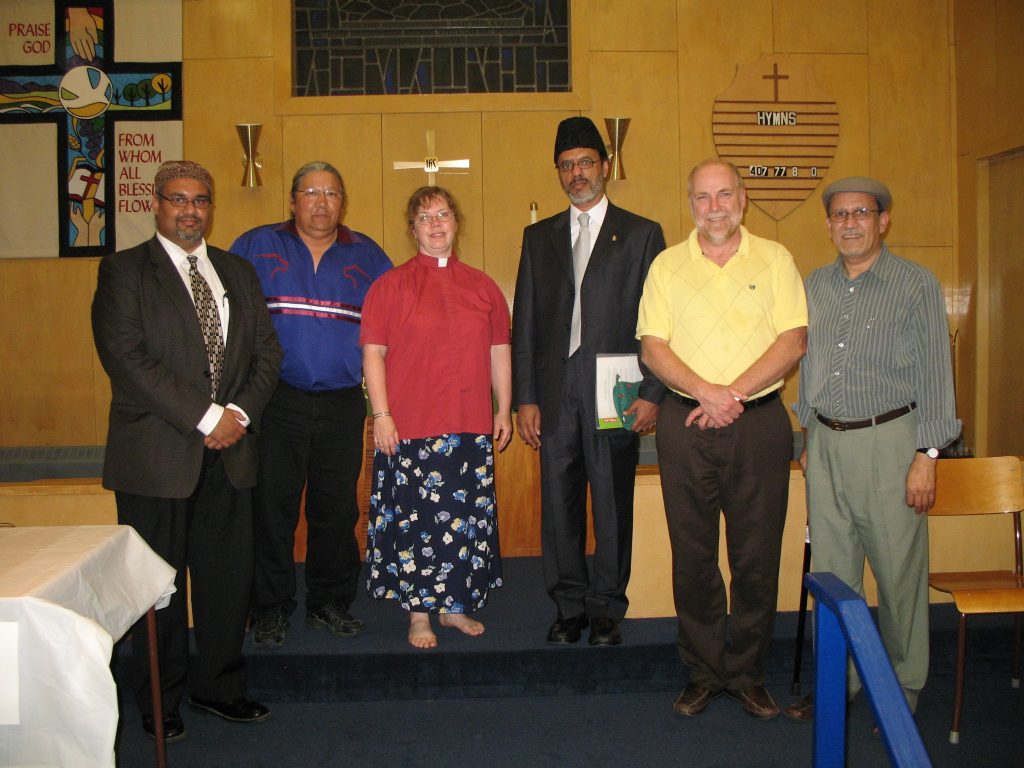
on right is Tanveer Shah with Ansar Raza (speaker)
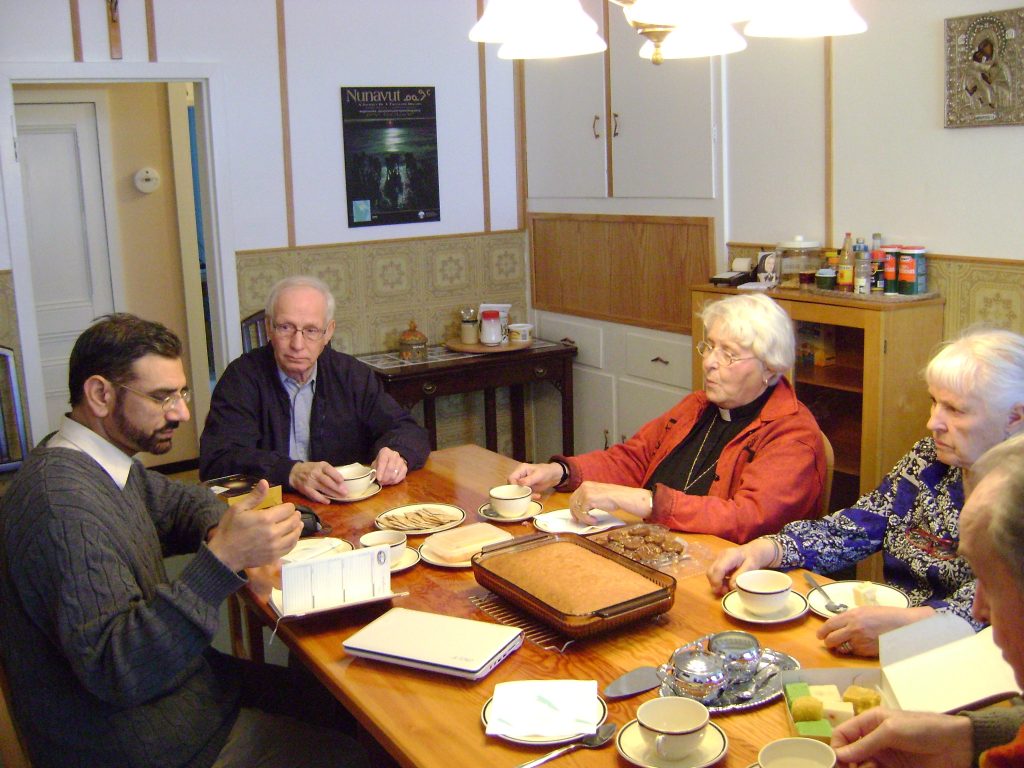
The Saskatoon Jama’at was small, and its members knew it. The knowledge caused them no concern and did nothing to lessen their resolve. By the grace of Allah the task was accomplished, and only through His mercy were those who took part able to bring it to completion. May Allah continue to bless everyone who gave their time and energy to the 101 Communities project.
On 4 July 2008, Respected Malik Lal Khan Sahib wrote to Hazrat Khalifatul Masih V (aba). Under the centenary, he explained, Jama’ats and auxiliary organisations had devised many plans. A khadim of the Saskatoon Majlis had devised a most distinctive one, to introduce Islam and Ahmadiyyat to at least one hundred and one communities during the jubilee year. He had mentioned this intention to Huzoor (aba) earlier and requested prayers. Now he reported that, with the help of his companions, the plan had been completed, and he asked Huzoor (aba) to pray for them. The full translation appears in Appendix C.
Two days later, on 6 July 2008, Huzoor (aba) returned the letter with a note in his own hand. It begins with a single word. Alhamdulillah.
At the Legislative Assembly
We wanted the centenary to reach the intelligentsia of government as well, so that they too might understand the message of Islam and Ahmadiyyat. By the grace and sheer blessings of Allah, the Honourable Don Morgan made this possible. When he was approached with the idea, he committed himself at once and then worked with the entire legislature to ensure the event succeeded.
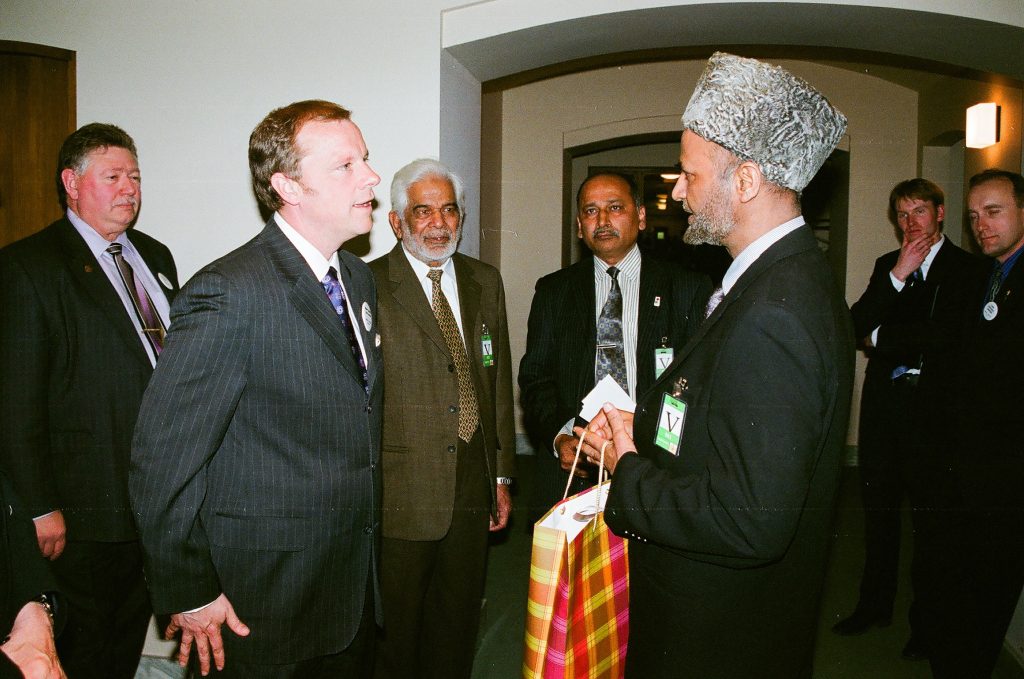
Don Morgan honoured us with a luncheon. Premier Brad Wall attended, together with his cabinet of 18 ministers and 12 other members of the Legislative Assembly. During the ceremony Respected Amir Sahib, Malik Lal Khan Sahib, presented a token of our appreciation to Premier Brad Wall and to Don Morgan, Minister of Justice and Attorney General.
The luncheon was followed by a sitting of the House, in which our host read a ministerial statement recognising the centenary and affirming that the Ahmadiyya Muslim Jama’at is a peaceful community. The entire House agreed. Alhamdulillah. The Minister spoke of the challenge of creating an environment where diversity is welcomed, and then quoted the founder of the Jama’at.
“It is our principle to have sympathy for the whole of mankind. … I say it on oath that I have no enmity with any people.”
He closed by asking every member of the legislature to recognise the commitment of the community to reducing strife in the world and building a society based on respect and understanding.
Those who attended from the Jama’at were Malik Lal Khan, Amir of the Jama’at in Canada, Tanveer Shah, President of the Saskatoon Jama’at, Dr Habeeb Ur Rehman, President of the Regina Jama’at, Munib Ahmad, Humayun Nasir, Dr Rafiq Sahi, Kabir Chughtai, Mussadaq Hayat, Nasser Malik, Moeen Haque, Secretary Tabligh of Regina, and Fazal Masood Malik.
The Centenary Banquet
On 1 June 2008, to mark the Centenary of Khilafat Ahmadiyya, a banquet was held at the Saskatoon Inn to extend a mutual hand of friendship to the friends of the community. By the grace of Allah, it was a very successful banquet by every definition.
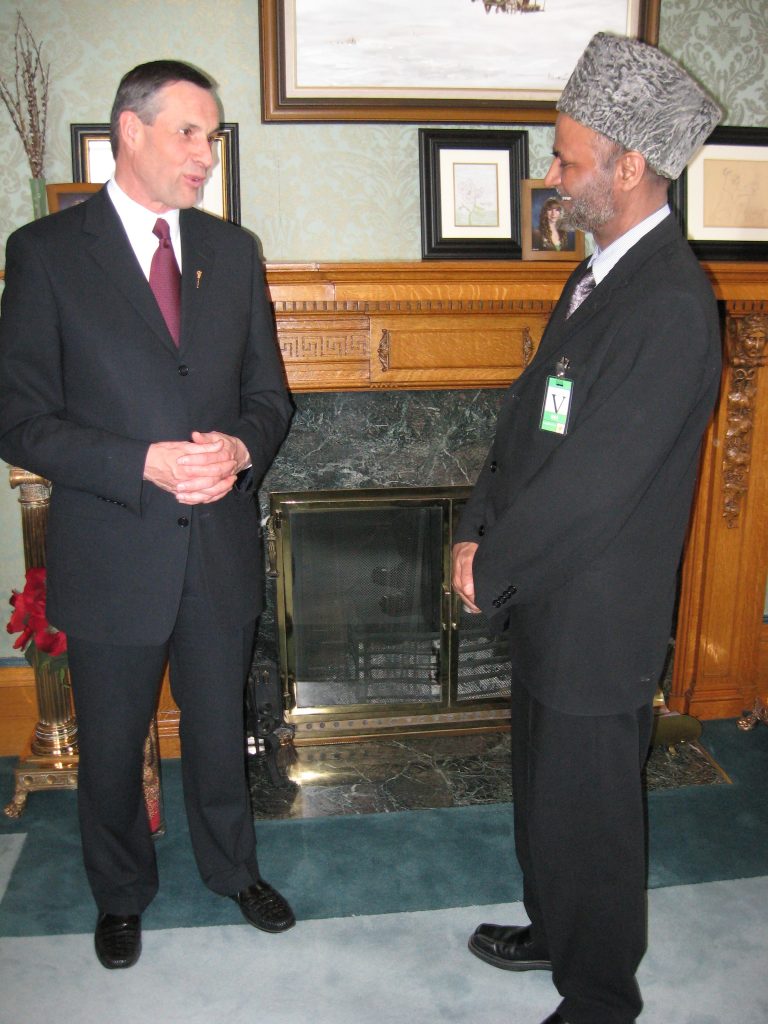
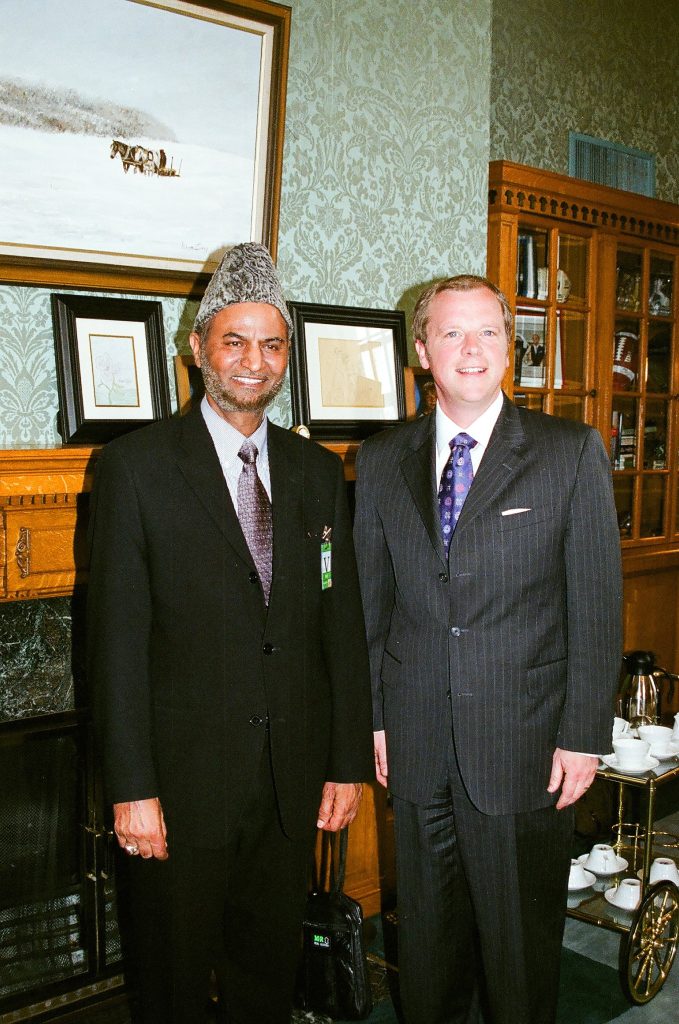
Besides the members of the Jama’at, about 155 non-Ahmadi and non-Muslim guests attended. Among the notable guests were the Honourable Don Morgan, Minister of Justice and Attorney General, the Honourable Rob Norris, Minister of Advanced Education, Employment and Labour, Minister Responsible for Immigration and Minister Responsible for the Workers Compensation Board, and the Honourable Dan D’Autremont, Minister of Government Services and Minister responsible for the Information Technology Office.
They were joined by Joceline Schriemer, MLA for Saskatoon Sutherland, Pat Atkinson, MLA, Brad Trost, Member of Parliament for Saskatoon Humboldt, Chief Clive Weighill of the Saskatoon Police, Deputy Chief of Police Gary Broste, Lorne Calvert, Leader of the Official Opposition, Pat Lorje, Councillor for Ward 2 in the City of Saskatoon, Father Ted Huges, Director of Chaplaincy Services for the Prairie region of the Correctional Service of Canada, and John Dewar, Superintendent of Schools for South East Saskatoon. Beyond the officers of provincial and federal government, many distinguished guests attended, among them doctors, lawyers, school principals and professors of the University of Saskatchewan.
The programme opened with a recitation from the Holy Quran and its translation. Durrey Adan Shah, a member of Nasirat-ul-Ahmadiyya, then gave an introduction titled “Who are Ahmadi Muslims?” in English and French. A grand luncheon followed. Pat Lorje read a message from the Mayor of Saskatoon. The Honourable Rob Norris brought greetings from the Premier, and the Honourable Don Morgan expressed his delight at attending an event where so many religions and cultures met in peace and harmony.
Lorne Calvert congratulated the community on the grand opening of the mosque in Calgary, due to take place on 5 July. “The only thing more delightful,” he said, “would be opening of the mosque in Saskatoon.”
The last item was a speech by Maulana Naseem Mahdi Sahib. It was short, yet powerful, and it lingers still in our souls as a message of the living God. As he spoke, we could not see a single person who seemed to disagree. Every head was nodding, and the delight in the room could be felt.
The silent prayer at the close stirred many emotions. At the table where this khadim sat, the gentleman beside me was red eyed and close to tears. Many guests remarked that it had been a very spiritual event. Cantor Neil Schwartz of Agudas Israel and Jocelyn Schiner said, “We knew of the community, but today we learnt the truth.” Janice Walker-Szaroz, Principal of Lakeview School, where many of our young children studied, said, “Today, so many of my questions were answered that it is amazing.” Then she added, “I finally understand why you are so happy all the time.” The Honourable Don Morgan said simply, “I was deeply moved.”
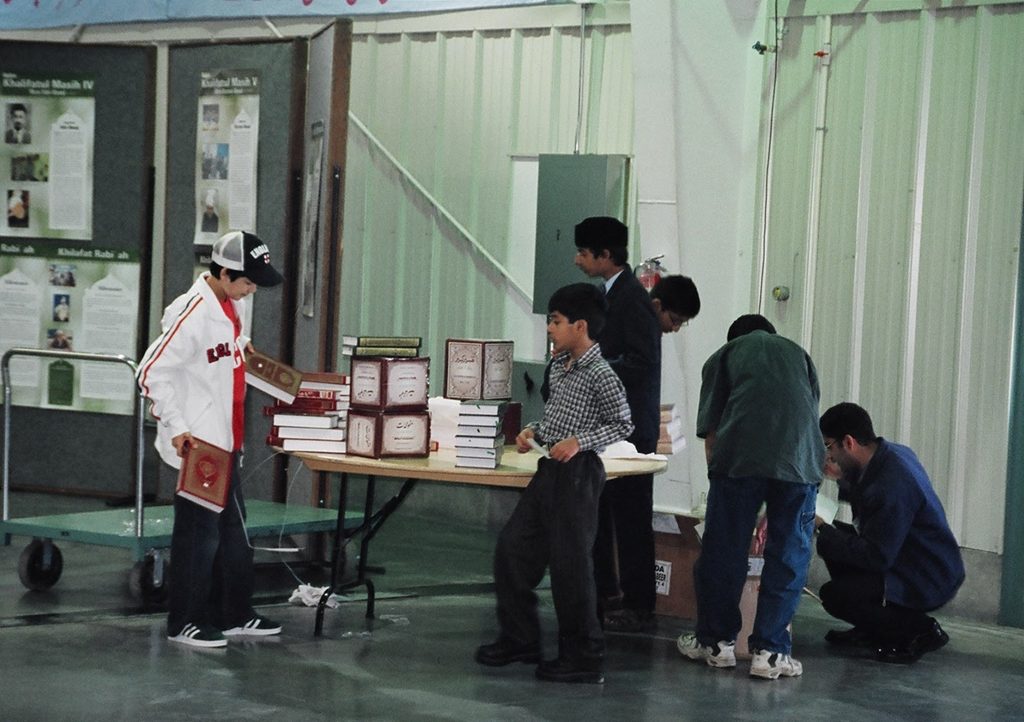
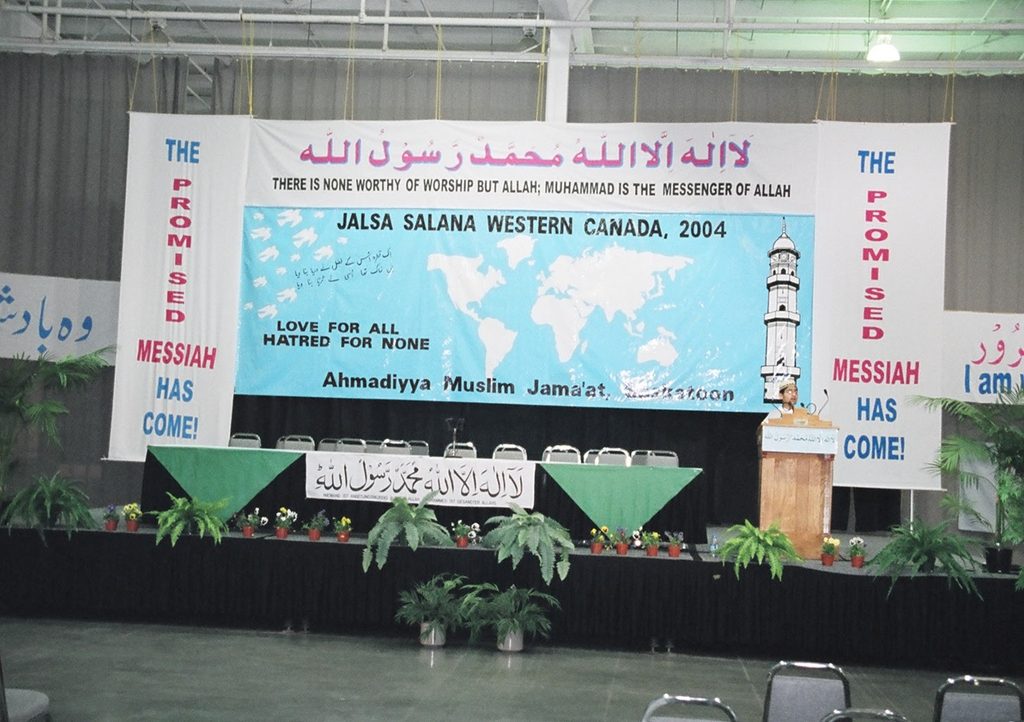
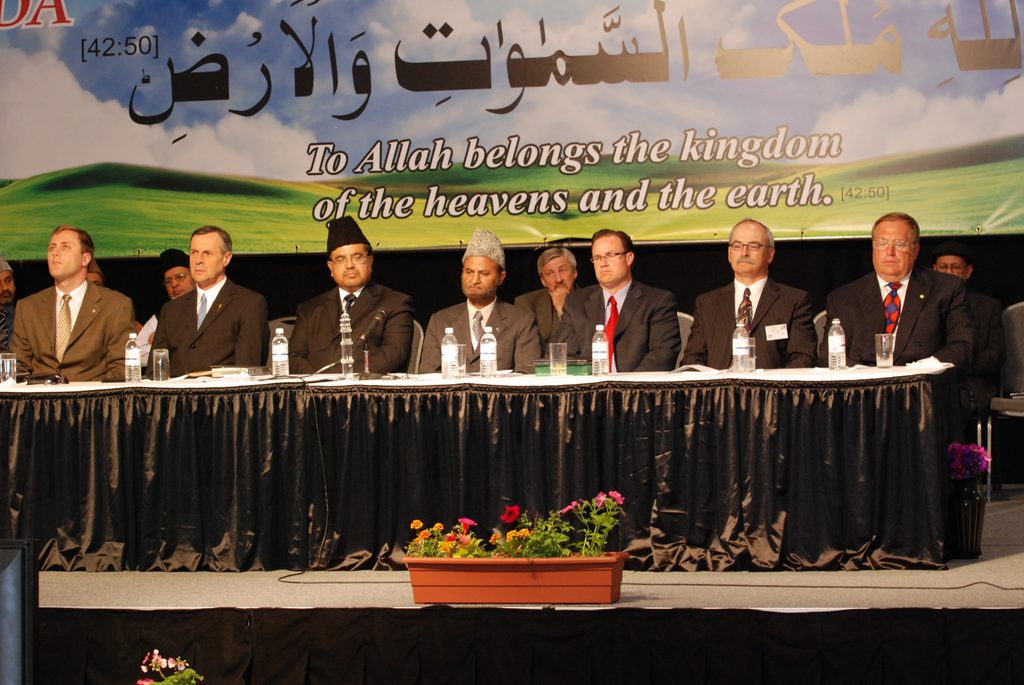
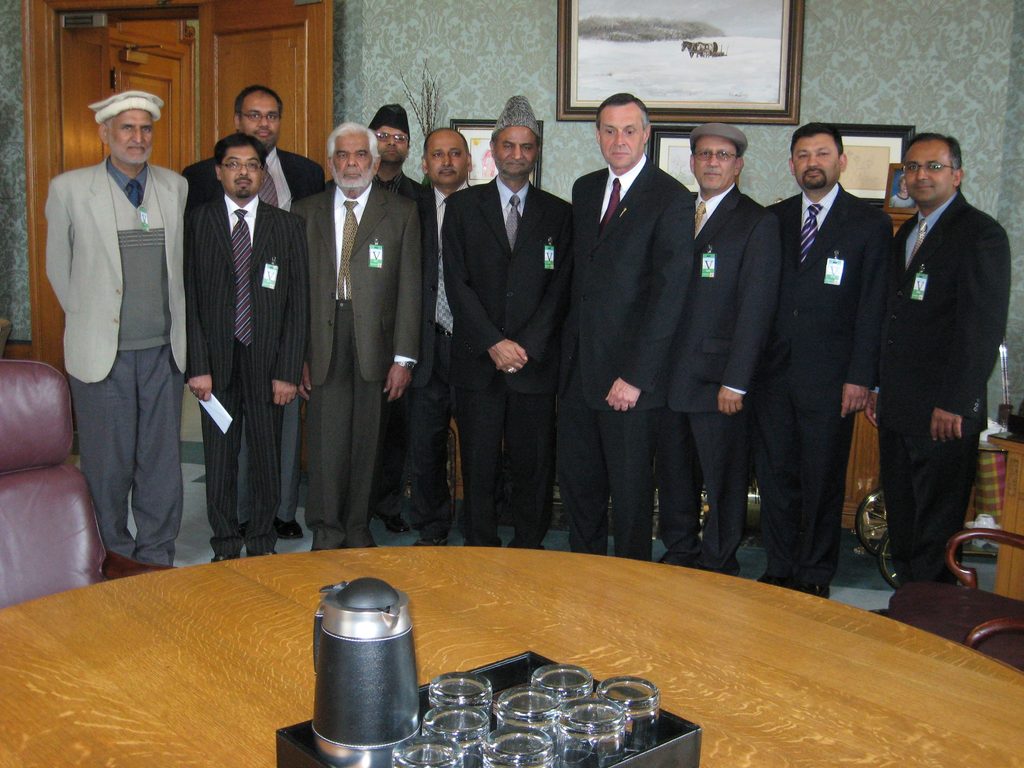
from right: Don Atchison (Mayor), David Katzman (President B’nai Brith Saskatoon), Rob Norris, Lal Khan Malik, Naeem Mahdi, Don Morgan
Alongside the centenary work, the Jama’at also reached out to the Indigenous peoples of the province.
The First Peoples
It is our duty to reach out to every people and to deliver the message of Islam in a manner worthy of it. In keeping with the expectations of the Holy Prophet (sa), we resolved to reach out to the people who belong to this land, the Indigenous peoples, who have lived here since the beginning of history. According to records, the first known civilisation existed more than 6,000 years ago where modern Saskatoon now stands.
We extended our friendship in two ways. First, we developed personal relationships with elders of the community, among them Stuart Amoyte, an elder of Prince Albert, Dr Danny Musqua, an elder of Saskatoon, and Joseph Naytowhow, a storyteller of Saskatoon.
Second, a group of Khuddam chose to learn the basics of the language spoken by the most populous nation, the Plains Cree. Mudassar Chaudhary, Imran Bader Hashmi, Waqas Ahmad and this khaksar took the Introduction to Cree course offered by the University of Saskatchewan.
Preparing the Workers
Behind every event stood people who had to be trained. In 2008 a Tabligh training workshop was held, and in 2009 the local Tabligh Aamila met for a brainstorming session. Personal development included the study of the Cree language and the practice of letter writing. Assistants were trained, and the work of Tabligh was carried on in support of every activity of the Jama’at.
Departure
In 2009, on learning of the wish of Hazrat Khalifatul Masih V (aba) that a Jama’at be established in Prince Edward Island, this humble one, together with the family, moved to Charlottetown, its capital city.
Respected Malik Lal Khan Sahib, by then Amir of the Jama’at in Canada, afterwards asked that a report be prepared on the work done in Saskatoon. That report covered the period from December 2002 to December 2009, and it is the source from which this account has been drawn.
Seven years earlier, a call had gone out for one hundred families, so that a mosque not yet built would one day be full. In June 2008, a former Premier of Saskatchewan stood before 155 guests and said that the only thing more delightful than a mosque in Calgary would be a mosque in Saskatoon. The sixteen acres were still waiting, but a community had now grown around them.
Postscript
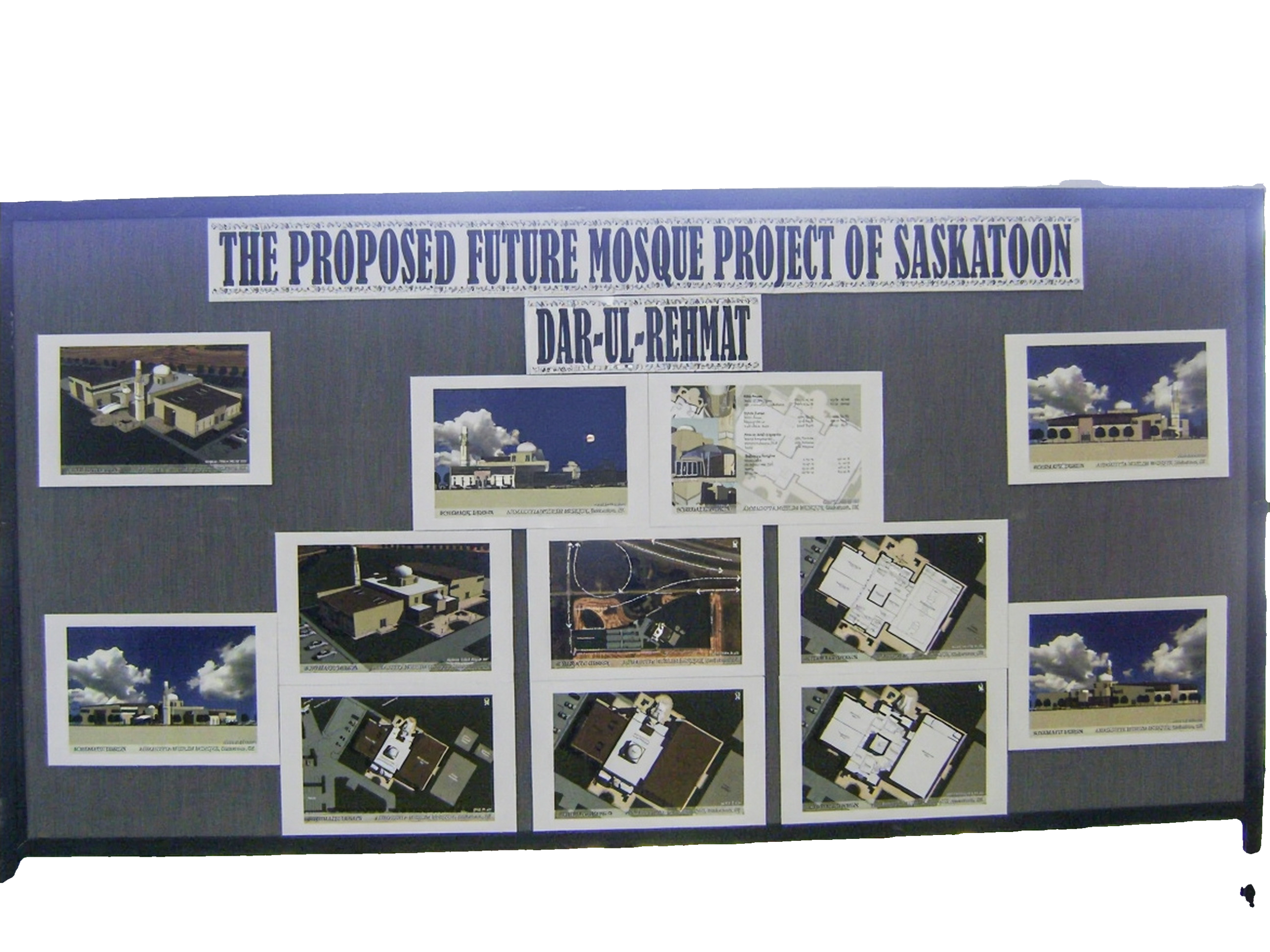
On 5 October 2013, ground was broken for the Baitur Rahmat Mosque, the mosque of the Ahmadiyya Muslim Jama’at serving Saskatoon. In 2016, during his tour of Canada, Hazrat Khalifatul Masih V (aba), Khalifa and World Head of the Ahmadiyya Muslim Jama’at, inaugurated it – AlhumduLillah.
Appendix A. The Text of the Tehrik
As published in the Ahmadiyya Gazette, from January 2003.
By the grace of Allah, the Jama’at has a sixteen acre plot of land, excellently situated in Saskatoon. Hadrat Khalifatul Masih IV (peace be upon him) laid the foundation stone of Saskatoon Mosque on this site in 1989. But at present, only a few families are living in Saskatoon. It is my wish that at least 100 Ahmadi families are settled in this town so that when this mosque is completed, it is full of worshippers.
Please urge such members of your Jama’at, particularly the newcomers in Canada, who do not have special reasons to stay at a particular place to plan moving to Saskatoon with the intention of establishing and maintaining this Mosque. Saskatoon has comparatively lower cost of living and the local Jama’at will be eager to help the newcomers find jobs and settle.
Maulana Naseem Mahdi Amir, Jama’at Ahmadiyya Canada
Appendix B. Ministerial Statement, Legislative Assembly of Saskatchewan
Read by the Honourable Don Morgan, Minister of Justice and Attorney General, on the centenary of Khilafat, 2008. Reproduced verbatim.
Thank you, Mr. Speaker.
One of the challenges for all Saskatchewan people is to create an environment where diversity is welcomed and celebrated, where our differences are set aside and the values we share are paramount.
In our world of ever increasing technology, you would think it would be easier to achieve those goals. That a world reduced in scope would be less susceptible to the idea of hatred and violence. But, ironically, technology has made it easier for those who breed hatred to get out their message.
However, there are times when people of different faiths can come together and take a stand for a world that is inclusive and caring.
Mr. Speaker, that’s why I’m pleased to recognize the centenary of Caliphate in the Ahmadiyya Movement in Islam. The movement, which has members in my constituency of Saskatoon Southeast and throughout Saskatchewan, carries a simple message of peace and understanding.
As founder Hazrat Mirza Ghulam Ahmad wrote:
“It is our principle to have sympathy for the whole of mankind. If a person sees that fire has broken out in the house of a Hindu neighbour and he does not get up to help in putting it out, I tell you truly that he is not of me. If one of my followers sees a Christian being killed and does not go to his assistance to rescue him, then I tell you quite truly that he is not of us. I say it on oath that I have no enmity with any people.”
Established in 190 countries, the Ahmadiyya Muslim Community continues to preach a message of peace and tolerance.
The movement is a reminder that the values we all share are stronger than those who would seek to divide us. Differences in the way we worship may exist, but the underlying belief in the goodness of humanity is common to us all.
As the Ahmadiyya Movement in Islam celebrates this centenary, I would ask all members of the legislature to recognize their commitment to reducing strife in the world and building a society based on respect and understanding.
Thank you.
Appendix C. Letter to Hazrat Khalifatul Masih V (aba), 4 July 2008
Translated from the handwritten Urdu original.
My beloved Master, may Allah the Almighty support you with His mighty help.
Assalamu alaikum wa rahmatullahi wa barakatuhu.
Under the Centenary Jubilee of Khilafat Ahmadiyya, the Jama’ats and auxiliary organisations devised various plans. A khadim of the Majlis Khuddam-ul-Ahmadiyya Saskatoon, Canada, dear respected Fazal Masood Malik Sahib, devised a most distinctive plan, that during the jubilee year he would introduce Islam and Ahmadiyyat to at least one hundred and one different communities.
This target seemed very difficult to me, so I urged him to complete the plan not merely in his individual capacity but on behalf of the Saskatoon Majlis.
I had mentioned this intention of his in the service of Huzoor-e-Anwar and requested prayers. Alhamdulillah, with the help of his companions he has completed this plan and has conveyed the introduction of Islam and Ahmadiyyat to one hundred and one communities.
I request Huzoor-e-Anwar to pray for them.
Wassalam, The humble servant of Huzoor-e-Anwar, Malik Lal Khan
Handwritten note of Huzoor (aba) in the margin, dated 6 July 2008, beginning Alhamdulillah.