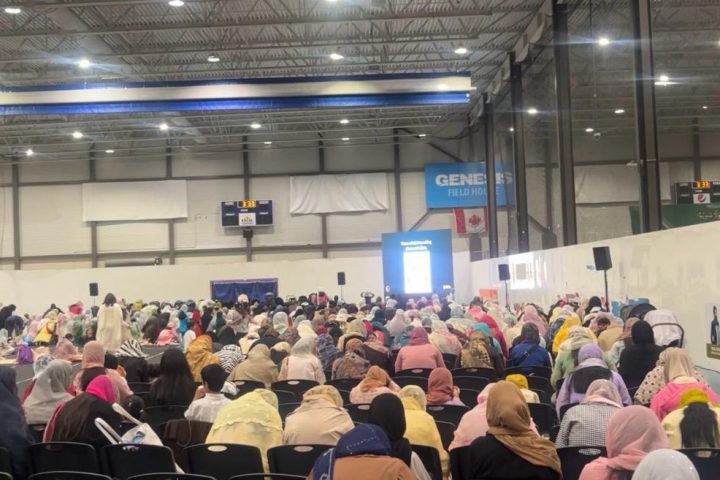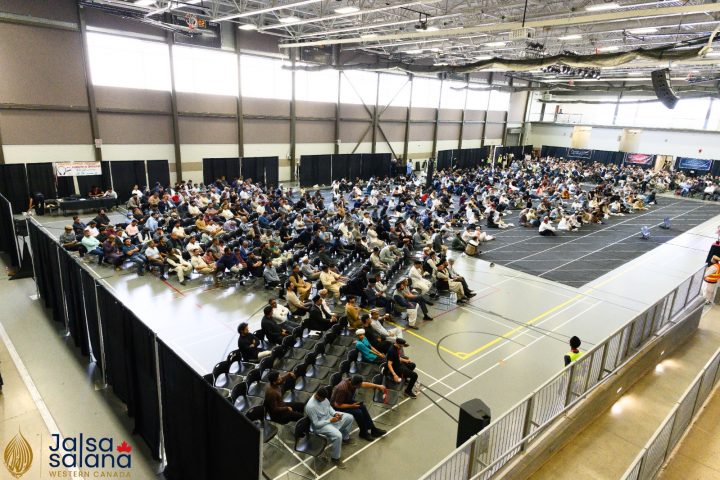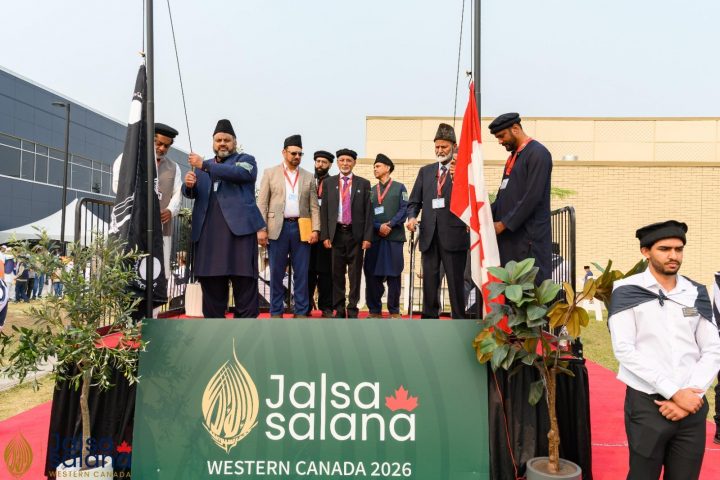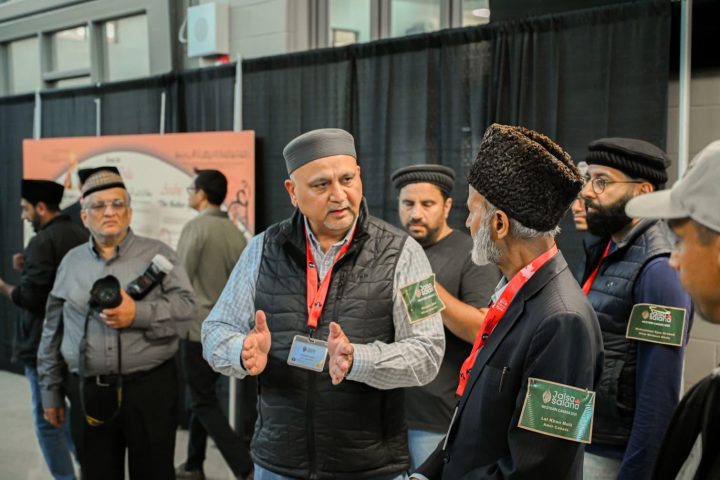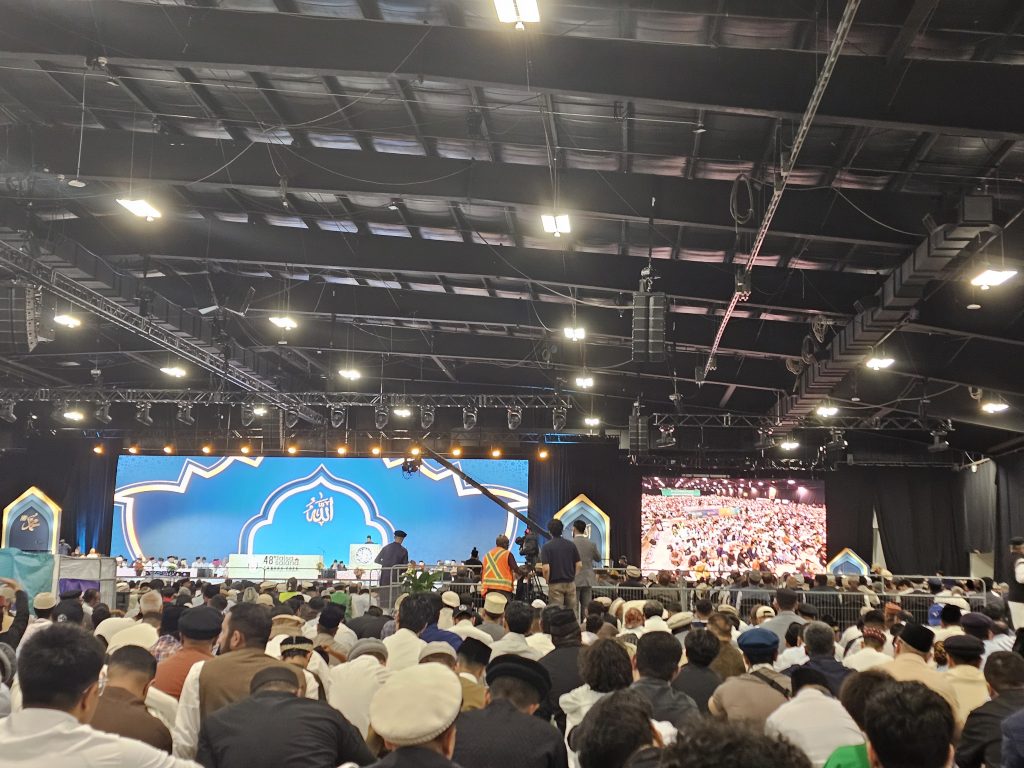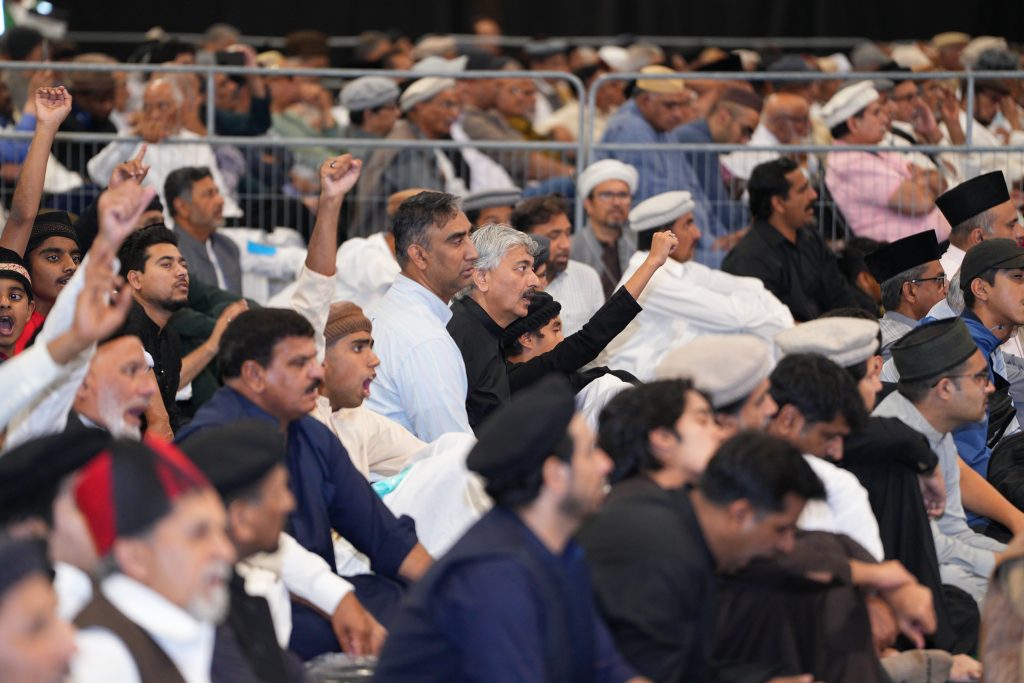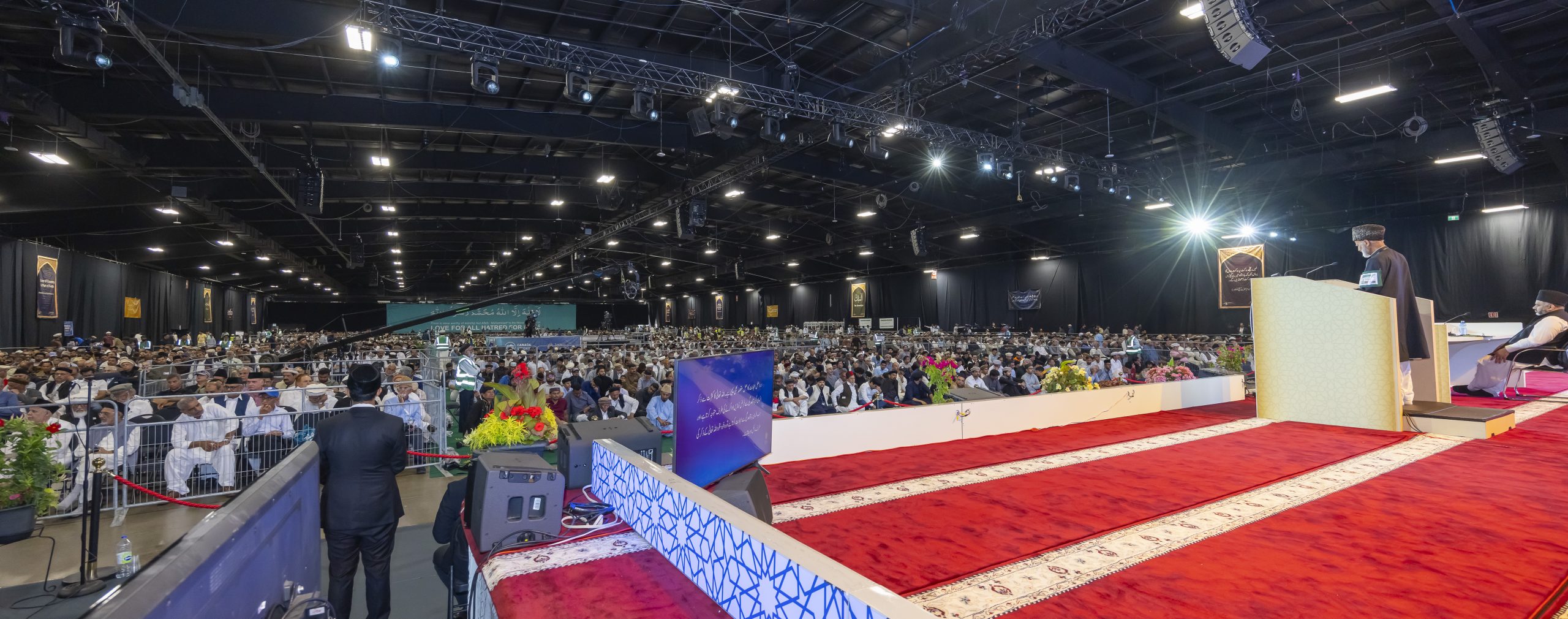
Alhamdulillah, the second day of the 48th Jalsa Salana Canada, held on 11 July 2026, comprised two sessions and seven addresses. The morning session focused on the moral discipline that Islam asks of the individual, in prayer, in speech, in desire, and in obedience, while the afternoon session brought together reflections on divine covenant, scientific discovery, and selfless service, alongside remarks from Canadian civic and political figures.
Morning Session
The session opened with a recitation by Syed Mubashar Ahmad Sahib of verses 12 to 14 of Surah Al Hujurat, with English translation delivered by Omar Abdullah Chaudhry Sahib. The verses are unambiguous in their instruction that the believers must not deride one another, must not call each other by offensive nicknames, must avoid suspicion and backbiting, and must remember that humanity has been divided into nations and tribes for no purpose beyond mutual recognition. In the sight of Allah, the Holy Qur’an states, honour belongs only to the one who possesses Taqwa, righteousness, and nothing else.
A poem of the Promised Messiah (as) followed, translated for the audience by Kaman Rajput Sahib. The verses describe true Islam as a willingness to perish entirely for the sake of Allah and identify humility as the root from which every other virtue grows. Read together, the recitation and the poem set the tone for the session that followed.
Zubair Afzal Sahib, Additional Secretary Tarbiyyat and Waqf e Jadid for Nau Mubai’een, delivered the first address of the session, taking as his subject the place of Salat in a demanding modern life. He argued that it is the business of daily life, not prayer, that ought to be understood as the burden; Salat, he said, is the medicine that restores a restless heart, not an additional weight placed upon it.
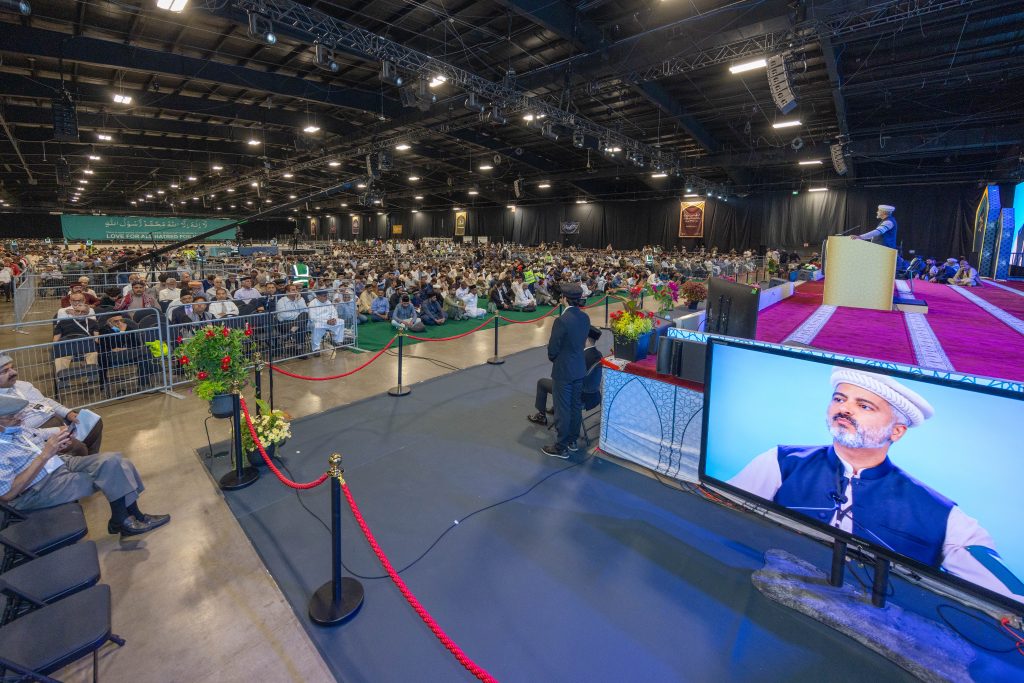

Zubair Sahib was direct about what competed for that time. Work, social media, and sport, he noted, pointing in particular to this year’s FIFA World Cup, have become the tools by which prayer is first delayed and then quietly abandoned altogether. He described the habit of allowing a meeting or a sports event to take precedence over Salat as a form of hidden shirk, in which worldly obligations are, often without the person noticing, elevated to a status that belongs to God alone.
He drew on the example of the Holy Prophet (sa) and of the Promised Messiah (as), both of whom, even in illness, in the midst of war, or while in physical pain, turned to prayer as a source of rest rather than a further demand on their strength. He recalled that the Promised Messiah (as) was known in his youth as “Masita,” one who frequents the mosque. This love of mosque was a private devotion that preceded the many years which led up to his appointment as the Mahdi and the Messiah. The Holy Prophet’s (sa) own wish to be counted among the thankful servants of God, Zubair Sahib said, is a reminder that worship is properly rooted in gratitude rather than in fear.
Najeebullah Ayaz Sahib, Missionary, addressed the session in Urdu on the subject of tajassus (prying) and backbiting, which he identified as among the principal causes of the erosion of trust within a community. He observed that platforms such as WhatsApp and Facebook have made the spread of gossip faster and easier than at any point in the past, removing much of the friction that once made a person pause before repeating what they had heard about another.
Islam’s instruction, Najeebullah Sahib explained, is to cover the faults of others rather than to seek them out. Prying into another person’s affairs, he said, is not a minor social lapse but a spiritual sickness, one that distracts a person from the far more pressing task of examining their own shortcomings. He described the tongue, and increasingly the keyboard, as the primary battlefield of the believer’s moral struggle in the present age, since words spoken or typed carelessly can unsettle a community’s peace far more quickly than they can be withdrawn. Covering the faults of others, by contrast, gives people the space to reform quietly and with dignity, and is essential to communal harmony.
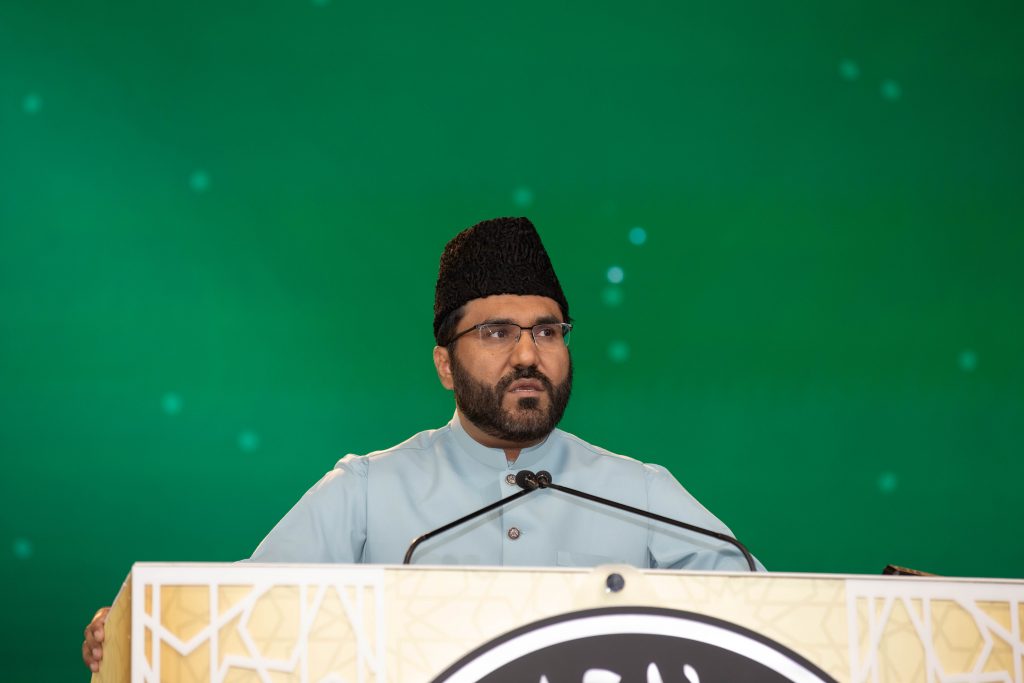
Missionary Umair Khan Sahib spoke on haya (modesty), describing it as a distinguishing quality of Islam. He noted that the instruction of the Holy Qur’an is to lower the gaze. This instruction is addressed to men before it is addressed to women, placing the primary responsibility for social propriety upon them.
Umair Sahib supported his address with reference to contemporary research linking unrestrained exposure to pornography and a lack of self-discipline to depression, sexual violence, and the breakdown of marriages, citing organisations such as Culture Reframed. He referred to individual cases in which unchecked desire had culminated in serious violence and the destruction of families, offering them as illustrations of the real-world consequences. He reminded the audience of the Qur’anic instruction not merely to avoid adultery but to not even approach it, an instruction which is preventive rather than merely prohibitive. It closes off the path to sin before it becomes difficult to resist. Where a majority of young people report premarital experiences, he called on Ahmadi youth to take pride in belonging to the minority who hold to this discipline and described the restraint of a lustful glance as yielding its own quiet sweetness in worship.
The session’s final address was delivered in Urdu by Maulana Hadi Ali Chaudhary Sahib, Na’ib Amir of the Ahmadiyya Muslim Jama’at Canada, on the role of Khilafat in preserving the moral and spiritual life of the community. Khilafat, he said, is the Divine guide that keeps the community anchored to the path of the Holy Prophet (sa), and it is through firm attachment to this institution that Islamic values can be upheld within a secular Western environment.
Maulana Hadi Ali Sahib pointed to the Ten Conditions of Bai’at as the practical framework through which the moral reformation of the youth, and of the community as a whole, is to be pursued. In a period when ethical standards shift readily from one generation to the next, he described Khilafat as a source of consistency that allows believers to contribute fully to the societies in which they live while retaining a distinct spiritual identity. He closed by describing obedience to Khilafat not simply as a matter of communal order but as a lifeline connecting the individual believer directly to the pleasure of Allah.
Afternoon Session
The session opened with a recitation by Ismael Afolabi Sahib of verses 35 to 50 of Surah Bani Isra’il, translated into Urdu, English, and French. These verses call on believers to fulfil their covenants, to weigh and measure honestly in trade, and to walk the earth without arrogance, reminding the listener that the ear, the eye, and the heart will each be questioned on the Day of Judgement. A poem by Hazrat Musleh Maud (ra), translated by Mudasar Ahmad Shami Sahib, followed, urging the Jama’at’s youth to remain loyal to their covenants, to turn away from Satan, and to become, in his words, an elixir of life for those thirsting after truth.
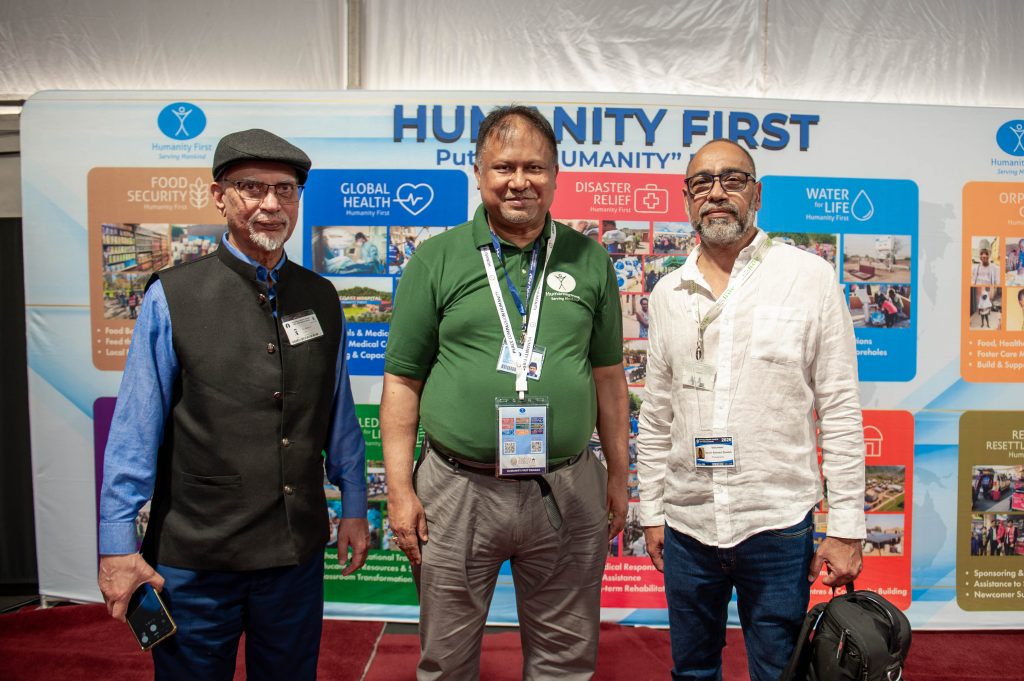
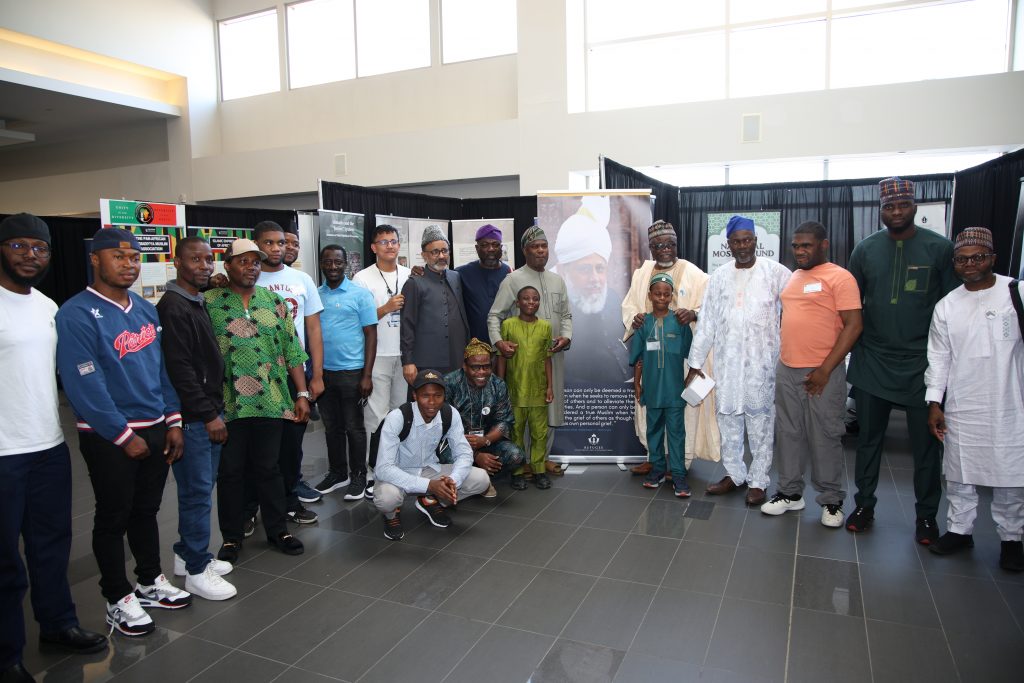
Dr Tauseef Khan Sahib, National Secretary Ta’lim, addressed the session on the relationship between revelation and scientific enquiry. He noted that some 700 verses of the Qur’an touch on matters of science and credited this body of verses with having inspired the achievements of the Golden Age of Islam, including foundational work in algebra and algorithmic thought. His central argument was that the Qur’an, as the word of God, and the universe, as the work of God, do not contradict one another when each is properly understood. He drew out several examples in detail, such as the Qur’an’s references to the honeybee and its uses in medicine, its guidance on balanced nutrition and fasting, its counsel toward moderate exercise, and its intimations of an expanding universe. He recalled a remark by Hazrat Mirza Tahir Ahmad (rh) that the Qur’anic reference to honey alone was worth a billion dollars in unrealised research and closed with a call for Ahmadi youth to pursue scientific excellence as an expression of faith rather than a departure from it.
The session also included a series of brief remarks from Canadian civic and political figures, among them mayors, members of Parliament, and representatives of Ontario’s political parties, together with a comment from a member of the Canadian media. Their remarks were consistent in theme, each praising the Jama’at’s motto of “Love for All, Hatred for None,” recognition of the community’s charitable work in hospitals, food banks, and blood donation drives across the Greater Toronto Area, and reaffirmation of support for religious freedom both in Canada and abroad. The breadth and cross-party nature of the attendance reflected the standing the Jama’at has built within its home communities.
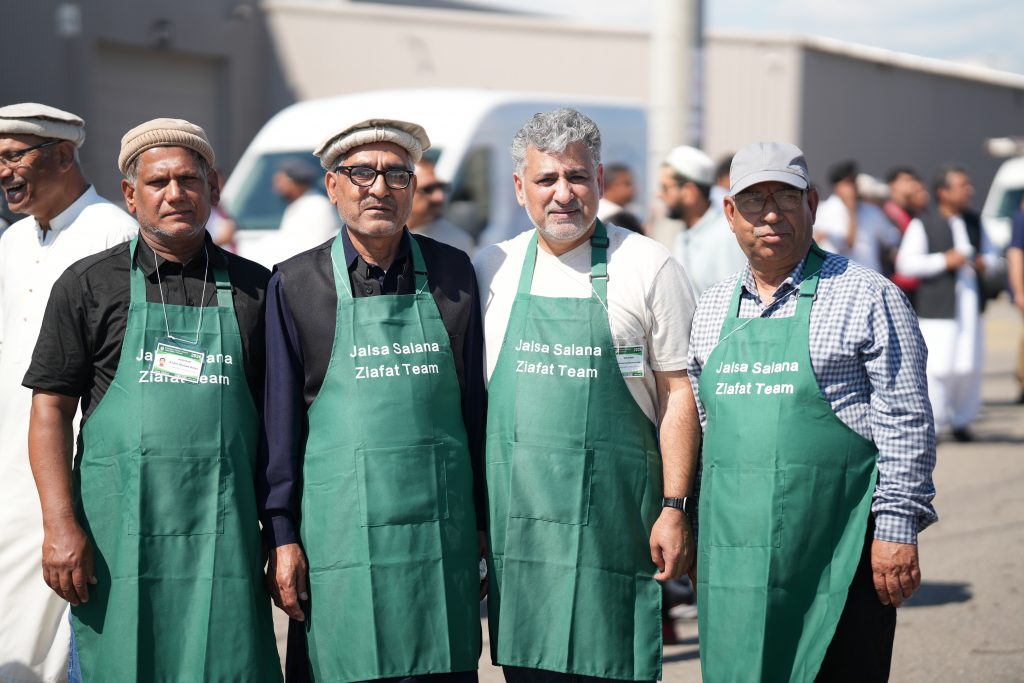

Farrukh Rehman Tahir Sahib, Missionary with The Review of Religions, spoke on the proper attitude toward service of faith. He urged the audience not to regard such service as a burden but as a source of fulfilment beyond what money can provide, noting that where the earliest generations of Islam were called to physical sacrifice, believers today are asked instead to give of their time, wealth, and reputation. Time, he observed, is the one resource distributed equally to every person regardless of wealth or standing and is therefore the truest measure of what a believer is willing to offer God. Drawing on Qur’anic language of trade and exchange, he described devotion to faith as a transaction in which a finite offering is met with an infinite return, and reminded the audience that the Companions of the Holy Prophet (sa) were, in his words, human beings just like any other, whose example remains within reach rather than belonging to a distant and unattainable past.
Dr Maood Bin Tahir Sahib, President of the Ahmadiyya Muslim Lawyers Association of Canada, closed the formal addresses with a discussion of covenant, A’hd, as a binding moral and spiritual undertaking witnessed by Allah, extending from the primordial covenant between Creator and creation to the ordinary contracts and signatures of daily life. He described the breaking of a promise as an invisible sin and a mark of hypocrisy that erodes integrity from within, and offered practical counsel on the importance of putting agreements in writing in business dealings, in marriage, and in immigration matters, so as to avoid both worldly dispute and spiritual betrayal. He recalled the Holy Prophet’s (sa) insistence on honouring a promise made under difficult circumstances even when it appeared to work against his own interest. The speech closed by describing loyalty to Khilafat as the covenant’s modern expression, asking of every believer the same completeness of devotion and sincerity that the covenant has always required.
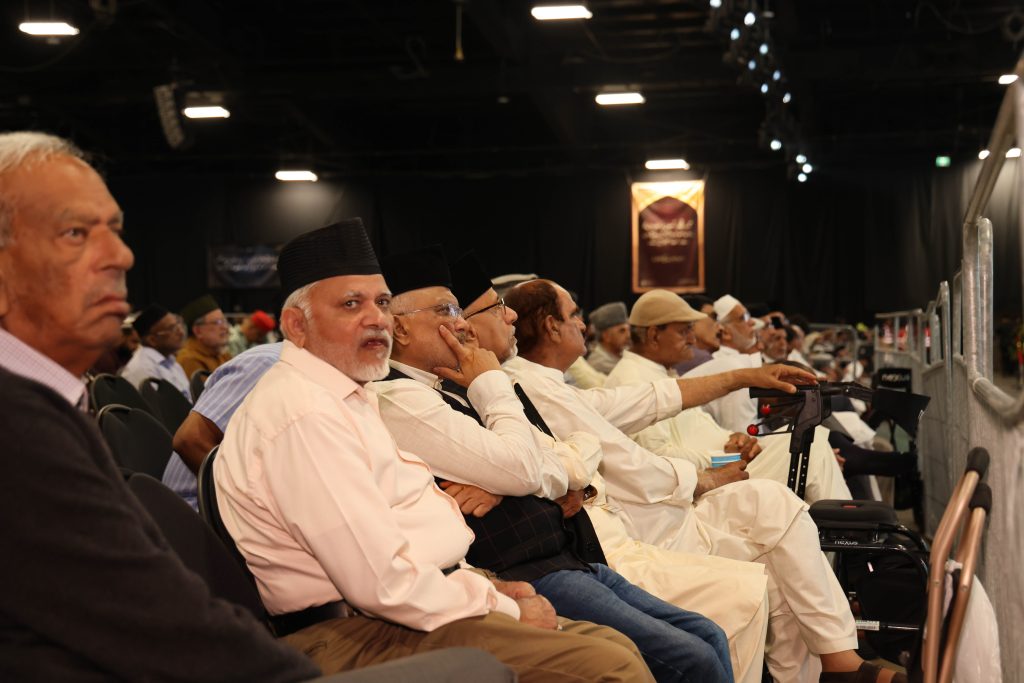

May Allah enable us to observe the teachings raised across the day, of humility, of the discipline of prayer, of guarded speech, of modesty, and of obedience to Khilafat, and to ponder the invitation towards scientific curiosity pursued in faith, service offered without complaint, and the honouring of covenants in both the small and the sacred matters of life. May these teachings become a regular part of our daily lives and make us better followers of the Jama’at of the Promised Messiah (as), Insha’Allah.