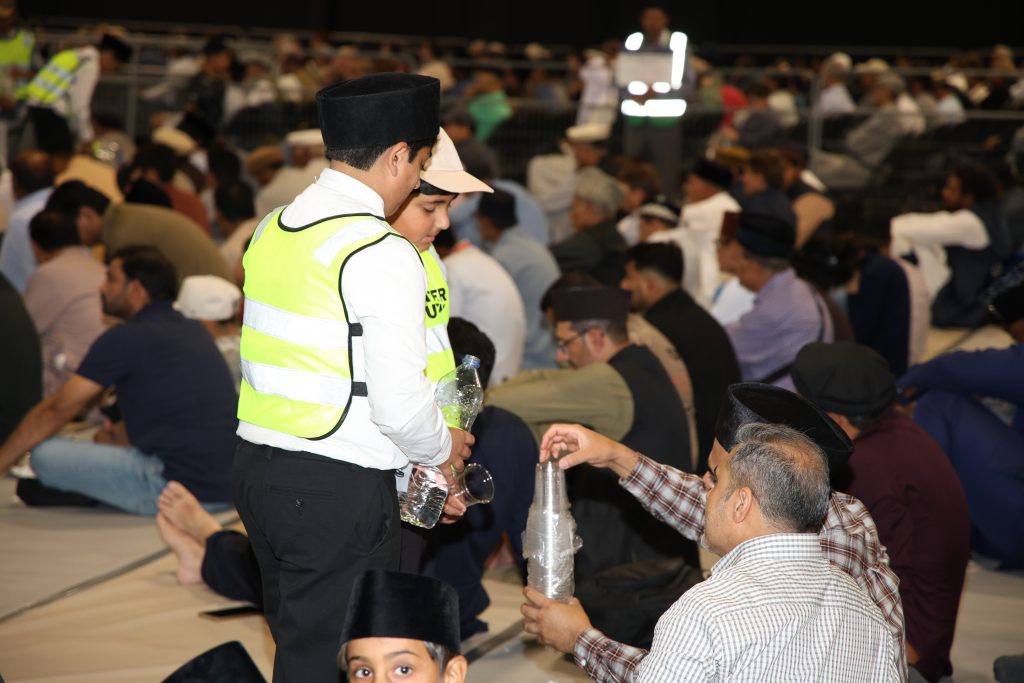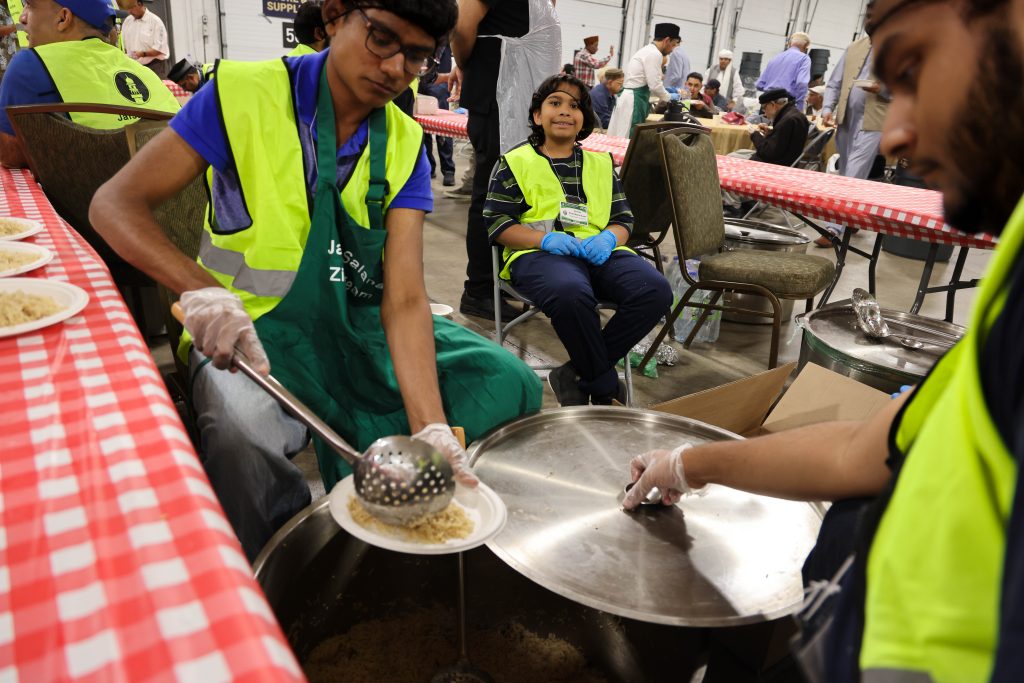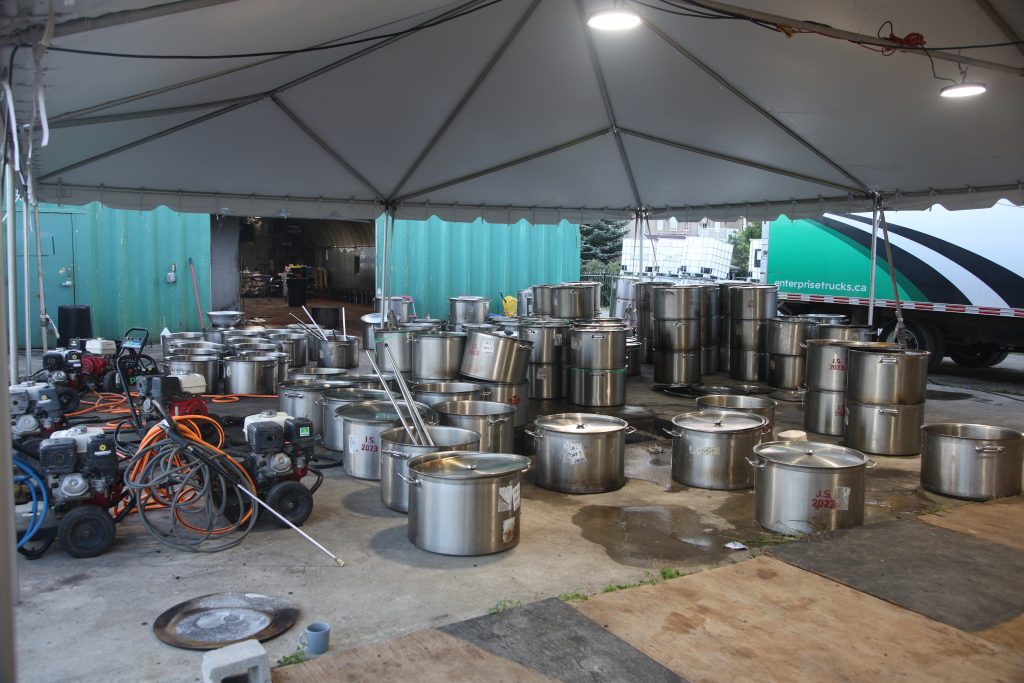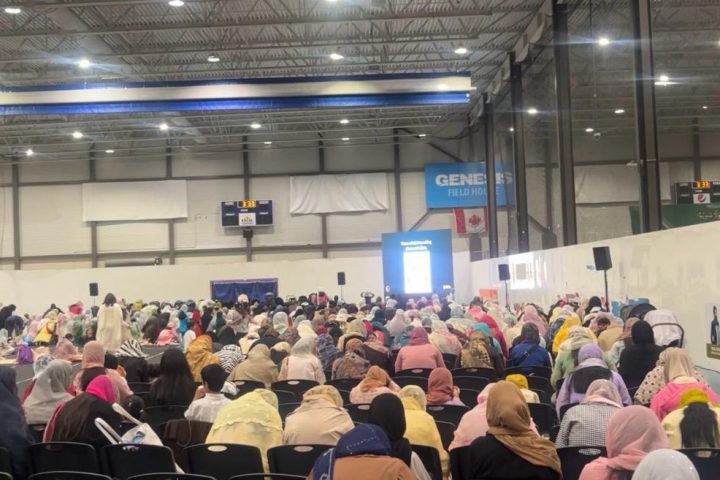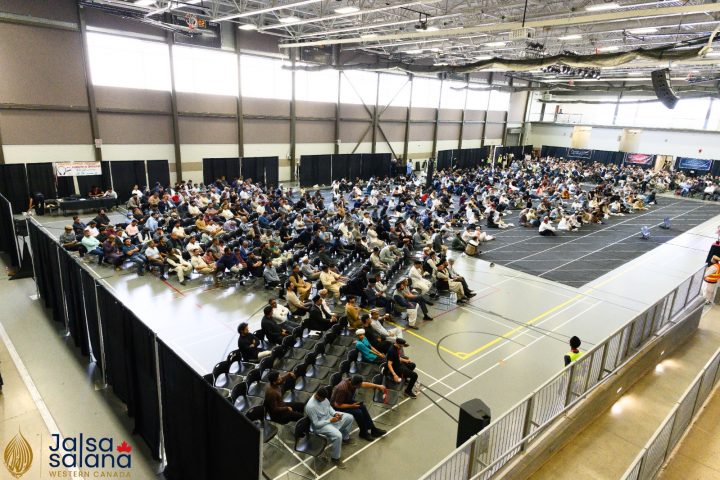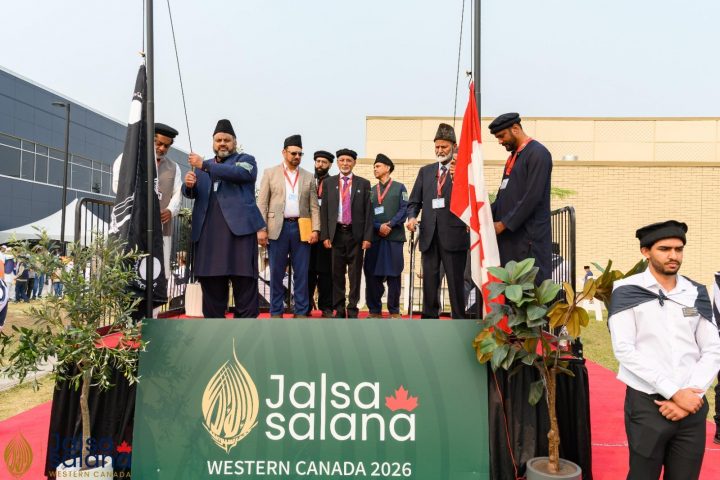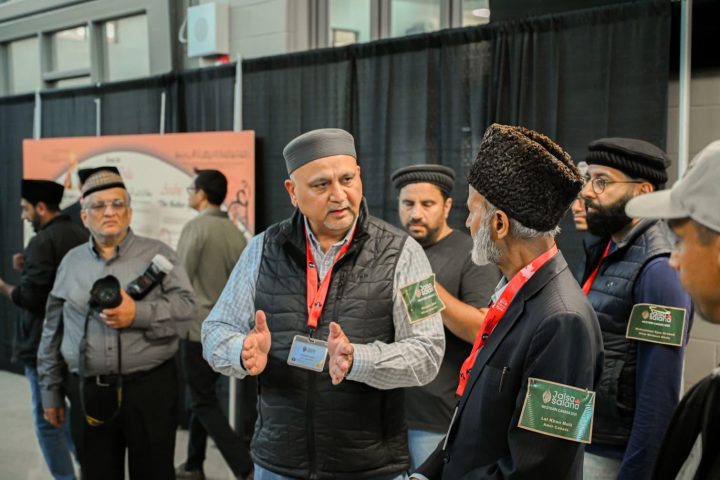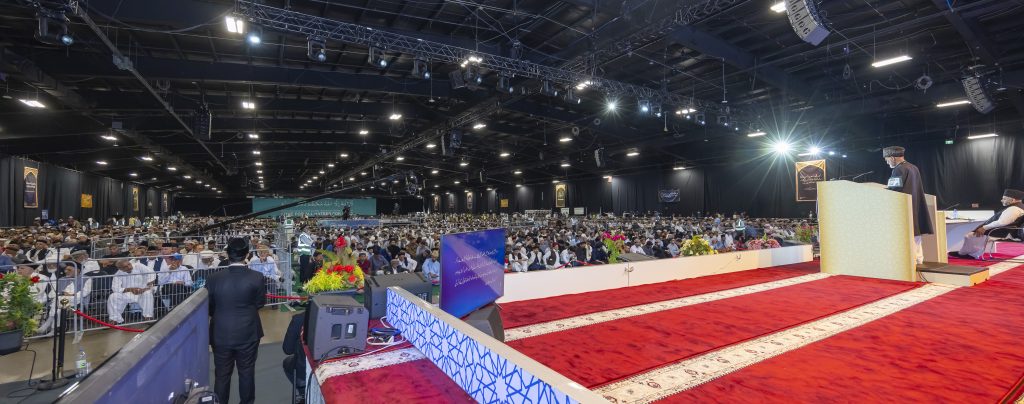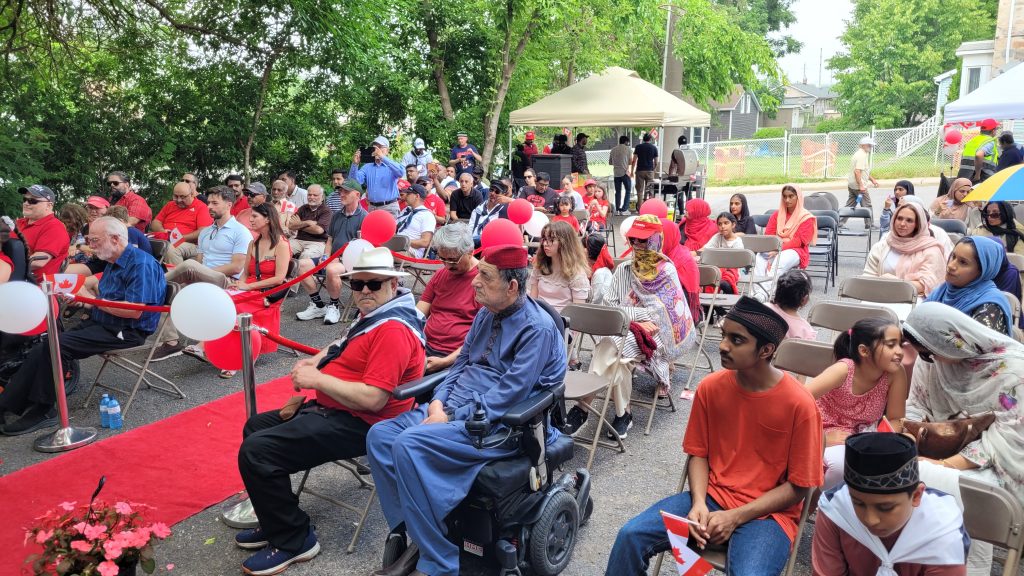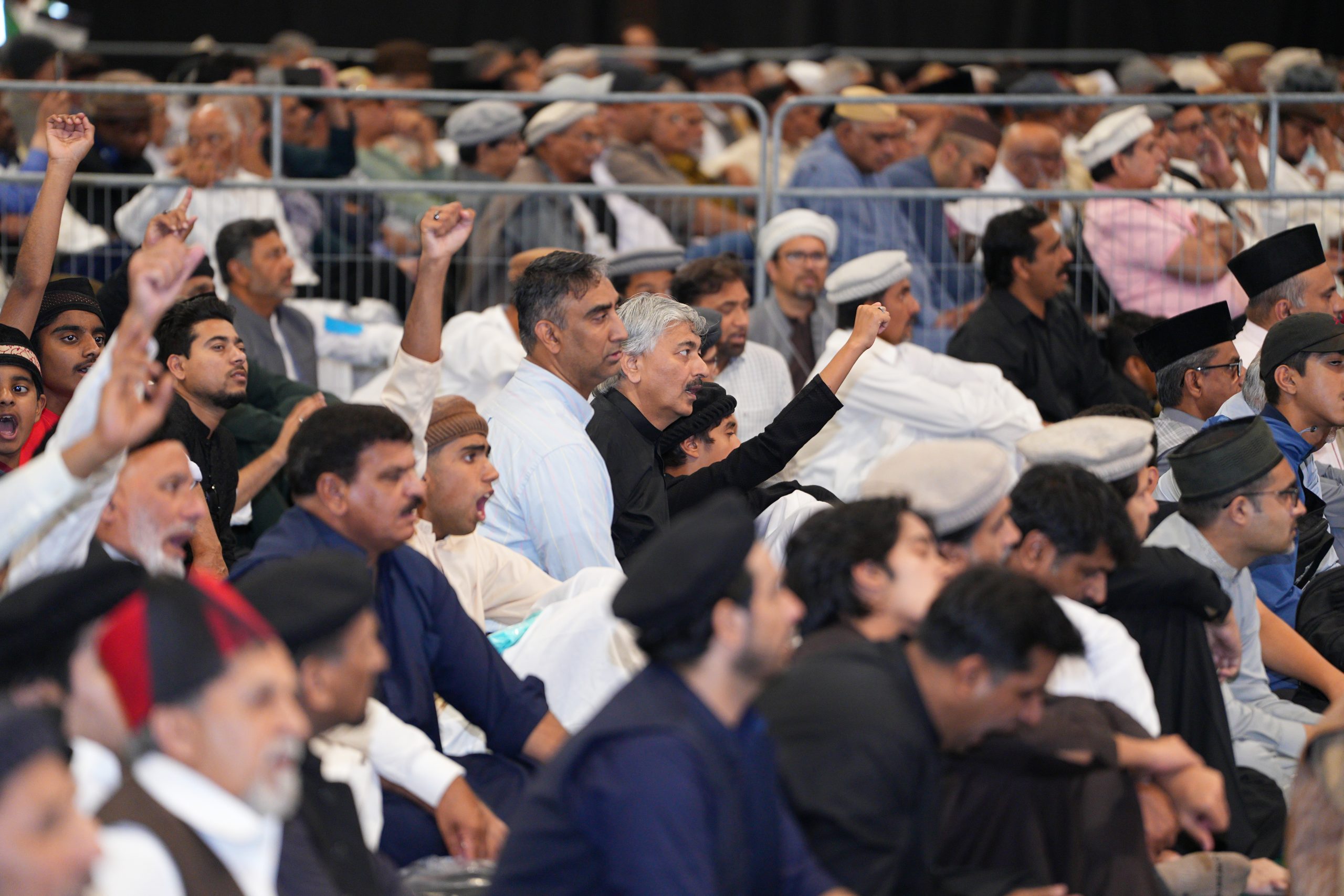
Alhamdulillah, the 48th Jalsa Salana Canada reached its conclusion on 12 July 2026 with the Final Session, held before a full gathering at The International Centre in Mississauga, Ontario.
The session opened with Tilawat and a poem of the Promised Messiah (as). Following which, an address on the financial sacrifices of the Companions (ra) of the Promised Messiah (as) was delivered by Tahir Ahmed Sahib, National Additional Secretary Mal. He drew on the examples of early companions, who gave of their means and their time when the community itself had little to give. Ahmed Sahib returned to a theme throughout his speech, which was less about the amounts involved, but about the spirit behind them, describing repeated giving, even amid a companion’s own private fear of poverty, as one of the clearest expressions of love for God. The address placed today’s Jamaat in Canada in direct line with that history, a prosperity built on sacrifices made when sacrifice was costly rather than comfortable. “It is they who leave this earth thus purified,” Ahmed Sahib said of such companions.
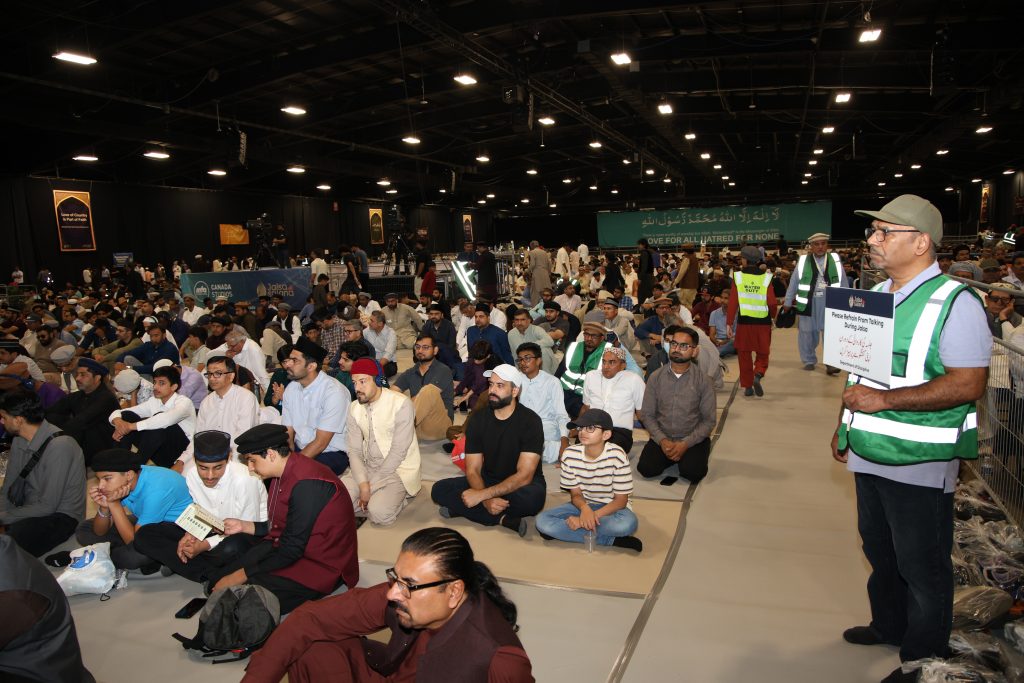
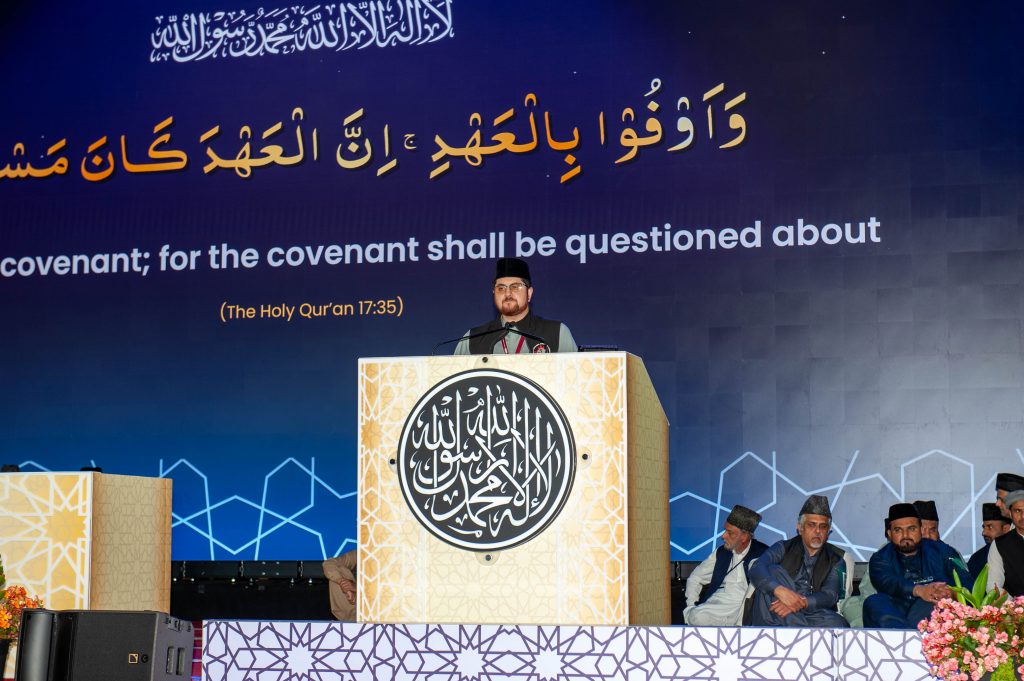
The second address of the session turned to home life. Naveed Ahmad Mangla Sahib, Missionary for Ottawa East, spoke on balancing the rights of parents against the obligations of marriage, a refreshingly direct address that named marital separation as a major concern within the community. He mentioned the high rate of marital separation (20%) within the community, noting that 30-40% of these cases involve interference from in-laws or parents.
He grounded much of the address in the Prophet’s (sa) own examples. The Holy Prophet(as) was a husband who helped with housework, mended his own clothes, and by all accounts remained even-tempered at home. He also cited the well-known teaching that a mother’s contentment carries unusual weight in a child’s own standing before God. “The best of virtues are those that are done in moderation,” he told the gathering, and returned more than once to the idea that a home runs better when one is focused on duty, rather than on entitlement.
“Your parents are (the pathway to) hell and heaven for you; you decide which path you want to take,” he said, before adding that the same principle held for marriage: “Instead of focusing on what your rights are, we should ask what my responsibility is!”
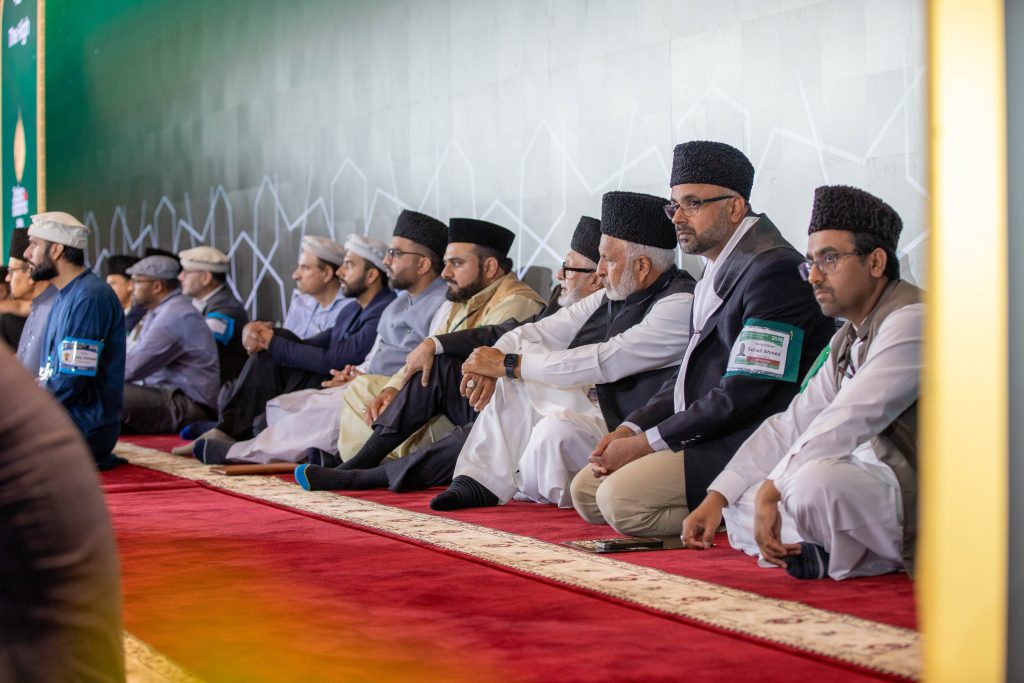
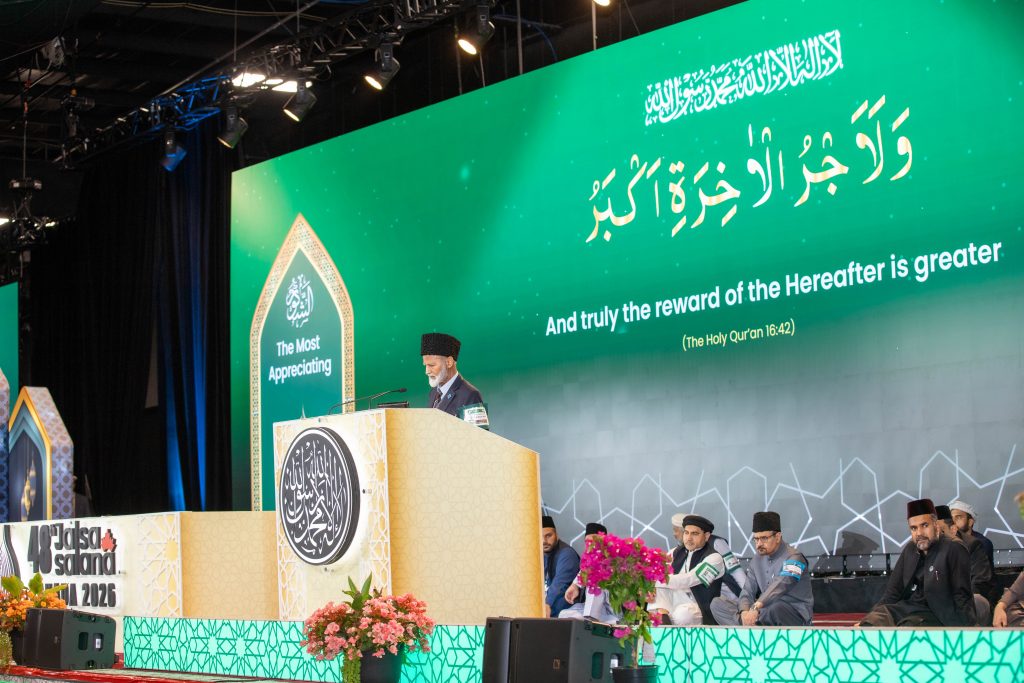
The Final Session also included brief remarks from several public officials in attendance. Toronto Mayor Olivia Chow spoke to the Jamaat’s community service work and returned to the community’s “Love for All, Hatred for None” motto as a response to rising local tensions: “Hate has no place in this city, no matter what kind of hate,” she said. Ontario MPP and Minister Stephen Lecce, marking a decade of attending Jalsa Salana Canada, thanked the gathering “for being true leaders in our country.” MP Heather McPherson accepted the Sir Muhammad Zafrulla Khan Award for public service, telling the audience that “Canada must lead with courage and principle, not convenience.” Ontario Premier Doug Ford sent a video message praising the community’s charitable work.
Alam-e-In’ami and academic excellence awards, including recognition of students who completed memorisation of the Holy Qur’an, were also presented during the session.
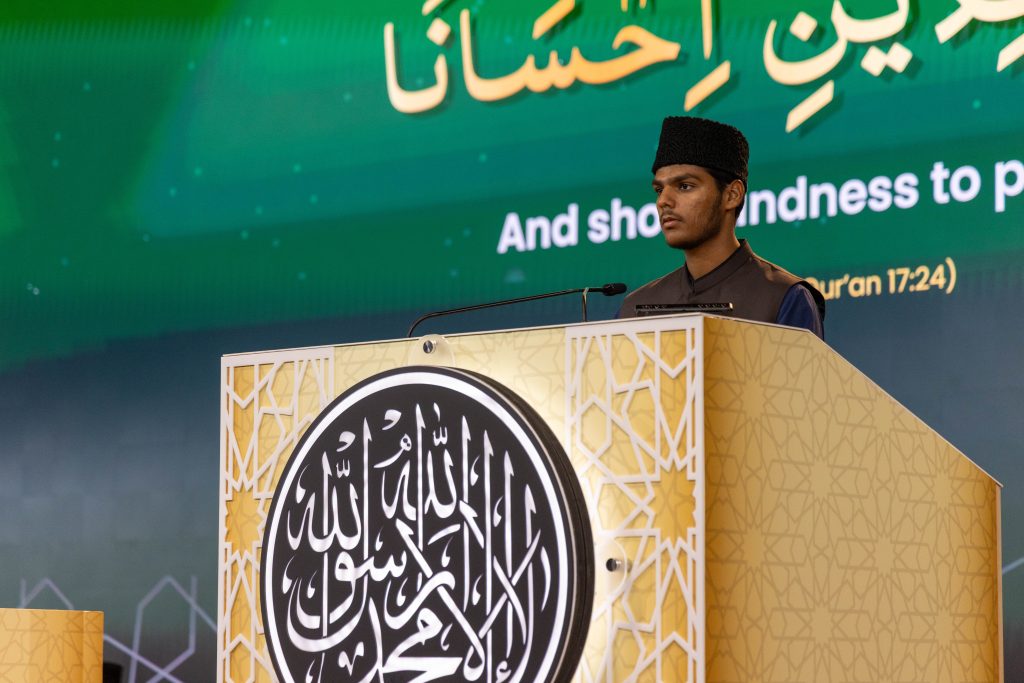
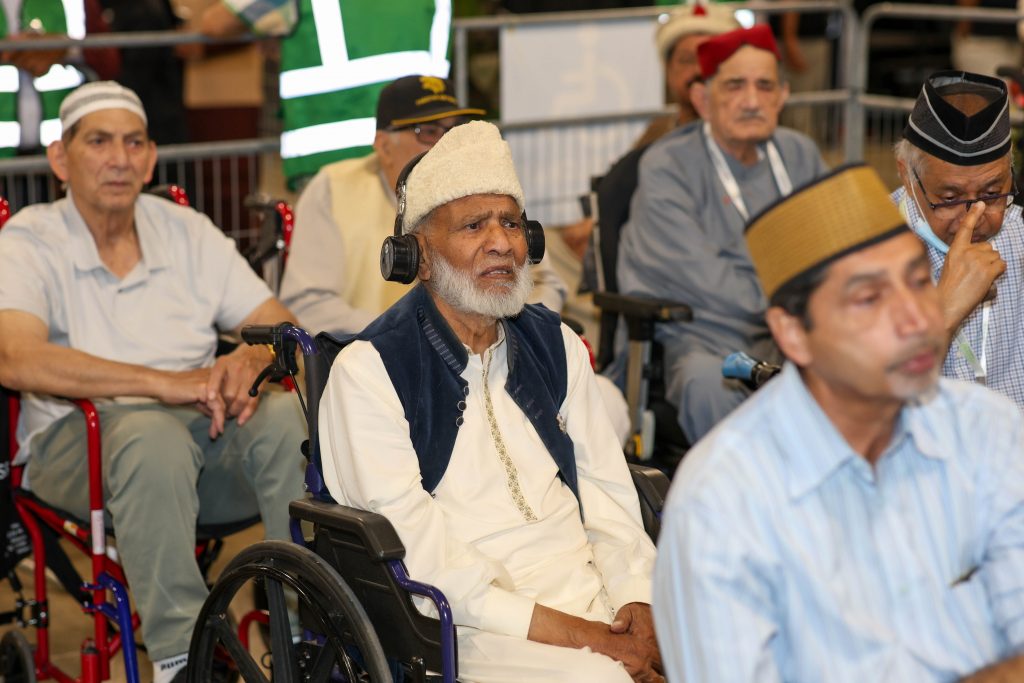
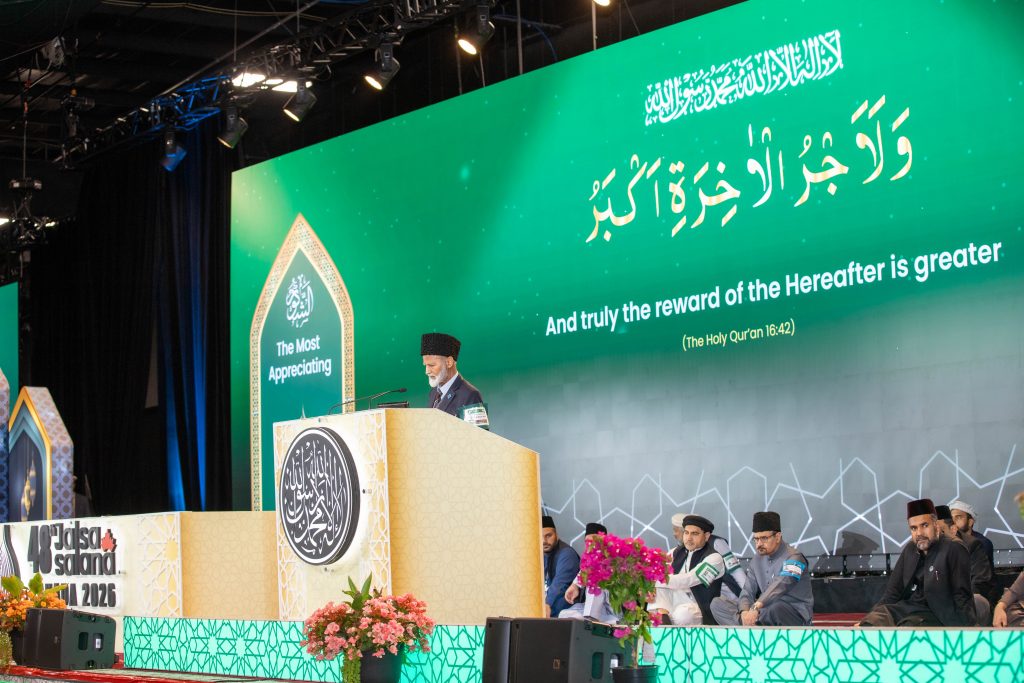
Lal Khan Malik Sahib, National Amir of Ahmadiyya Muslim Jama’at Canada, delivered the concluding address. He spoke of the risk that material comfort, if left unexamined, can quietly loosen a community’s sense of purpose, drawing a comparison to the Israelites’ own history of prosperity and drift. Ahmadis in Canada, he said, “were not just scattered around the globe, we were planted for this promise to bear fruit,” rejecting the idea that the community’s presence in Canada was simply a matter of economic migration or an escape from persecution. He described every Ahmadi in the country as “a representative of Islam… ambassadors of Islam.” Their honesty in financial dealings, reliability at work, and plain kindness are a form of preaching more effective than words. On legacy, he told the gathering, “A legacy is not merely what you leave behind when you die, it is what continues to live after you are gone.” Respected Amir Sahib closed with an appeal to the community’s young people not to underestimate what they were capable of, likening a person’s potential to a seed that “must lose itself in the soil to become a tree,” before leading the gathering in a silent prayer for a safe return home and for the acceptance of the Jalsa’s efforts.
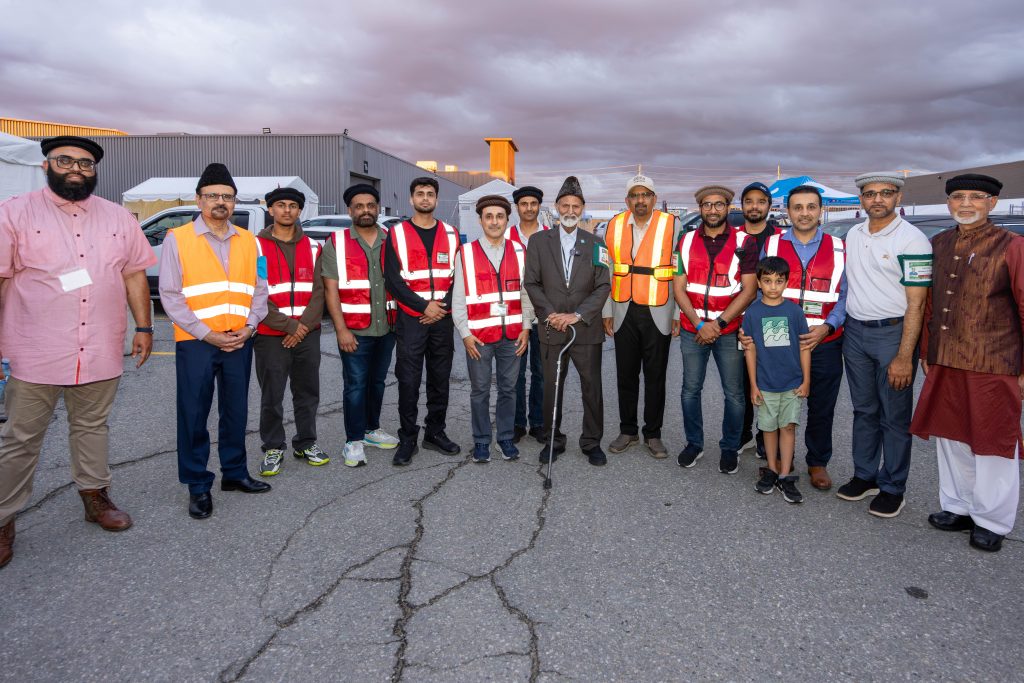
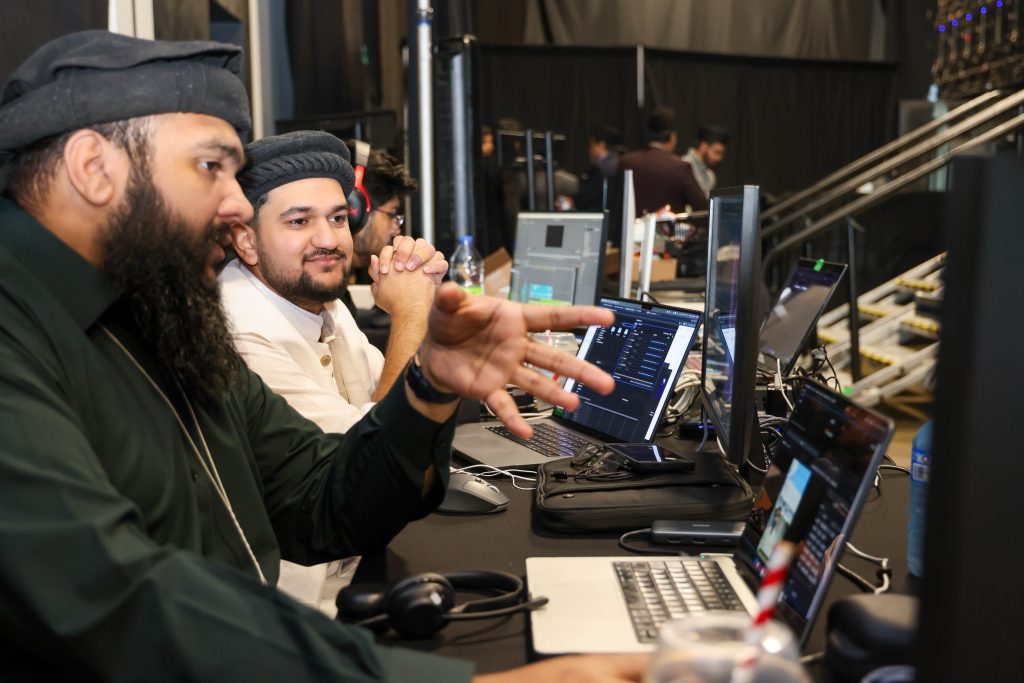
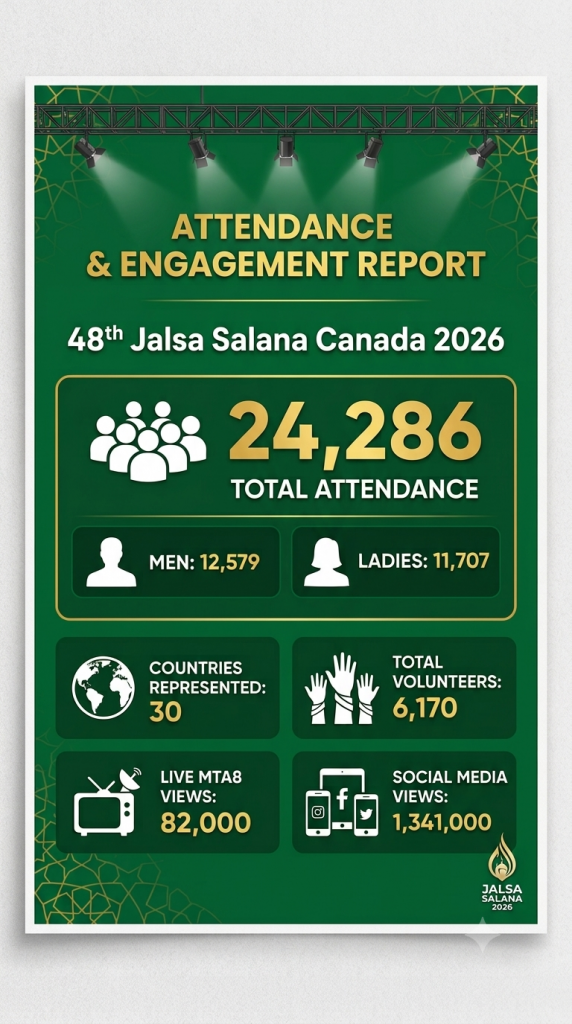
By the close of the session, this year’s attendance (2026) figures were shared.
A total of 24,286 people, 12,579 men and 11,707 ladies, from 30 countries, supported along the way by 6,170 volunteers. The session was broadcast live to 82,000 viewers on MTA8, with social media views reaching 1,341,000.
For this reporter, the anticipation and the wait for next year’s Jalsa Salana have already begun. Insha’Allah, we pray that Allah may give us the ability to report live from the venue next year.