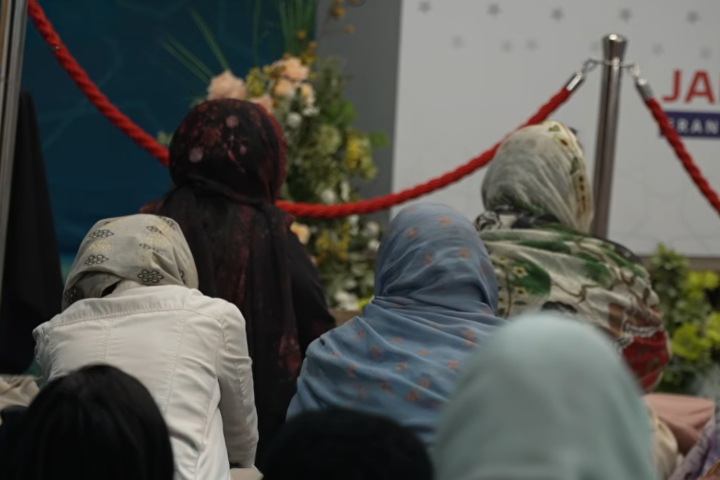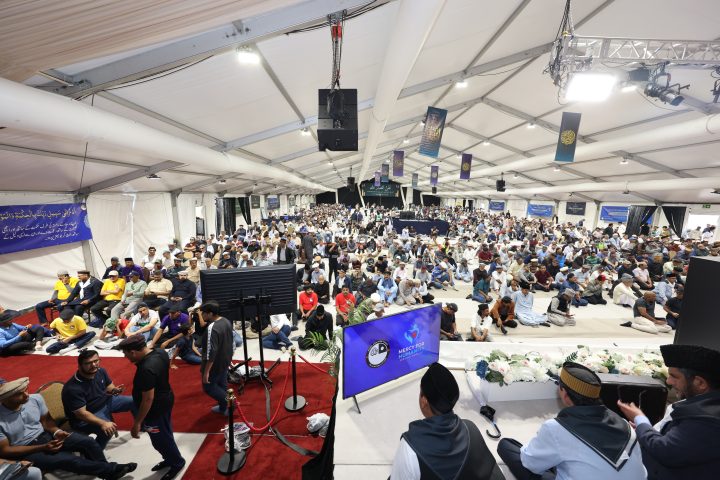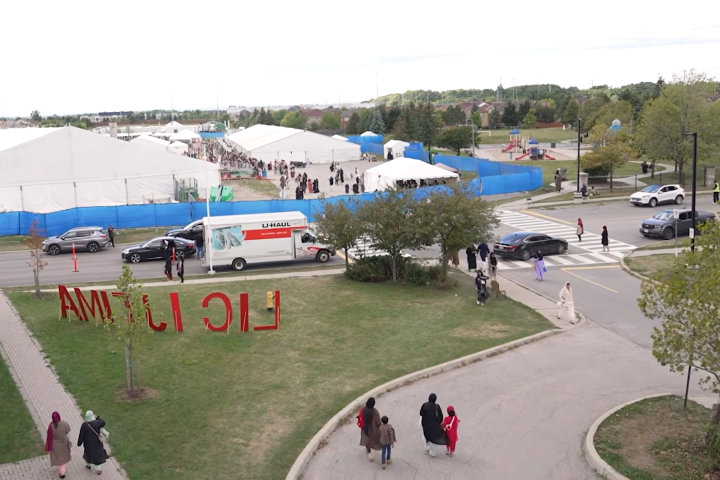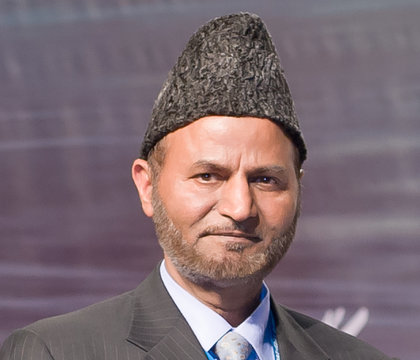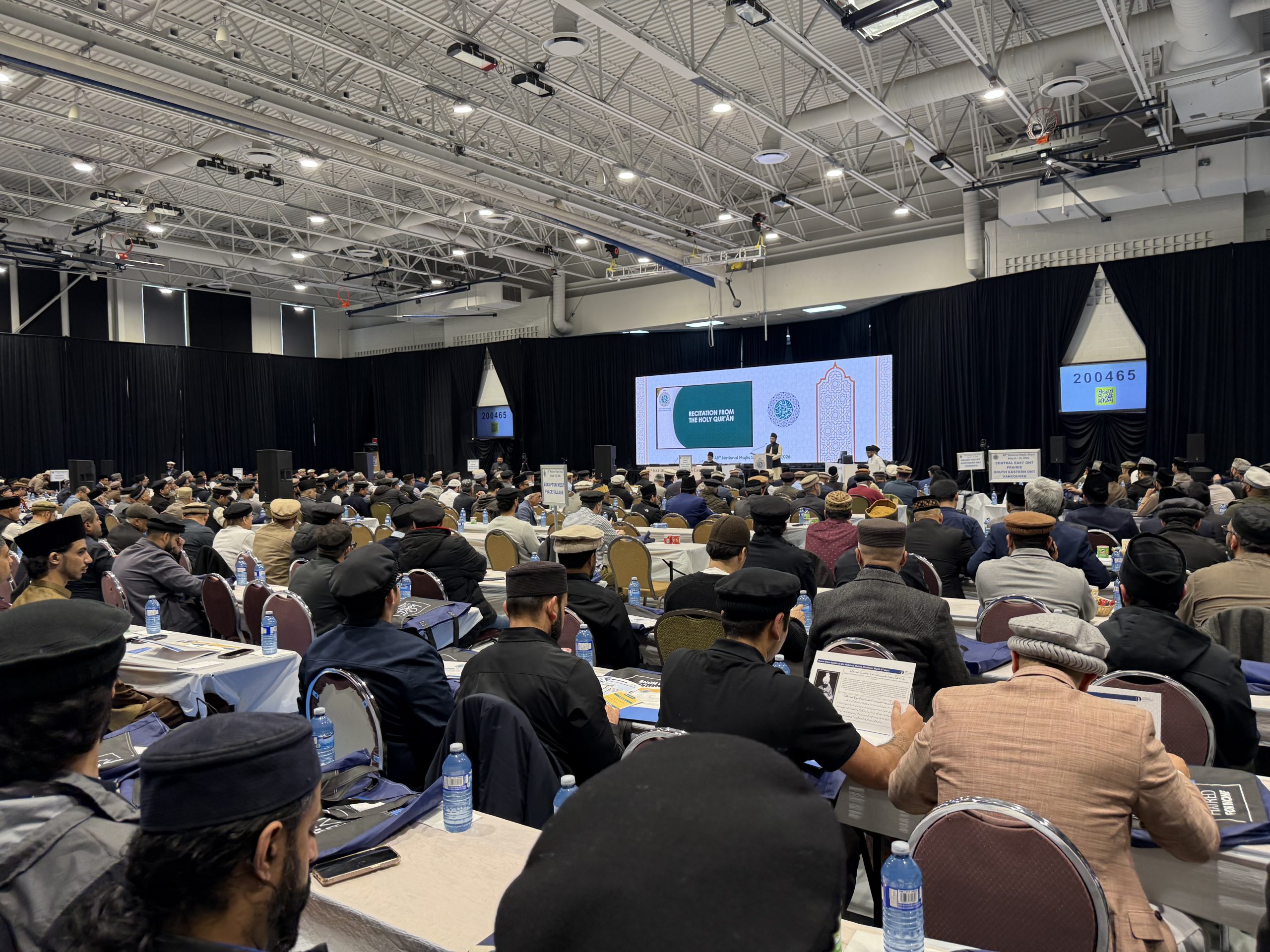
Vaughan, Ontario — The 49th National Majlis-e-Shura of the Ahmadiyya Muslim Jama’at Canada concluded on Sunday afternoon, 10 May 2026, after three days of consultative deliberation held at Aiwan-e-Tahir on the Baitul Islam grounds in Vaughan. The closing session was presided over by Respected National Amir Sahib, Malik Lal Khan Sahib, whose concluding address turned on a single, sustained theme: that the responsibility of a Shura delegate does not end when the hall empties.
Convened on 8 May, the Shura saw two subcommittees deliberate on the annual budget for 2026-2027 and on a proposal from Brampton East concerning the re-engagement of members detached from Jama’at activities. Implementation reports on the previous year’s proposals were presented by national secretaries of the relevant departments, and parallel information sessions were held on Friday evening for delegates not assigned to subcommittees, covering subjects from the introduction of AhmadiyyaJournal.ca and the office bearer’s role in Humanity First, to AMLAC and AMMAC services, Rishta Nata, capital development projects, and Nizam-e-Wasiyyat.
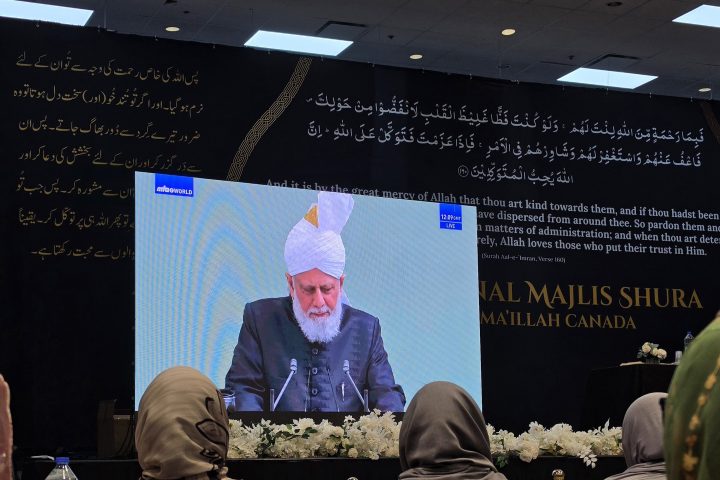
In his concluding address, Respected Amir Sahib began by conveying a concern recently expressed by Hazrat Khalifatul Masih V (may Allah be his Helper). Addressing Murabbiyan in London, Huzoor (aba) had noted that not all were regular in the prayers and supplications he had recommended, including Istighfar and the prayer for Allah’s protection. Respected Amir Sahib drew the natural inference for those gathered in the hall. “If Huzoor (aba) was concerned about the Murabbiyan, he must also be concerned about all the office bearers of the Jama’at and other members of the Jama’at.” He then led the delegates in repeating those prayers together, urging that “every day at some appointed time of the day, we must say these prayers and supplications.”
He reminded the members that the weight of representation extends beyond procedure. “We, as representatives of the Jama’at assembled here for Shura, bear a responsibility to act in a manner that is satisfying in the eyes of the members who chose us. They expect us to be a model.”
Respected Amir Sahib then renewed an appeal he has voiced on previous occasions, the need to strengthen smaller Jama’ats across Canada. By the grace of Allah, he noted, the Jama’at has expanded in the major cities, but in many smaller communities only two, three, or four families remain. He offered a simple illustration of the asymmetry. A thousand members leaving the Greater Toronto Area would scarcely be noticed, and the same would be true of five hundred leaving Calgary, “but in the small mosques where we have two, three, four or five families, the addition of these members moving to these smaller Jama’ats would be substantial.”
He pointed to the dispersal of Ahmadis from Pakistan and other lands of persecution as part of a divine plan rather than mere circumstance. “It is Allah’s plan that these conditions were created, and Allah wanted Ahmadis to move around, to disperse in the whole of the world, so that the message of Islam Ahmadiyyat is conveyed to these places effectively.”
“In the Holy Qur’an,” he continued, “Allah mentioned it three times that ultimately, Islam is going to be the accepted religion of all the people of the world. The majority of the people of the world are going to accept Islam willingly, and this is going to happen through that community of the Promised Messiah. This is going to be effected through us, through our children and their children.”
He named several smaller communities where additional families would make a substantial difference, beginning with Sydney in Nova Scotia, where the Jama’at maintains both a mosque and a mission house. “We have lost all the families who were living there,” he said. “There are very few left.” He also named Sault Ste. Marie, Thunder Bay, Kelowna, and Whitehorse, among the places that need a stronger Ahmadi presence, noting that pensioners, retirees, and those whose work does not bind them to a particular city could consider moving with the intention of strengthening the Jama’at and conveying the message of Islam Ahmadiyyat. Such a move, he said, “would be an act of worship, because whatever action we take in obedience to Allah, seeking His pleasure, is an act of worship.“
The principal theme of the address, however, was the responsibility of the delegate beyond the days of Shura itself. Respected Amir Sahib disclosed a sobering figure: of the quarterly update request sent by Secretary Shura in December, asking delegates to report on the implementation of last year’s decisions at the local level, fewer than ten per cent of delegates had responded.
“It means we are not giving importance to implementation of what we were working on for three days last year,” he told the members. “And if we do not change what we have done these three days, the same would happen to it this year. We have to change.”
Drawing on a Friday Sermon delivered by Hazrat Khalifatul Masih V (aba) in March 2006, which was dedicated entirely to the responsibilities of Majlis-e-Shura delegates, Respected Amir Sahib reminded the members that a delegate’s position “lasts for a full year, not for two or three days of Shura only. The moment you were elected, your responsibility began and it continues until the next Shura.”
He went on to describe delegates as the link between the National Majlis-e-Shura and the members of the local Jama’ats. “You sat in this house, you heard the discussion, you grasped the spirit behind every recommendation, not just the words but their intentions, their hopes, and the direction that was set. No one is better placed than you to bring these recommendations alive in your local Majalis-e-Amla.”
He urged delegates, from the very next meeting of their local Majlis-e-Amla, to ask what has been done, what is being done, and what still needs to be done on the recommendations of the previous Shura. He also reminded members of their duty to share the proceedings of Shura with the wider membership of their Jama’ats, rather than waiting for a report from Markaz, calling that approach “not right, as it displays a lack of responsibility on the part of the Jama’at leadership, and it shows a lack of confidence in their own members.”
Citing the institution of Shura as the highest, after Khilafat itself, Respected Amir Sahib recalled the words of the Holy Prophet Muhammad (peace and blessings of Allah be upon him), that consultation is a mercy for the Ummah and that those who practise it will not be deprived of guidance. He warned, however, that this mercy flows only when an institution is taken seriously and its output acted upon. “If we gather every year, debate and discuss, offer recommendations, receive Huzoor’s blessing, and then return home without ensuring implementation of the recommendation, then we must honestly ask ourselves: are we fulfilling the purpose of this, or are we merely going through the formalities?”
He closed with a request to every delegate present to listen to or read the transcript of the Friday Sermon of March 2006 before the next Ijlas-e-Amla, having arranged for Secretary Shura to send the transcript to all delegates and to make it available on the Shura portal.
Respected Amir Sahib then thanked the Department of Shura for the considerable work behind the scenes, including the improvements introduced this year, and concluded with prayers for the delegates’ safe return and for Hazrat Khalifatul Masih V (may Allah be his Helper) to be granted long life and excellent health. The session concluded with silent prayer.
May Allah the Almighty enable every delegate to carry the spirit of this Shura home to their Jama’ats, Insha’Allah. Ameen.